Best Vegetables to Grow Indoors: No Greenhouse or South Window Needed

Growing vegetables indoors is more practical than most people assume. You don’t need a greenhouse or even a south-facing window — just the right plants, a bit of planning, and a willingness to pay attention. The best vegetables to grow indoors are those that tolerate lower light, stay compact, and reward you with harvests on a relatively short timeline.
This guide covers 12 strong performers, organized by ease and light requirements, plus the essentials on soil, containers, and lighting so you can actually succeed rather than watch things slowly die on a windowsill.
Why Some Vegetables Thrive Indoors (and Others Fail)
Not every vegetable is a candidate. Corn, sprawling squash, and large root vegetables like parsnips are non-starters — they need space, strong outdoor light, and often insect pollination. The indoor winners share a few traits:
- Compact growth habit — they don’t sprawl or vine aggressively
- Tolerance for lower or artificial light — typically 6–10 hours rather than the 12+ hours field crops need
- Short roots — most thrive in containers 6–12 inches deep
- Fast harvest cycles — you get results in weeks, not months
Light is almost always the limiting factor. A standard bright windowsill delivers roughly 1,000–2,000 foot-candles on a sunny day. Most fruiting vegetables (tomatoes, peppers) need 3,000–5,000 foot-candles minimum to produce well. Leafy greens and herbs can thrive at 500–1,000. That gap explains why leafy crops dominate indoor growing lists.
If you add a full-spectrum grow light — even a modest LED panel — your options expand considerably.

The 12 Best Vegetables to Grow Indoors
1. Lettuce and Salad Greens
This is the most forgiving starting point. Loose-leaf varieties like ’Black Seeded Simpson’, ’Oak Leaf’, or any cut-and-come-again mix can go from seed to harvest in 30–45 days. They tolerate lower light better than almost any other food crop and actually prefer cooler indoor temperatures (60–68°F / 15–20°C).
Sow seeds densely in a shallow tray (4–6 inches deep), water from the bottom to avoid damping off, and harvest by snipping outer leaves. A single tray kept going with staggered sowings can supply a family’s salad needs year-round.
2. Spinach
Spinach is slightly more demanding than lettuce but still manageable on a bright windowsill. It bolts (goes to seed and turns bitter) in heat, so keep it away from radiators and direct afternoon sun in summer. ’Tyee’ and ’Space’ are compact, reliable varieties. Like lettuce, harvest outer leaves to extend the plant’s productive life.
3. Kale and Chard
Both are cut-and-come-again crops that tolerate lower light reasonably well, though they grow faster under supplemental lighting. Dwarf kale varieties like ’Dwarf Blue Curled’ stay manageable in a 6–8 inch pot. Chard’s vibrant stems (Rainbow Chard is reliably attractive) also make it a visual asset on a kitchen counter.
4. Herbs — Basil, Cilantro, Chives, and Parsley
Strictly speaking, herbs are not vegetables, but they earn inclusion here because they’re genuinely useful in a kitchen garden and widely searched under the same intent. Basil needs the most light (6–8 hours minimum, prefers a grow light). Chives and parsley are the most shade-tolerant and essentially maintenance-free once established.
Buy a pot of supermarket basil, divide it into three or four smaller plants, repot them, and they’ll outlast the original pot by months — a common trick that actually works.
5. Radishes
Few vegetables are faster. Most radish varieties are harvest-ready in 22–30 days from sowing. They need only 4–6 inches of soil depth and do fine under moderate light. ’Cherry Belle’ and ’French Breakfast’ are consistent producers. Succession sow every two weeks for a continuous supply.
Radishes are also excellent for children or beginners who need a quick proof-of-concept before committing to slower crops.
6. Green Onions (Scallions)
You can regrow green onions from grocery-store scraps by placing the root ends in a jar of water on the windowsill — a genuine no-cost starting method. For a more reliable harvest, sow seeds in a 6-inch-deep tray. They need minimal care beyond regular watering and reward you with a continuous harvest when you snip the tops to about an inch above soil level.
7. Microgreens
Microgreens are vegetable seedlings harvested at 1–3 inches tall — typically at the cotyledon or first true-leaf stage. Peas, sunflower, radish, broccoli, and beet microgreens are among the most flavourful. They’re harvested once (not cut-and-come-again like salad greens), but the turnaround is extremely fast — often 7–14 days — and the nutritional density of microgreens is genuinely high compared to their mature counterparts. Research from the University of Maryland found that many microgreen varieties contain higher concentrations of vitamins C, E, and K than the full-grown leaves.
All you need is a shallow tray, potting mix or a growing mat, seeds sown densely, and a few days of darkness under a cover before moving to light. Grow lights are ideal but not strictly necessary if you have a very bright window.

8. Cherry Tomatoes
This is where indoor growing gets genuinely ambitious. Cherry tomatoes can produce well indoors if you give them enough light — meaning a strong LED grow light is essentially non-negotiable unless you have a very large south-facing skylight. Compact or patio varieties work best: ’Tumbling Tom’, ’Tiny Tim’, and ’Tumbler’ are all bred specifically for container growing.
You’ll also need to hand-pollinate by gently shaking the flowers or running a soft brush inside each bloom when they open, since there are no outdoor insects to do it for you. Use a 10–12 inch pot, a stake or small cage, and a fruiting-specific fertilizer (higher in phosphorus and potassium than leafy-crop feeds).
Expect a longer wait — 70–90 days from transplant — but fresh cherry tomatoes picked from a plant in your kitchen are meaningfully better than anything you buy in plastic clamshells.
9. Peppers
Peppers are similar in requirements to tomatoes but even more heat-loving (they prefer 70–85°F / 21–29°C consistently). Small hot varieties — ’Thai Hot’, ’Prairie Fire’ — are particularly well-suited because the fruits are small and the plants compact. A pepper plant can live for several years indoors in the right conditions, which makes it one of the best long-term investments in an indoor edible garden.
Like tomatoes, you’ll need hand pollination and a strong grow light.
10. Beans (Bush Varieties)
Bush beans — not climbing pole beans — stay compact enough for large containers. They need at least 8 inches of soil depth and bright light (a grow light helps significantly). ’Bush Blue Lake’ and ’Contender’ are reliable. Sow three or four seeds per 12-inch pot, thin to the strongest two. You’ll harvest in about 50–60 days.
Beans fix their own nitrogen, so they’re somewhat self-sufficient once established and don’t need heavy fertilizing.
11. Peas (Dwarf and Snap Varieties)
Dwarf pea varieties like ’Tom Thumb’ (which genuinely grows to only 8–9 inches tall) produce full-sized pods on remarkably small plants. They prefer cooler temperatures and perform well in a cool spare room or near a cool north-facing window in spring and autumn. Sow seeds an inch deep, provide a small twig or bamboo stick for support, and harvest when pods are plump.
12. Pak Choi (Bok Choy)
Pak choi is fast (ready in 30–45 days), compact, and happy in lower light than most brassicas. ’Toy Choi’ is a miniature variety bred for container growing. Harvest whole small plants or take outer leaves as needed. It’s particularly useful in an indoor setup because it’s one of the few genuinely versatile cooking vegetables — equally good stir-fried, braised, or raw in salads — that requires so little effort to grow.
If your indoor garden starts producing more radishes and pak choi than you can eat right away, Root Cellar Storage: How to Preserve Fresh Vegetables offers a low-tech way to keep the surplus fresh for weeks.
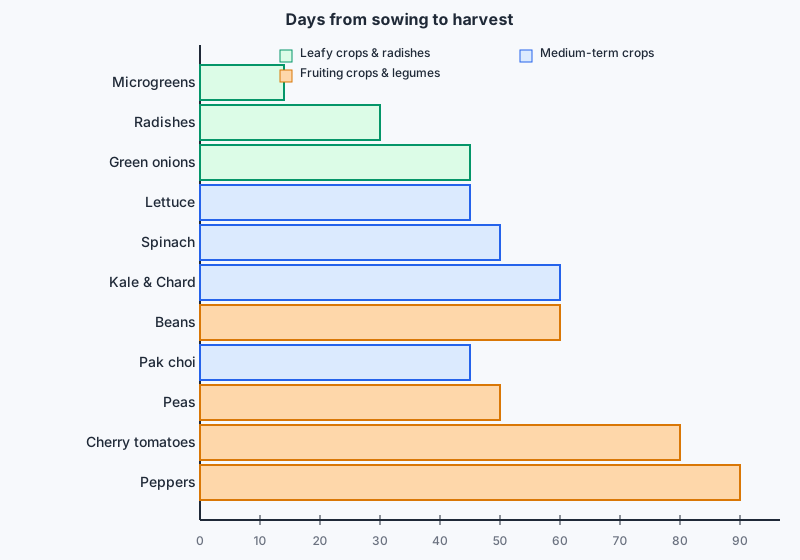
| Vegetable | Days to Harvest | Minimum Light (hours/day) | Container Depth | Best For |
|---|---|---|---|---|
| Lettuce & Salad Greens | 30–45 | 4–6 | 4–6 inches | Quick continuous harvests; coldest tolerance |
| Spinach | 40–50 | 5–6 | 6 inches | Heat-sensitive; outer-leaf harvesting |
| Kale & Chard | 45–60 | 4–6 | 6–8 inches | Extended harvests; visual appeal on counter |
| Radishes | 22–30 | 4–6 | 4–6 inches | Fastest harvest; proof-of-concept for beginners |
| Green Onions | 30–45 | 4–6 | 6 inches | Regrowable from scraps; continuous snipping |
| Microgreens | 7–14 | 2–4 (after germination) | 1–2 inches | Highest nutrient density; shortest timeline |
| Cherry Tomatoes | 60–80 | 12–16 (grow light required) | 10–12 inches | Fruiting indoors; requires hand-pollination |
Setting Up for Success: Light, Soil, and Containers
Getting the Light Right
Windowsill growing works for leafy crops and herbs. For everything else, budget for a grow light. Full-spectrum LED grow lights have dropped in price considerably and are far more efficient than the fluorescent tubes that used to dominate the market. Look for panels rated in PPFD (photosynthetic photon flux density) rather than just watts — a PPFD of 200–400 µmol/m²/s at canopy level suits most leafy crops, while fruiting vegetables want 400–600+.
Keep the light on a timer: 14–16 hours for fruiting crops, 12–14 hours for leafy greens.
Choosing Containers
- Lettuce, radishes, green onions, microgreens: Shallow trays or pots 4–6 inches deep
- Kale, chard, spinach, herbs: 6–8 inch pots
- Beans, peas, pak choi: 8–10 inches
- Tomatoes, peppers: Minimum 10–12 inches, with larger always better
Drainage holes are non-negotiable. Standing water kills roots fast. Use saucers but empty them 30 minutes after watering.
Soil and Fertilizer
Don’t use garden soil indoors — it compacts in pots, drains poorly, and can harbour pests and pathogens. Use a quality peat-free potting mix (coir-based mixes work well) and add a slow-release balanced fertilizer at planting time. Leafy greens benefit from a nitrogen-forward feed every two to three weeks. Fruiting plants need less nitrogen and more phosphorus once they flower.

Common Problems and How to Avoid Them
Leggy, weak seedlings: Almost always a light problem. Move the pot closer to the light source or add supplemental lighting.
Soil staying wet for days: Improve drainage (add perlite to the mix), reduce watering frequency, and ensure the pot has adequate drainage holes.
Yellowing leaves: Could be overwatering, nitrogen deficiency, or insufficient light — diagnose by ruling out causes in that order.
Fungus gnats: The small dark flies hovering around indoor pots. Let the top inch of soil dry out completely between waterings — their larvae need moisture to survive. Yellow sticky traps catch adults.
Lack of pollination on flowering crops: Hand-pollinate tomatoes and peppers by gently shaking the plant or transferring pollen with a soft brush every day or two when flowers are open.
Putting It Together: A Practical Starting Plan
If you’re beginning from scratch, start with two or three crops rather than attempting everything at once:
- A tray of mixed salad greens — fast, forgiving, genuinely useful
- Chives or parsley in a pot — near-zero maintenance
- A small pack of radish seeds — fast payoff, builds confidence
Once those succeed, add a grow light and move up to pak choi, dwarf peas, and eventually tomatoes. The learning curve is real but not steep, and most indoor growing failures trace back to one of two causes: not enough light or too much water. Fix those, and the vegetables mostly take care of themselves.
Indoor growing is genuinely practical — not just as a hobby, but as a way to have fresher produce with a shorter journey from plant to plate than anything you’ll find in a shop.
Once you’re harvesting more lettuce and herbs than you can use in a day, How to Store Cut Vegetables and Keep Them Fresh will help you keep the extras crisp until you’re ready to cook.