Baking Soda vs Baking Powder: Key Differences Explained

What Are These Two White Powders, Exactly?
Baking soda and baking powder sit side by side in almost every kitchen cabinet, and their containers look nearly identical. Swap one for the other without thinking, and your cookies come out flat, your muffins taste metallic, or your cake fails to rise at all. The difference between them is real, chemical, and worth understanding — especially if you bake regularly.
Both are leavening agents, meaning they produce carbon dioxide gas that makes baked goods rise and turn light. But the way each one creates that gas is entirely different, and that difference determines when and why you use each one.

Baking Soda: Pure Chemical Punch
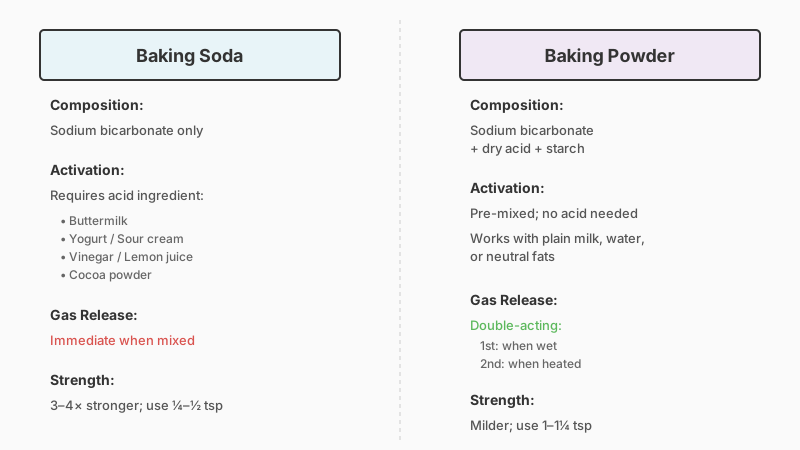
Baking soda is sodium bicarbonate — a single-ingredient compound. On its own, it does nothing useful in a batter. It needs an acid to activate.
When sodium bicarbonate meets an acid in a wet mixture, a neutralization reaction produces carbon dioxide bubbles almost immediately. Those bubbles expand in the oven’s heat, lifting the batter.
What Counts as an Acid in Baking?
You encounter acidic ingredients in recipes more often than you might think:
- Buttermilk — the most classic pairing
- Brown sugar (slightly acidic compared to white)
- Yogurt and sour cream
- Natural cocoa powder (not Dutch-process)
- Vinegar and lemon juice
- Honey and molasses
- Cream of tartar
If a recipe calls for baking soda, check: there should always be at least one of these acidic ingredients present. If there isn’t, the soda will leave a soapy, slightly bitter aftertaste because unreacted sodium bicarbonate is alkaline.
How Powerful Is It?
Baking soda is roughly three to four times stronger than baking powder as a leavening agent. That’s why recipes typically call for small amounts — often just ¼ to ½ teaspoon — compared to a teaspoon or more of baking powder.
Beyond rising, baking soda also promotes browning. It raises the pH of the batter, which accelerates the Maillard reaction — the same chemical process that browns meat. This is why recipes for chocolate chip cookies or gingerbread often use baking soda: you want that golden-brown color and deeper flavor crust.
Baking Powder: Built-In Acid Included
Baking powder is a pre-mixed blend of sodium bicarbonate plus one or more dry acids (typically cream of tartar or sodium aluminum sulfate) and a starch (usually cornstarch, which absorbs moisture and keeps the mixture stable in the container).
Because the acid is already built in, baking powder can leaven batters that contain no acidic ingredients whatsoever — plain milk, water, or neutral fats like oil and butter. This makes it the default choice for pancakes, plain yellow cake, vanilla muffins, and most quick breads.
Single-Acting vs. Double-Acting
Nearly all commercial baking powder sold today is double-acting, which means it produces gas in two stages:
- First rise — when the powder gets wet (mixing stage)
- Second rise — when it hits the oven’s heat
This two-stage process gives you flexibility. You can mix your batter, let it sit a few minutes, and still get a good rise in the oven. With baking soda alone, you want to get the batter into the oven quickly after mixing because the gas release starts immediately on contact with liquid acid.
Single-acting baking powder (now rare) released all its gas at once upon wetting, meaning you had a very short window before the batter went flat.

Side-by-Side Comparison
| Property | Baking Soda | Baking Powder |
|---|---|---|
| Chemical composition | Pure sodium bicarbonate | Sodium bicarbonate + acid + starch |
| Needs external acid? | Yes | No |
| Relative leavening strength | ~3–4× stronger | Milder |
| Speed of reaction | Immediate on contact with acid+liquid | Double-acting: two stages |
| Effect on browning | Promotes browning (raises pH) | Minimal effect on browning |
| Typical quantity per cup of flour | ¼–½ tsp | 1–1¼ tsp |
| Shelf life (opened) | ~2 years | ~1 year |
If your cakes have been coming out dense or sunken despite getting the leavening right, our guide Fix Common Cake Baking Mistakes Before They Ruin Your Bake covers the other common culprits.
Can You Substitute One for the Other?
Yes — with adjustments. This is one of the most practical things to know.
Replacing Baking Powder with Baking Soda
Use ¼ teaspoon of baking soda for every 1 teaspoon of baking powder called for. But you must also introduce an acid. The usual fix is ½ teaspoon of cream of tartar per ¼ teaspoon of baking soda, which neatly mimics baking powder’s chemistry. If you don’t have cream of tartar, a small amount of lemon juice or vinegar in the wet ingredients can work, though it may slightly affect flavor.
Replacing Baking Soda with Baking Powder
Use 3 teaspoons of baking powder for every 1 teaspoon of baking soda. A couple of cautions here: at these quantities, the extra starch and salt (some formulas include a little salt) can affect texture and flavor. This substitution works acceptably in a pinch but isn’t ideal for delicate cakes.
When You Should Use Both Together
Many recipes call for both, and this isn’t redundancy — it’s balance. The baking soda neutralizes the excess acid in the batter (improving both flavor and color), while the baking powder provides the remaining leavening lift. Classic examples include devil’s food cake and buttermilk pancakes.
Freshness Matters More Than Most People Realize
Old leaveners are one of the most common reasons home baking fails. Both compounds gradually lose potency over time, especially once opened and exposed to humidity.
Leavening agents aren’t the only ingredient that trips people up, so it’s worth checking out How to Properly Measure Flour for Baking: Spoon In, Level Off for another easy-to-fix source of baking inconsistency.
Testing Baking Soda
Drop ¼ teaspoon into a small bowl with a splash of white vinegar. It should fizz vigorously and immediately. If it barely bubbles, it’s spent.
Testing Baking Powder
Drop ½ teaspoon into a cup of hot water. Active powder will bubble briskly. Lukewarm, sluggish bubbling means it needs replacing.
Store both in a cool, dry place with the lid tight. Keeping either near the stove, where steam and heat fluctuations are constant, shortens their useful life significantly.

The Chemistry Behind the Rise: A Closer Look
If you want to understand this at a deeper level, here’s the actual chemistry without the intimidating notation.
When sodium bicarbonate (baking soda) meets an acid — say, the lactic acid in buttermilk — the reaction produces sodium salt + water + carbon dioxide. It’s the carbon dioxide that does the work, forming tiny pockets in the gluten network of the batter. Heat from the oven expands those pockets and sets the structure around them, creating the open, airy crumb you want.
In baking powder, the same process happens, except the acid (cream of tartar or sodium aluminum sulfate) is already there in dry form. The starch is included specifically to absorb stray moisture and prevent the soda and acid from reacting prematurely in the container.
Sodium aluminum sulfate, the acid in many commercial double-acting powders, is heat-activated — meaning most of its gas release happens in the oven rather than during mixing. This is what makes double-acting powder so forgiving.
Some bakers prefer aluminum-free baking powder (which uses monocalcium phosphate instead) to avoid any potential metallic aftertaste, particularly in vanilla or lemon recipes where delicate flavors are prominent. Brands like Rumford use this formula.
Practical Takeaways for Everyday Baking
- Buttermilk pancakes, banana bread, carrot cake, red velvet: expect baking soda on the ingredient list because the acidic components are already there.
- Vanilla layer cake, plain scones, biscuits, pound cake: baking powder does the heavy lifting in these neutrally flavored recipes.
- Chocolate chip cookies: often both, with the soda also helping achieve a golden-brown exterior.
- Date on your container: check it. A year-old, half-used tin of baking powder might be the reason your muffins have been coming out dense lately.
Understanding these two ingredients won’t turn you into a pastry chef overnight, but it eliminates a whole category of mysterious baking failures. Once you know why a recipe uses one or both, you stop treating them as interchangeable white powders and start treating them as the precise tools they are.
Conclusion
The core distinction is simple: baking soda is pure sodium bicarbonate that needs an external acid to work, while baking powder is a self-contained system with the acid already included. Baking soda is stronger and faster; baking powder is more forgiving and versatile for neutral batters. Many recipes use both deliberately to balance flavor and control rise.
Fresh leavener, the right choice for your recipe’s acidity, and the correct amount — get those three things right, and your baked goods will rise the way they’re supposed to every time.