12 Ways to Make a Small Kitchen More Functional

A small kitchen is not a design failure — it’s a constraint that forces smarter decisions. The best small kitchens in the world (think Paris studio apartments or Tokyo micro-homes) work beautifully because every inch is intentional. Here’s how to get yours there.
Start With a Ruthless Edit
Before you buy a single organizer, subtract. Pull everything out of your cabinets and counters and ask one question: do I actually use this? A panini press used twice a year is eating prime real estate. A set of twelve matching ramekins for a one-person household is a joke. Donate, store elsewhere, or toss.
Most small kitchens feel cramped not because they lack storage, but because they’re holding too much stuff. Editing is free and it works immediately.
What to cut first
- Duplicate tools (three spatulas, four wooden spoons)
- Single-use gadgets with a narrow job (avocado slicer, strawberry huller)
- Chipped or mismatched dishes beyond what you realistically seat
- Expired pantry items taking up shelf space
Rethink Your Counter Layout
In a small kitchen, countertop space is the scarcest resource. Treat it like desk space in a tiny office: only what you reach for daily earns a permanent spot.
The coffee maker and toaster probably stay. The stand mixer, the fruit bowl overflowing with wrinkled limes, and the paper towel stand eating six inches of counter edge — those need a second look.

The One-Appliance Rule
If you must keep countertop appliances, try a one-in-one-out policy. Adding an air fryer means the toaster oven goes into a cabinet (or goes away). This sounds strict, but it forces you to rank what you actually use.
Another move: mount your microwave. An over-the-range microwave or a microwave shelf bracket reclaims a full square foot or more of counter space, sometimes more depending on model size.
Use Vertical Space Aggressively
Wall space above the counter is chronically underused in small kitchens. The area between the counter and upper cabinets — called the backsplash zone — can hold magnetic knife strips, mounted spice racks, and small rail systems (the FINTORP-style pegboard rails are a classic example).
Above the cabinets is another ignored zone. It’s not ideal for daily-use items, but it’s solid for rarely accessed gear: the extra stock pot, the waffle iron, the holiday baking pans.
Specific vertical upgrades worth the money
Magnetic knife strip — clears a full knife block off the counter, costs very little, and keeps knives accessible and sharper (no more drawer rattling).
Wall-mounted spice rack or rail — a rail with S-hooks and small baskets can hold spices, utensils, and even small cutting boards vertically.
Stackable shelf risers inside cabinets — doubles the usable shelf layers without any installation. Works especially well for canned goods and mugs.
Over-door organizers — the inside face of a cabinet door can hold cleaning supplies, foil and wrap boxes, or a cutting board. Door-mounted racks are inexpensive and require no drilling in most cases.

Fix Your Storage Strategy, Not Just Your Storage
Buying more bins and baskets without a system just relocates clutter. A functional small kitchen needs a storage logic — where things live based on how and when you use them.
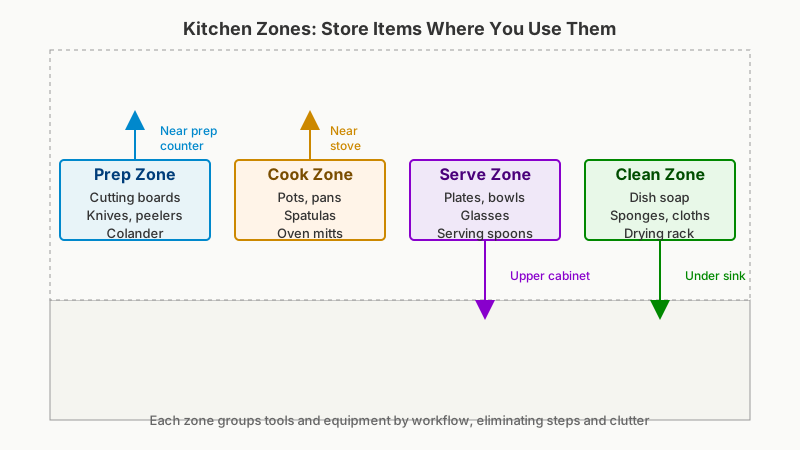
The classic principle: store things closest to where you use them. Pots near the stove. Prep tools and cutting boards near the counter where you chop. Coffee mugs directly above or beside the machine. Cleaning supplies under the sink. When your storage reflects your workflow, the kitchen moves faster and you stop losing things.
Zone your kitchen
Even in a galley kitchen with six feet of counter, you can define zones:
- Prep zone: cutting boards, knives, peelers, colander
- Cook zone: pots, pans, spatulas, oven mitts
- Serve zone: plates, bowls, glasses, serving spoons
- Clean zone: dish soap, sponges, drying rack, cleaning cloths
When you reorganize storage around these zones, the daily cooking routine becomes noticeably smoother.
Pull In Multi-Function Furniture and Tools
In a small kitchen, multi-purpose beats single-purpose every time. A few genuine examples:
A rolling kitchen cart adds prep surface and storage when you need it, then rolls out of the way. Look for one with a butcher-block top — it doubles as a cutting surface. A locked set of wheels means it stays put while you work.
Nesting bowls and measuring cups take a fraction of the space of non-nesting equivalents. A set of five nesting stainless bowls stores as one object.
A lid organizer or pot rack — lids are the chaos agents of any small kitchen. A vertical lid rack mounted inside a cabinet door or on a wall keeps them from avalanching every time you open the cabinet.
Fold-down or extendable tables — if your kitchen has no room for a dining area, a wall-mounted fold-down table (often called a Murphy table or drop-leaf table) gives you an extra surface when you need it and takes almost no space when folded.
Improve the Lighting
This one surprises people: bad lighting makes a small kitchen feel smaller and less functional. If you’re struggling to see what’s in the back of a cabinet, or chopping vegetables in your own shadow, the kitchen feels worse than it is.
Under-cabinet LED lighting is inexpensive, easy to install (many options are peel-and-stick or plug-in with no electrician required), and dramatically improves both visibility and the sense of space. Warm white light (around 2700–3000K color temperature) keeps the kitchen feeling cozy rather than clinical.
If your kitchen has limited natural light, avoid dark cabinet finishes and dark backsplash tile — they absorb what little light exists. A lighter color on open shelving or walls bounces light around the room.

If you want to push the effect even further, How to Make a Small Room Look Bigger: Light, Color, And Tone Tricks covers extra light, color, and tone tricks that make any cramped room feel bigger.
Solve the Sink and Drying Rack Problem
The kitchen sink area tends to accumulate — sponges, soap, drying dishes, scrub brushes. In a small kitchen, a full-size drying rack can occupy a third of the counter.
Some practical fixes:
- Over-sink drying rack: mounts above the sink on a rail or suction cups, drips directly into the basin, and keeps the counter free.
- Roll-up dish drying mat: lays flat beside the sink while in use, rolls up and stores in a drawer when not needed.
- Collapsible drying rack: folds flat and slides into a cabinet. Works well if you run a dishwasher most days but hand-wash pots and the occasional pan.
Also worth considering: a sink caddy that holds soap, sponge, and brush in one unit on the back edge of the sink, rather than scattered around the basin.
Deal With the Pantry (or Lack of One)
Many small kitchens have no dedicated pantry. Dry goods, cans, and oils end up shoved wherever they fit. Some solutions:
A freestanding pantry cabinet placed in an adjacent hallway or dining area extends your kitchen storage without touching the kitchen itself. Shallow-depth pantry cabinets (around 12 inches deep) can fit in surprisingly tight spots.
Lazy Susans in corner cabinets — if you have a corner cabinet, a rotating lazy Susan or pull-out carousel turns an inaccessible dead zone into functional storage.
Decant dry goods into clear, stackable containers — flour, pasta, lentils, and similar items stored in uniform clear containers (wide-mouth glass or BPA-free plastic) stack much more efficiently than their original packaging, and you can see when you’re running low.
If your small kitchen woes are part of a bigger transition, How to Make Moving to a New Home Less Stressful: Start Early, Stay Calm offers useful strategies for keeping the whole process manageable.
Small Upgrades With Outsized Impact
Not everything requires a renovation or significant money. Some of the most effective small kitchen improvements are mundane:
- Drawer dividers stop utensil drawers from becoming junk drawers.
- Turntables inside cabinets (not just for corner cabinets) make reaching items at the back practical.
- Command hooks on the inside of cabinet doors hold measuring spoons, small tools, or lightweight lids.
- A tension rod under the sink creates a second level for spray bottles.
- A pot filler or simple wall-mount faucet — more renovation-level, but if you’re redoing plumbing anyway, this can save trips from sink to stove.
If those newly cleared walls end up with a few unwanted dings from moved furniture or removed shelving, How to Patch a Small Hole in Drywall: Making Doorknob Dents Disappear will help you fix them up quickly.
Think About Workflow, Not Just Aesthetics
It’s easy to see beautiful kitchen photos and want open shelving with color-coordinated dishware. But if your cooking style is heavy and fast — sautéing, braising, making a mess — open shelves become a dusting job. Closed cabinet doors hide that reality.
Build your kitchen around how you actually cook, not around what looks good in photos. A functional small kitchen is the one that makes your routine easier, not a stranger’s.
Conclusion
Making a small kitchen more functional is mostly about discipline and logic, not spending money. Subtract before you add. Store things where you use them. Capture vertical space. Use multi-function tools and furniture. Fix the lighting.
Done thoughtfully, a small kitchen can outperform a big one. The constraint keeps you from accumulating junk, forces you to know where everything is, and means you move efficiently without crossing a vast empty floor. That’s not a compromise — it’s a legitimate advantage.