Best Desk Organizers for a Small Workspace

Why Your Small Workspace Needs a Real System
A cramped desk doesn’t have to mean a chaotic one. The problem most people run into isn’t a lack of space — it’s that they’re using surface area for things that should be going vertical, into a drawer, or off the desk entirely. A well-chosen desk organizer doesn’t just tidy up clutter; it restructures how you work.
The best small-workspace organizers share a few traits: they go up instead of out, they serve double duty, and they earn every square inch they occupy. What follows covers the main categories, with specific picks in each, and some honest notes on where each type falls short.

For a broader look at keeping clutter from creeping back once you’ve set up your organizers, check out How to Keep a Workspace Tidy: Design a System That Fights Friction.
Vertical Risers and Stacked Shelves
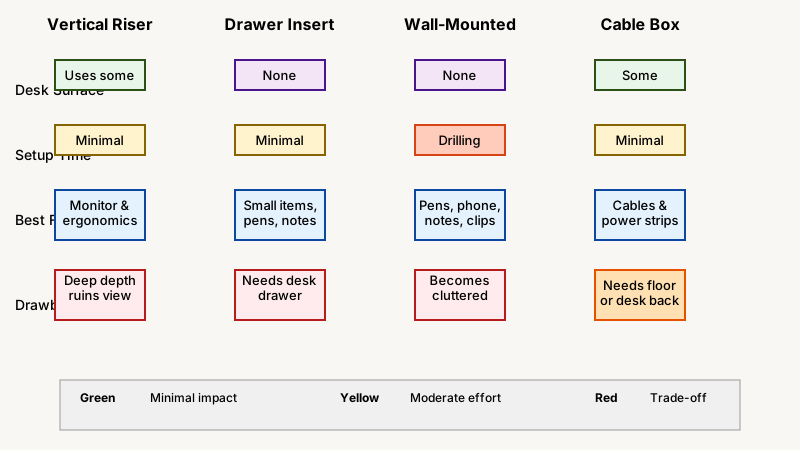
If you only buy one thing for a small desk, make it a riser. A good monitor riser or desk shelf adds a second surface above your keyboard or notepad area, where you can store a small plant, a to-do notebook, or a wireless charger — while the space underneath holds your keyboard, cables, or a laptop stand.
FITUEYES Monitor Stand Riser is a reliable pick here: it’s a clean, understated bamboo shelf that raises a monitor to ergonomic height while creating a narrow but usable lower shelf. The footprint matches a standard monitor, so it doesn’t eat more space than it gives back.
For a more modular approach, the SimpleHouseware Mesh Desk Organizer (the 3-tier version with file slots on the side) is a narrow tower that keeps papers, folders, sticky notes, and pens sorted vertically. It’s metal mesh, so it doesn’t feel as premium as bamboo, but the open design makes contents visible at a glance without hunting.
Watch out for: riser shelves with a deep footprint (over 10 inches front-to-back). On a small desk, they can push your monitor too far back, ruining your viewing angle.
Drawer Inserts and Desktop Trays
If you have even one shallow desk drawer, a properly sized insert will do more for your workflow than almost anything else. Most people shove items into drawers without dividers and then lose everything. A simple bamboo or plastic grid insert (brands like Bambüsi or Lipper International sell these) cuts that drawer into defined zones — one for pens, one for sticky notes, one for small cables, one for receipts or stamps.
For desks with no drawers at all, a shallow desktop tray — roughly 10 × 6 inches — acts as a controlled landing zone. The Poppin Accessory Tray is a good example: low-profile, available in several neutral colors, and sized precisely so it doesn’t dominate a small surface.
A single tray beats a pile, but only if you enforce a rule: if it doesn’t fit in the tray, it leaves the desk. Without that discipline, the tray just becomes the center of a larger pile.

Wall-Mounted and Pegboard Systems
For truly minimal desks — less than 48 inches wide — getting organizers off the desk surface entirely is the highest-leverage move. A small pegboard panel mounted above your desk at eye level can hold:
- A pen cup on a hook
- A small shelf for your phone or a notebook
- A magnetic strip for scissors, a USB hub, or a charging cable clip
- A calendar or whiteboard panel
IKEA’s SKÅDIS pegboard (available in 22 × 22 cm and larger) was designed exactly for this. The accessory ecosystem is wide, affordable, and you can rearrange it as your needs change. Installation requires two wall anchors — manageable even in a rented room if you patch on the way out.
For renters who can’t drill, a Command Strip mounted small shelf (3M Command Large Utility Hook strips support up to about 7.5 lbs each) can hold a narrow floating shelf above the desk. It’s not as flexible as pegboard, but it moves supplies off the surface permanently.
The honest downside to pegboard: it looks great in setup photos and becomes disorganized slowly, item by item, until it’s as cluttered as the desk it replaced. Budget 10 minutes once a month to reset it.
Cable Management Solutions
Cables are the silent enemy of a small workspace. A desk that’s physically clean can still feel chaotic if three cords are snaking around the surface. A few targeted fixes:
- Cable clips with adhesive backs (Velcro’s One-Wrap ties or the OHill adhesive clips) route charging cables along the desk edge and off the surface.
- A cable management box like the D-Line or Bluelounge CableBox sits on the floor or back of the desk and swallows a power strip plus excess cord length. Surprisingly effective at making a small space feel cleaner.
- A USB hub with a short cable replaces the hydra of individual charger bricks spread across a power strip. Anker’s desktop hubs are consistently reliable and keep one cord where there used to be five.
None of these are glamorous, but cable chaos is the fastest way for a tidy desk to look messy again within a week.
If cords are still piling up behind your monitor, our deep dive How to Organize Cables Behind a Desk: Audit First, Then Tame It walks through a full audit-and-fix process.
Multi-Functional Organizers Worth Considering
Some of the most useful products for small desks do two things at once:
- Wireless charging pads with a pen slot and phone stand (brands like Yootech and Twelve South make versions of this) save space by collapsing three items into one.
- Monitor arms with a built-in cable channel and USB pass-through free up the desk from a monitor stand entirely, making the entire surface available — at the cost of drilling or clamping the arm to the desk edge.
- Standing desk converter trays with a small shelf built into the back work for people who need to shift between sitting and standing but can’t justify a full height-adjustable desk. They occupy the whole desk surface but consolidate everything into one unit.
The tradeoff with multi-functional products: if you stop using one function, you’ve committed your space to something that’s now only half useful. Think about whether you’ll genuinely use the secondary feature before committing.

How to Choose: A Practical Framework
Before buying anything, answer these three questions:
- What is actually on your desk right now? Do a quick inventory: laptop or monitor, peripheral devices, writing tools, paper, snacks, phone? Your organizer should solve your specific mess, not a generic one.
- Can you go vertical, wall-mounted, or under-desk? Prioritize solutions that expand your usable space rather than just rearranging what’s already on the surface.
- Do you have drawers? If yes, fill them with inserts first — it’s the cheapest and most effective storage upgrade available.
Avoid buying organizers purely based on aesthetics. A beautiful bamboo tower that holds items you don’t actually use daily wastes desk real estate. Every piece of desk furniture should earn its spot.
Frequently Asked Questions
What’s the single best desk organizer for a very small desk under 36 inches wide?
A vertical monitor riser with built-in storage underneath, combined with cable clips along the desk edge. Together these clear the surface and maximize vertical space without any wall drilling.
Are bamboo organizers better than plastic or metal mesh?
Not categorically. Bamboo looks warm and tends to be durable, but metal mesh lets you see contents at a glance and often holds more weight. Plastic is lightest and cheapest. The best material is whatever suits your environment — metal rusts near damp areas, bamboo can warp in very humid rooms.
How do I keep a desk organizer from becoming clutter itself?
Every slot or compartment needs an assigned item, and that item needs to be used regularly enough to justify the space. If a compartment sits half-empty or holds random overflow, the organizer is too large or not the right shape for your actual needs.
Can desk organizers work in a shared workspace or hotdesking situation?
Yes, but differently. In a shared desk environment, a compact carry-all pouch or a handled caddy that you bring with you daily is more practical than a fixed organizer. The Poppin Everything Pencil Pouch or a simple fabric tool roll works well here.
Is a pegboard worth it for a home office with limited wall space?
Often yes, even for a small panel. A 22 × 22 cm SKÅDIS board costs under $30 and can hold enough accessories to meaningfully free up a small desk surface. The key is pairing it with the right accessories (shelves, not just hooks) and committing to keeping it organized rather than treating it as extra hanging space.