How to Make a Small Room Look Bigger: Light, Color, And Tone Tricks

Small rooms have a way of feeling like they’re closing in on you — especially when the furniture is wrong, the colors are off, or the light is fighting you. The good news is that making a small room look bigger is mostly a matter of deliberate choices rather than expensive renovations. This guide cuts straight to what actually works, with specific techniques used by interior designers and backed by how our eyes perceive space.
Start With Light: Color, Paint, and Tone
Color is the single most powerful tool you have, and it costs relatively little. The classic advice — paint small rooms white — is partly right, but the full picture is more nuanced.
Go Light, But Not Necessarily Bright White
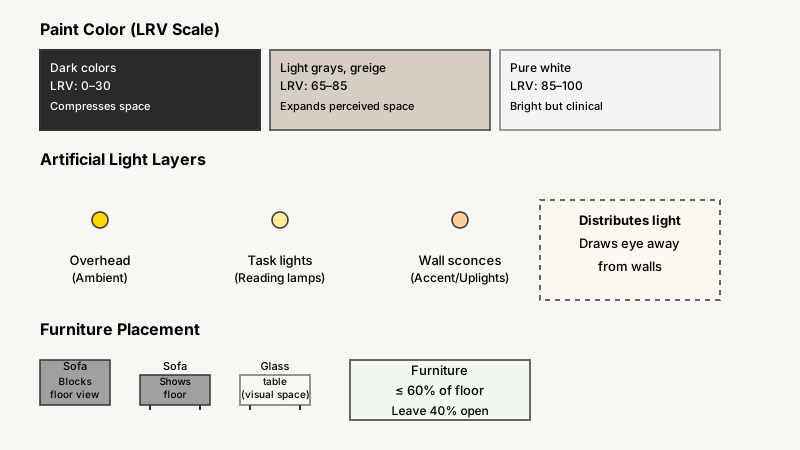
Pure white walls can look stark and clinical. Soft whites, pale warm grays, greige (a gray-beige hybrid), and light sage greens all reflect light without creating that hospital feeling. The key metric here is Light Reflectance Value (LRV): the higher the number (on a scale of 0–100), the more light a paint color bounces back. For a small room, aim for colors with an LRV above 65.
Painting the ceiling in the same color as the walls — or just a shade lighter — blurs the boundary between wall and ceiling, which makes the room feel taller. Designers sometimes call this the “enveloping” technique, and it’s particularly effective in rooms with low ceilings.
Use a Single Color Scheme Throughout
Contrasting colors — a dark accent wall against three light ones — can create focal points, but they also chop the room into visual segments. In a small space, a monochromatic or analogous color scheme lets the eye travel uninterrupted, which reads as spaciousness.

Don’t Forget the Floor
Light-colored flooring (pale wood, light stone, or even a large light-toned rug) continues the visual expansion downward. Dark floors can anchor a large room beautifully, but in a small space they often make the footprint feel even more compressed.
Light Sources: Natural and Artificial
Paint sets the canvas, but light is what activates it. A poorly lit small room will feel cramped regardless of wall color.
Maximize Natural Light
- Ditch heavy drapes. Replace thick curtains with sheer panels, linen, or roller blinds that let daylight through while still offering privacy. Heavy fabric absorbs light; sheer fabric diffuses it.
- Hang curtains high and wide. Mount the curtain rod as close to the ceiling as possible and extend it 6–12 inches beyond each side of the window frame. This makes the window appear larger and floods the room with more perceived light even when the curtains are drawn back.
- Use mirrors strategically. A large mirror positioned opposite or adjacent to a window reflects the outdoor view and essentially doubles the perceived depth of the room. Interior designers frequently place a full-length or oversized mirror on the wall facing the primary light source. Avoid clustering many small mirrors — one or two large ones outperform a gallery of small frames.
Layer Your Artificial Lighting
A single overhead light fixture casts flat illumination that highlights the room’s boundaries. Layered lighting — a combination of ambient (overhead), task (reading lamp, under-shelf lighting), and accent (wall sconces, LED strip lighting inside shelves) — distributes light through the room and draws the eye to different zones rather than to the walls themselves.
Wall sconces and uplights are especially useful: they pull attention upward, making ceilings feel higher.

Furniture: Size, Placement, and Negative Space
Furniture choices can make or break a small room — and oversized, poorly placed pieces are the most common mistake people make.
Choose Furniture With Legs (or Visual Transparency)
Furniture that sits flush to the floor creates a visual wall of solid material. Pieces raised on legs — whether a sofa, bed frame, or side table — allow the eye to see through to the floor beneath, which creates the impression of a continuous, uninterrupted surface. The more floor you can see, the bigger the room appears.
Glass and acrylic furniture take this further: a transparent coffee table, for instance, takes up physical space but almost no visual space. This isn’t just a design trend — it’s a functional optical illusion.
Right-Size Your Pieces
Not everything needs to be tiny — in fact, one large statement piece often works better than several small ones fighting for attention. The real goal is to avoid overfilling the room. A common rule of thumb: furniture should occupy no more than 60% of the floor area, leaving the rest as open walkway and breathing room.
In a small bedroom, a platform bed or a bed with built-in storage can replace a bulky bed frame plus a separate dresser, freeing significant floor space.
Multifunctional Furniture Is Non-Negotiable
When space is tight, every piece should ideally do two jobs:
- Ottoman with storage instead of a coffee table
- Murphy bed or sofa bed for a guest room that doubles as a study
- Dining table with drop leaves that folds down when not in use
- Bench at the foot of the bed that opens for blanket storage
Built-in shelving is one of the smartest investments in a small room — it uses wall space instead of floor space, keeps storage contained, and can be painted to match the walls so it visually disappears.
If you’re carving out a dedicated corner for reading in your small space, How to Set Up a Cozy Reading Nook: Choosing Your Spot Before Furniture walks through how to choose the right spot before committing to any furniture.
If your small space challenges extend to the kitchen, 12 Ways to Make a Small Kitchen More Functional offers targeted strategies for making that room work harder too.
Push Furniture to the Walls (Carefully)
Conventional wisdom says push everything to the walls to free up floor space, but floating a sofa a few inches away from the wall can actually make a room feel larger because it suggests the room extends beyond the furniture. Test both arrangements if you can — the right answer depends on the room’s proportions.
Visual Tricks That Designers Actually Use
Vertical Lines Draw the Eye Upward
Vertical stripes — whether in wallpaper, tile, artwork arrangement, or even tall narrow bookshelves — draw the gaze upward and make ceilings feel higher. This is why floor-to-ceiling curtains or bookcases that reach the ceiling are consistently recommended for small rooms: they use height to counteract the sense of limited floor space.
Rugs That Are Too Small Make a Room Feel Smaller
This is one of the most common decorating mistakes. A rug that’s too small creates isolated islands of furniture floating on an expanse of floor — which fragments the room and makes it feel cluttered. In a small living room, choose a rug large enough that all the key furniture legs sit on it, or at least the front legs do. A correctly sized rug unifies the seating area and makes the overall space feel more cohesive and larger.
Declutter Aggressively
No paint color or furniture arrangement can overcome visual clutter. Studies in environmental psychology consistently show that cluttered spaces are rated as smaller and more stressful than orderly ones. In a small room, every surface object competes for attention and contributes to a sense of compression. Built-in storage, closed cabinetry, and drawer organizers do more for perceived space than almost any other intervention.
Try Diagonal Flooring or Diagonal Furniture Arrangement
Placing floor tiles at a 45-degree angle, or angling a rug diagonally, creates longer sightlines across the room — which reads as more square footage. It’s a subtle effect but noticeable enough that designers use it regularly in narrow rooms and corridors.

Mirror Tiles or Mirrored Furniture
Mirrored side tables, mirrored wardrobe doors, or even a slim strip of mirror tiles along one wall amplify light and create the impression of depth. In small hallways, a full-length mirror on a side wall is often the single most impactful change you can make.
Practical Checklist Before You Start
Before spending money, run through this sequence:
- Declutter first. Removing unnecessary objects costs nothing and often reveals the room has more space than you thought.
- Test paint samples on cardboard before committing — tape them to the wall and observe how they look at different times of day.
- Measure before buying furniture. Map out the room on graph paper or use a free app like Planner 5D or IKEA Place to see how pieces fit before they arrive.
- Audit your lighting. Walk through the room at night and identify dark corners. Adding a floor lamp or LED shelf lighting is usually cheap and has an immediate impact.
- Reassess window treatments. If your curtains are dark, heavy, or hung too low, this is the easiest quick win.
If the small room in question is your bedroom, How to Make Your Bedroom More Relaxing: 12 Practical Changes offers more ideas for turning it into a calmer, more livable space.
Conclusion
Making a small room look bigger comes down to a few consistent principles: more light, less visual clutter, furniture with presence but not bulk, and colors that keep the eye moving rather than stopping at the walls. None of these changes require structural work. Even targeting just two or three of the tips here — higher curtain rods, a large mirror, and better layered lighting — will produce a noticeable difference in how the room feels.
Start with what you can change this weekend and build from there. Small rooms, done right, can feel purposeful and even cozy rather than cramped.