Teaching Kids to Tidy Their Own Room — for Real

Getting a child to clean their room without a battle — and then keep it that way without constant reminders — is one of those parenting challenges that sounds simple but usually isn’t. The goal isn’t just a tidy floor on one Saturday morning; it’s a kid who can manage their own space independently. That shift requires a different approach than most parents instinctively try.
Why Kids Struggle to Tidy (and Why Nagging Doesn’t Fix It)
The first thing worth understanding is that most kids aren’t being defiant when they leave their room in chaos. They genuinely don’t know where to start. An adult sees a messy room and quickly prioritizes: pick up clothes first, then toys, then surfaces. A child often sees an undifferentiated wall of mess with no clear entry point. Overwhelm is the default setting.
Nagging produces the behavior exactly once — while you’re watching — and then produces resistance the next time. What actually builds the habit is breaking the task into pieces small enough that the child can succeed without supervision.
There are also developmental realities to keep in mind. A five-year-old cannot be expected to organize by category the way a ten-year-old can. Expecting adult-level tidying from a young child sets everyone up for frustration. The job, realistically sized for the child’s age, is the foundation.
Age-by-Age Expectations: What’s Actually Realistic
Skipping over this step is where most room-tidying plans fall apart. Expecting too much creates learned helplessness; expecting too little means the skill never develops. Here’s a rough framework — exact readiness always varies by child:
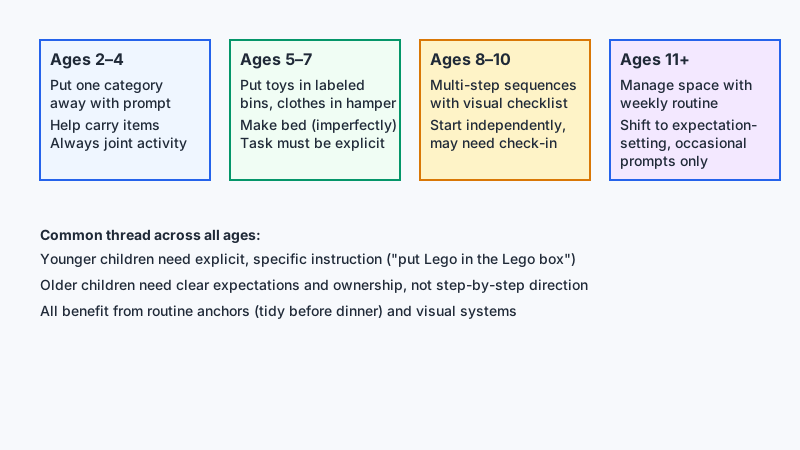
Ages 2–4: These children can put one category of toy away with a direct prompt (“cars go in the blue bin”) and can help carry items to the right place. Tidying is always a joint activity at this stage. Aim for one specific task, completed together.
Ages 5–7: Kids can put toys away into labeled bins, put dirty clothes in a hamper, and make a bed (imperfectly — that’s fine). They still need the task named explicitly. “Clean your room” is too vague; “put all the Lego pieces in the Lego box” is a task they can execute.
Ages 8–10: Children can handle multi-step tidying sequences with a visual checklist. They can put away books, clear surfaces, and sort items into broad categories. They can start a tidy session independently but may still need a check-in to see it through.
Ages 11 and up: Preteens can manage their space with a weekly routine and occasional prompts. The conversation shifts from instruction to expectation-setting — agreeing on what “tidy” means by Friday, then leaving them to figure out how.
Setting Up the Room So Tidying Is Actually Possible
A room that is hard to tidy will never stay tidy, no matter how motivated the child is. Before teaching the habit, look at the physical setup.
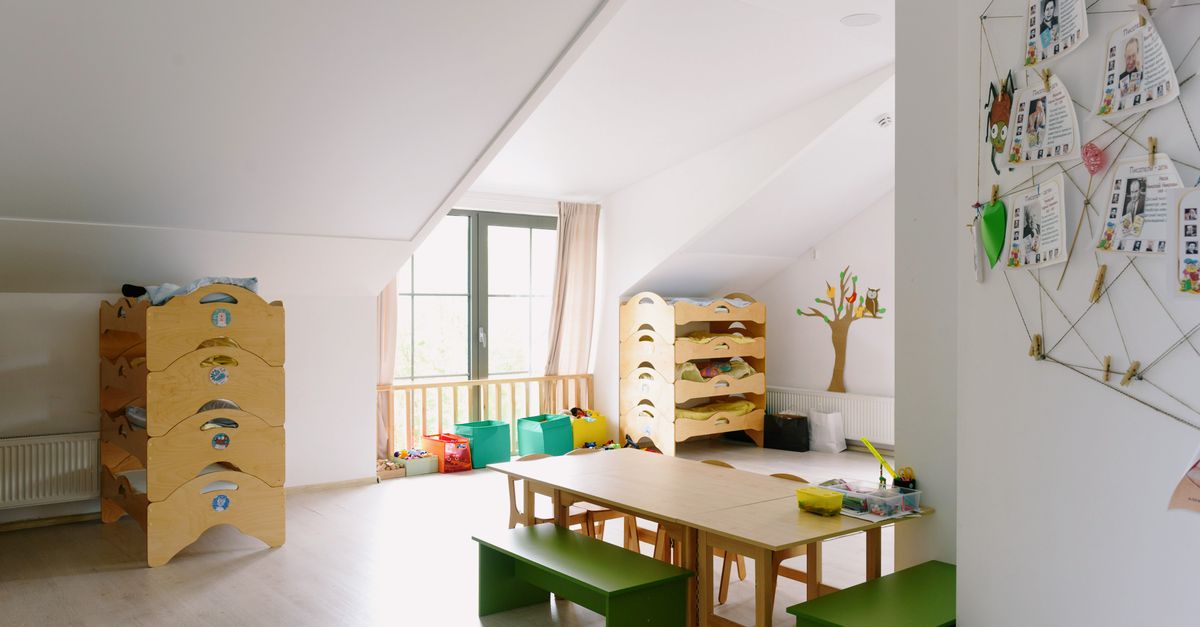
Storage should be reachable. If the bin where toys belong requires pulling a stool out and reaching up, it won’t be used. Low, open bins and shelves at child height are dramatically more effective than tall furniture or deep drawers.
Each category needs a home. A common source of clutter is items that have no assigned place. When a child doesn’t know where something goes, it lands on the floor. Go through the room together and make sure every major category — books, stuffed animals, craft supplies, small toys — has a specific, obvious location.
Own less. This one is uncomfortable, but rooms with fewer objects are genuinely easier to maintain. A child who has 200 toys cannot develop the same relationship with their space as one who has 40. Regular decluttering (done with the child, not to them) keeps the maintenance load manageable.
Label storage visually. For children who can’t yet read fluently, stick a photograph or drawn picture of the contents on the front of each bin. Even for older kids, a label removes the decision-making step (“where does this go?”) and replaces it with a simple match.
If the clutter problem extends beyond your kid’s room to the rest of the house, How to Declutter Your Home Step by Step (That Actually Works) offers a broader system worth borrowing from.
Teaching the Skill: A Step-by-Step Approach
Once the room is set up for success, the actual teaching can begin. This isn’t a one-time lesson; it’s closer to an apprenticeship.
Start by doing it with them. The first several tidying sessions should be side by side. Narrate what you’re doing and why: “I’m picking up all the soft things first because I can do that fast.” Show the decision process out loud. Children learn tidying strategies by watching an adult make the invisible visible.
Introduce one routine anchor. Pick one recurring moment — before dinner, before screen time, before bed — when tidying happens. Consistency matters more than frequency at the beginning. A five-minute tidy every day before dinner builds the habit faster than a 30-minute session once a week.
Use a visual checklist. Write or draw a simple sequence: dirty clothes in hamper → books on shelf → toys in bins → floor clear. Post it where the child can see it. Checklists shift the authority from parent to system — the child isn’t obeying you, they’re following a routine they can verify for themselves.
Gradually remove yourself. After several sessions together, try being nearby but not active (sit on the bed, respond to questions). Then try being in the next room. Then try simply saying “it’s tidy time” and walking away. Each step back should come only when the previous level is reliable.
Acknowledge the effort, not just the result. “You figured out where to put all those pieces” lands better than “your room looks nice,” because it reinforces the skill — the decision-making — not the outcome.
When It Isn’t Working: Common Failure Modes
Even with a solid setup and a clear routine, there are predictable sticking points.
The room gets tidy once, then drifts back. This is normal. The tidy-once problem usually means the routine isn’t anchored to anything consistent. Reassess the trigger — is the prompt reliable, or does it vary day to day?
The child does a rush job and calls it done. Rather than criticizing, be specific: “I can still see Lego on the floor by the desk.” Then let them finish. Avoid taking over — that signals that their attempt wasn’t valid.
Tidying always requires a parent present. If the child can’t start without you, the issue is almost always setup: the task is still too large or too vague. Break it down further. Reduce the number of items. Simplify the storage.
Conflict about what counts as tidy. Agree on a shared definition in advance, ideally when no one is annoyed. “Clear floor, clothes in hamper, no cups or plates” is clearer than “tidy.” Write it down or photograph a tidy version of the room as a reference.

Keeping the Skill Alive: Habits Over Incentives
Chore charts and reward stickers can jump-start motivation, but they rarely build durable habits. Once the external reward disappears, so does the behavior. What lasts is when tidying becomes simply part of how time is structured in the house — a given, like eating dinner.
The most durable setup is a brief daily reset (five to ten minutes) plus a slightly more thorough weekly session. By the time a child is eight or nine, the daily reset should need little to no prompting; the weekly one may still need a reminder but should not need supervision.
What actually sustains the habit long-term is a child who has internalized some ownership of their space — who minds when it gets chaotic, not just when a parent does. That takes longer to develop than the skill itself, and it can’t be rushed. It tends to emerge naturally when children have been given genuine agency over their space: allowed to arrange it how they like, consulted before reorganizing, and trusted to maintain it on their terms within the family’s basic expectations.
When closet chaos keeps undoing your child’s progress, How to Organize a Small Closet: Purge First, Then Map The Space walks through purging and mapping the space so everything actually has a home.
Frequently Asked Questions
At what age should a child be able to tidy their room independently?
Most children can manage a simple tidy session without step-by-step supervision by around age 8, though this varies considerably. “Independently” at 8 means following a checklist and completing the task with a check-in at the end — not the same independence an 11-year-old is capable of. Readiness depends on how the skill has been taught and how the room is set up, not just age.
Should I pay my child for tidying their room?
Paying for room tidying is one tool, not a universal answer. Evidence on children’s motivation suggests that external rewards can crowd out internal motivation over time, especially for tasks the child was beginning to do voluntarily. Linking tidying to pocket money can work short-term but may make it harder to withdraw the incentive later without a fight. A safer approach: use a reward to get the habit started, then phase it out gradually once the routine is established.
What if my child has ADHD or executive function challenges?
Children with attention or executive function difficulties often need smaller steps, more concrete prompts, and a simpler physical environment than their peers. Breaking the task into a three-step maximum, using visual timers to create a defined end point, and reducing the total volume of items in the room can all help. Some children benefit from tidying with a parent present for longer than neurotypical timelines suggest — that’s fine and expected, not a setback.
How messy is “too messy” to ignore?
A baseline worth setting with children: dirty dishes and food wrappers don’t stay in the room (health and pests), dirty laundry goes in the hamper, and the floor stays clear enough to walk safely. Beyond that, some clutter is normal and the bar for “acceptable” can reasonably differ between families. Giving children some control over the aesthetic of their space — within agreed limits — tends to increase their investment in maintaining it.
How do I stop the tidy room from reverting to chaos within a day?
Reversion is usually a volume problem or a routine problem, or both. If the room has more items than its storage can hold, it will look messy even after a thorough tidy because there’s no physical space for everything. Solve that first with a declutter. Then check whether the daily reset habit is in place — a brief tidy every day prevents the gradual drift that makes a Saturday clean-up feel overwhelming again.