Best Food Storage Containers for a Tidy Fridge

Why the Right Container Changes Everything
A disorganized fridge isn’t usually a space problem — it’s a container problem. Mismatched lids, round tubs that don’t stack, flimsy bags that collapse the moment you stack something on top: these are the real culprits behind food that gets buried, forgotten, and eventually tossed. The right storage containers don’t just hold food; they let you see it, stack it predictably, and actually use what you bought.
This guide breaks down the best container types by material, shape, and use case, so you can build a system that actually holds together — no identical sets required.

Glass vs. Plastic vs. Silicone: Picking Your Material
Glass
Glass containers have a few real advantages over plastic: they don’t absorb odors or stains, they go straight from fridge to oven or microwave (check the lid first — most plastic lids aren’t oven-safe), and they’re easy to sanitize. Borosilicate glass handles thermal shock better than standard soda-lime glass, so it’s worth checking what you’re buying if you plan to move containers between the freezer and oven.
The downside is weight and fragility. If you have a packed fridge with frequent grabbing and shuffling, glass will get chipped or cracked over time. Brands like Pyrex and OXO Good Grips make glass rectangles with locking lids that stack reliably and are widely available.
Plastic
Plastic containers dominate because they’re lightweight, affordable, and nearly impossible to break. The main concern is durability over time: cheaper plastics can warp in the dishwasher, which destroys the seal and the stackability both. Look for containers labeled BPA-free and dishwasher-safe on the top rack. Rubbermaid Brilliance is a standout in this category — the lids are crystal clear, latch firmly, and the rectangular shape tiles a shelf without gaps. Snapware Total Solution is another solid choice if you want containers that double for dry goods.
One trade-off worth knowing: plastic does eventually absorb pigment from tomato-based sauces or turmeric, even when labeled stain-resistant. This doesn’t affect food safety, but it does affect aesthetics over a year or two.
Silicone
Collapsible silicone bags and containers are genuinely useful for odd-shaped portions, sous vide prep, or freezer storage where rigid walls take up too much space. Stasher bags, for instance, seal tightly enough for marinating and collapse flat when empty. The limitation is that floppy containers don’t stack with any reliability — they’re a supplement to a system, not the backbone of one.
| Material | Weight & Breakage | Odor/Stain Absorption | Oven & Microwave Safe | Stackability | Best For |
|---|---|---|---|---|---|
| Glass (borosilicate) | Heavy; chips/cracks over time with frequent handling | None; odor- and stain-resistant | Yes, lids usually not | Reliable with locking lids | Meal prep, reheating, long-term storage |
| Plastic (BPA-free) | Lightweight; nearly unbreakable | Absorbs pigment from tomato sauce and turmeric over 1–2 years | Top-rack dishwasher only; lids not oven-safe | Excellent when new; warping destroys seal and stackability | Affordability, durability, dry goods and liquids |
| Silicone (collapsible bags) | Lightweight; durable | None | Heat-safe; seal tight for sous vide | Poor; floppy containers don’t stack reliably | Odd-shaped portions, freezer space-saving, marinating |
The Shape Question: Rectangles Rule
Round containers waste the corners of every shelf. Rectangular and square containers tile together without gaps, which means you can fit more food in the same linear space. This is the single most practical upgrade many people can make: swap your mismatched round tubs for a matching rectangular set and watch an entire shelf open up.
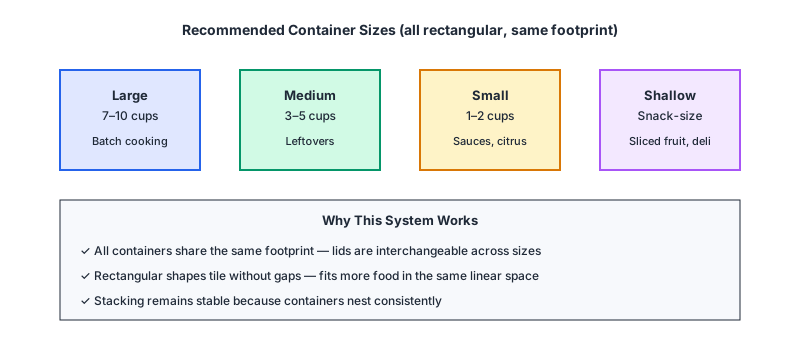
Nested sets matter here. A good system has three or four sizes — a large (roughly 7–10 cups) for batch cooking, a medium (3–5 cups) for leftovers, a small (1–2 cups) for sauces and cut citrus, and a shallow snack-size for sliced fruit or deli meat — that all share the same footprint so lids are interchangeable and stacking is stable.

Specific Use Cases: What to Actually Buy
For Meal Prep and Batch Cooking
Locking lids are essential when you’re transporting food or stacking full containers. Look for four-sided latch mechanisms rather than single-snap lids, which tend to pop open under the weight of containers stacked above them. Glass here has a real advantage: you can portion meals, refrigerate, and reheat in the same vessel without transferring.
OXO Good Grips Smart Seal glass containers are worth highlighting — the lids have a pressure-release button that creates an airtight seal without wrestling with stiff latches.
For Produce
Produce storage is its own sub-category. Airtight seals are actually the wrong choice for most vegetables: leafy greens and herbs need some airflow to avoid rotting prematurely. Produce-specific containers like the OXO GreenSaver or Oxo’s crisper container use a charcoal filter and an adjustable vent to manage humidity and ethylene gas — the gas that causes ripening and eventually spoilage. Whether these extend produce life dramatically varies by vegetable and how full the drawer is, but they do address the right problem (humidity control) rather than just sealing tight.
For herbs specifically, storing them upright in a small jar of water and covering loosely with a bag often outperforms any specialized container.
If you want to extend freshness even further before food ever reaches the fridge, our guide to Root Cellar Storage: How to Preserve Fresh Vegetables covers how root vegetables and other produce can be kept fresh without any container at all.
For Soups, Stocks, and Liquids
For liquids, the lid seal quality matters far more than it does for solids. Thin snap-lids will leak if tipped. Rubbermaid Brilliance and the Lock & Lock series both have strong reputations for liquid-tight seals. Wide-mouth containers are easier to fill and clean. Don’t overfill containers going into the freezer — liquids expand, and a cracked container at the bottom of your freezer is a mess worth avoiding.
For Cheese, Deli Meats, and Flat Items
Shallow rectangular containers — often labeled “deli” or “cold cut” containers — are the right tool for sliced items that get stacked and unwrapped. They prevent the curling and drying that happens when deli meat is left loosely wrapped. For hard cheese, a dedicated cheese box with adjustable humidity (like the Formaticum cheese storage box) is worth the investment if you buy cheese regularly; otherwise a tightly sealed plastic container beats a loose wrap every time.
Once your flat items are properly stored, the next step in a well-run kitchen is knowing which surface to prep them on, a topic covered in Cutting Boards for Every Food Type: How to Choose and Use Them Right.
Labels, Zones, and Habits That Make Containers Work
The best container system in the world still fails if you don’t know what’s inside or when it was stored. A roll of painter’s tape and a marker is genuinely all you need to date and label every container. Masking tape comes off cleanly from glass and most plastics without leaving residue.
Zoning your fridge by category — a shelf for leftovers, a shelf for meal-prepped ingredients, a door for condiments — and keeping like containers in a dedicated stack removes the decision fatigue that leads to containers scattered everywhere.
Keep a small stack of empty lids-on containers at the front of a shelf. That visual signal — open space, ready containers — makes it easy to store food properly in the moment instead of defaulting to plastic wrap.

Frequently Asked Questions
Are airtight containers always better?
Not for everything. Most vegetables need some airflow to stay fresh — completely airtight seals trap ethylene gas and humidity, which accelerates spoilage for leafy greens and herbs. Airtight seals are ideal for cooked food, liquids, cut fruit, cheese, and anything you want to protect from absorbing fridge odors.
How long can cooked food safely stay in the fridge?
Most cooked leftovers are safe for 3 to 4 days in the refrigerator at or below 40°F (4°C). After that, quality and safety both decline. Dating your containers when you store food makes this easy to track rather than guess.
Can I put hot food directly into glass containers?
Tempered glass (like Pyrex) can generally handle moderate temperature changes, but pouring boiling liquid into a cold glass container or putting a hot container directly on a cold surface is a risk — thermal shock can crack even tempered glass. Let food cool for 10–20 minutes before sealing and refrigerating.
Do I need a matching set, or can I mix and match?
Matching sets make stacking and lid-finding dramatically easier, but you don’t need to replace everything at once. Start with one rectangular set in two or three sizes — ideally from a brand where the lids are interchangeable across sizes — and add to it over time. The stackability gain alone is worth the initial investment.
Is it safe to freeze food in plastic containers?
Most containers labeled “freezer-safe” can handle freezer temperatures without cracking. Avoid thin-walled takeout containers and anything that already warps in the dishwasher — those materials are too brittle at freezer temperatures. Leave headspace for liquids, and avoid overpacking to prevent cracked lids.
Building a System That Lasts
The goal isn’t a perfectly color-coded fridge Instagram post — it’s a fridge where nothing gets lost, nothing dries out, and you actually use what you store. That usually means committing to one rectangular set you trust, adding one set of produce-specific containers for your crisper drawer, and keeping a few glass containers for anything that needs to go from fridge to oven. Everything else is optional.
Simple, consistent, predictable. That’s what makes a tidy fridge stay tidy.