How to Store Cooked Grains and Keep Them Perfectly Textured

Cooked grains are one of the most practical things you can batch-prep for the week — until they turn into a gummy, clumped brick in your refrigerator. The fix isn’t complicated, but it does depend on doing a few specific things right at the point of cooking and just before storage. This guide covers each major grain type individually, because rice, farro, quinoa, and oats all behave differently once they cool.
Why Texture Degrades in the First Place
Starch is the culprit. When grains cook, their starch granules absorb water and swell — a process called gelatinization. As they cool, those same granules partially recrystallize in a process food scientists call retrogradation. The result is grains that feel harder, drier, or stickier than when they came off the stove.
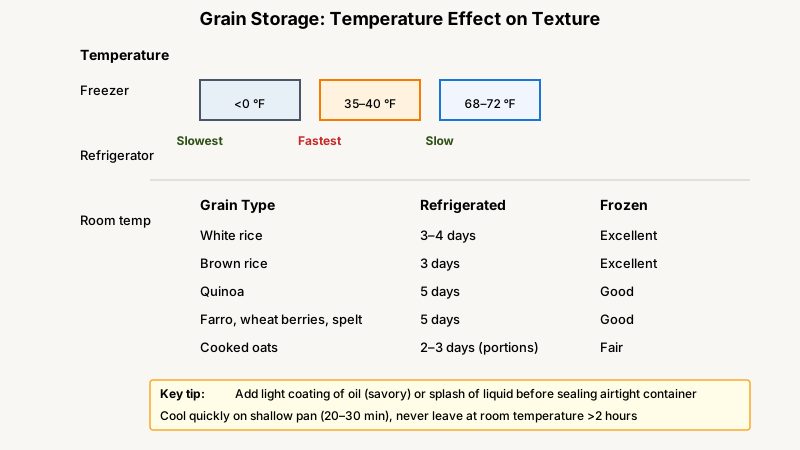
Retrogradation happens fastest at refrigerator temperatures (roughly 35–40 °F / 2–4 °C) and slowest either just above freezing or well above room temperature — which is part of why grains stored in the freezer often reheat closer to their original texture than grains kept in the fridge for several days. Moisture loss compounds the problem: uncovered or loosely covered grains dry out at the surface while the interior stays damp, creating an uneven, pasty texture.
Knowing this changes how you store. The goal is to slow retrogradation and seal in moisture, not just shove leftovers into any container.

The Core Steps That Apply to Every Grain
Cool Quickly, But Not on the Counter for Too Long
Don’t leave cooked grains at room temperature for more than two hours — that’s the standard food-safety window for cooked starchy foods before bacterial growth becomes a real concern. Spread them in a thin layer on a rimmed baking sheet if you need to speed up cooling; a thin layer loses heat in 20–30 minutes instead of the 90+ minutes it takes for a dense pot. Once they’re no longer steaming, transfer them.
Seal Moisture In
Airtight containers are non-negotiable. A loose lid, plastic wrap draped over a bowl, or a poorly fitting deli container lets moisture evaporate overnight. Wide, shallow containers (rather than tall, narrow ones) also help you reheat more evenly later.
Add a Tiny Bit of Fat or Liquid Before Sealing
For grains you plan to use in savory dishes — rice, farro, barley, millet — toss them lightly with a teaspoon of neutral oil per cup before sealing. The thin coating slows surface drying and prevents individual grains from fusing together as starches recrystallize. For sweet applications like overnight oats, a splash of milk or a spoonful of yogurt does the same job.
Label and Date Everything
This sounds obvious, but after day three you will not remember whether that container is farro or barley, or whether it was cooked Monday or Thursday.
Grain-by-Grain Storage Guide
White and Brown Rice
White rice keeps reasonably well for 3–4 days refrigerated in an airtight container. Brown rice has a shorter window — its bran layer contains oils that can go rancid — so aim to use it within 3 days. Both reheat best with a splash of water (about a tablespoon per cup of rice) before microwaving, covered, on medium power. The added moisture re-gelatinizes the starch surface just enough to restore a recognizable texture.
For longer storage, rice freezes beautifully. Spread cooled rice in a single layer on a lined sheet pan, freeze until just solid (about an hour), then transfer to zip-seal bags with the air pressed out. Frozen rice reheats from frozen in the microwave in 2–3 minutes and often tastes closer to freshly cooked than 4-day-old refrigerated rice does.
Quinoa
Quinoa holds its texture better than most grains through the week — its protein-rich outer layer gives it structural resilience that pure-starch grains lack. Refrigerated, it stays good for 5 days. No added fat is strictly necessary, but a very light toss in oil prevents the seeds from clumping. Unlike rice, quinoa doesn’t need extra water when reheating — a quick stir-fry in a dry pan or a brief microwave with the lid slightly ajar is enough.
Farro, Wheat Berries, and Spelt
These chewy whole grains are genuinely forgiving. Their dense, bran-encased kernels don’t absorb and release moisture as readily as refined grains, so they refrigerate well for 5 days with very little texture loss. Store them slightly damp — if the cooking liquid was seasoned, toss the grains in a tablespoon of it before sealing. They reheat evenly in a covered skillet with a few tablespoons of water or stock.
Oats (Cooked Steel-Cut or Rolled)
Cooked oatmeal is uniquely prone to thickening in the fridge because oat starch forms a particularly dense gel as it cools. A full batch can solidify into something resembling a rubber disc. The solution: store individual portions in shallow containers and add a splash of liquid (water, milk, or plant-based milk) before sealing. When reheating, add more liquid and stir every 30–45 seconds — this breaks the gel progressively rather than leaving a cold center.
Steel-cut oats, because their structure is more intact, hold texture better than rolled oats and can last 4–5 days refrigerated.
Millet and Amaranth
These small, fast-cooking grains go from fluffy to rock-hard in the fridge remarkably quickly — often within a day — if stored without added moisture. A light drizzle of oil and a tablespoon of cooking water per cup before sealing, stored in a very shallow layer, keeps them usable for 3 days. For longer storage, freeze them. Both grains also work well repurposed into grain patties or porridge where texture matters less.
Barley (Pearl or Hulled)
Barley is starchy and sticky even when freshly cooked. Refrigerated for 3–4 days, it benefits most from an oil toss before storage and a splash of warm water or stock on reheating. If it gels together completely, don’t panic: it breaks up easily when stirred in a pan over medium heat with liquid added gradually.

Freezing as a Long-Term Strategy
All of the grains above freeze well with one simple technique: freeze flat. Portion cooked grains into zip-seal freezer bags, squeeze out the air, and lay them flat on a shelf until frozen solid. Once frozen, the flat slabs stack compactly and thaw or microwave-reheat much faster than a solid frozen block would.
Expected freezer life for cooked grains is generally 1–3 months for best quality, though they remain safe to eat well beyond that. Texture does degrade slowly even frozen, so using within two months is the practical sweet spot.
Label bags with the grain type, date, and portion size. A cup of cooked grains weighs roughly 150–200 grams depending on the grain, so portioning by weight is more precise than estimating volume after freezing.
Reheating Without Wrecking the Texture
The most common reheating mistake is applying too much heat too fast. Here’s what actually works:
- Microwave: Add 1–2 tablespoons of water per cup of grain, cover with a microwave-safe lid or damp paper towel, heat on medium (not high) in 60-second intervals, stirring between each. High heat drives off moisture before it can be reabsorbed.
- Stovetop: Add grains to a nonstick or stainless pan with a splash of water or stock, cover, heat on low-medium, and stir every minute or two until hot throughout.
- Steam basket: Works especially well for rice — 5 minutes over boiling water revives texture more gently than either of the above options.

If you’re also dealing with produce that wilts fast in the fridge, How to Store Cut Vegetables and Keep Them Fresh offers the same kind of practical fixes for keeping veggies crisp.
Frequently Asked Questions
How long can cooked grains safely stay in the refrigerator?
Most cooked grains are safe for 3–5 days when stored in an airtight container in the refrigerator at or below 40 °F (4 °C). Quinoa, farro, and wheat berries tend toward the 5-day end; millet, white rice, and oats are better used within 3 days.
Why does my cooked rice get hard after one day in the fridge?
Starch retrogradation — the recrystallization of cooked starch — happens especially fast in the refrigerator. Adding a teaspoon of oil before storing and a tablespoon of water before reheating partially reverses this, softening the exterior starch enough to make the texture acceptable.
Can I store different grains together in one container?
You can, though their textures and moisture levels differ, and combining them can cause the softer grain to absorb moisture from the other and turn mushy. Storing separately and mixing only when plating gives you more control.
Is it safe to eat cooked grains that were left out overnight?
No. The USDA recommends discarding cooked starchy foods left at room temperature for more than two hours (one hour if the ambient temperature is above 90 °F / 32 °C). Reheating does not make them safe — it kills bacteria but not the heat-stable toxins some bacteria produce.
Does adding oil before storing change the flavor?
In practical terms, a teaspoon of neutral oil per cup of grain is a small enough amount that it has almost no detectable flavor impact. If you’re storing grains destined for a dessert or sweet dish, use a flavorless oil or skip the oil and compensate with a splash of liquid instead.
The Short Version
Store cooked grains airtight, slightly coated with oil or liquid, in shallow containers — and refrigerate within two hours of cooking. Use them within 3–5 days depending on the grain, or freeze flat for up to two months. Reheat gently with added moisture. The texture won’t be identical to freshly cooked, but it will be close enough that batch-cooking grains is genuinely worth doing.
Once your grains are properly stored, check out Use Up Leftover Cooked Grains All Week Long for creative ways to turn those leftovers into new meals throughout the week.