How to Soften Butter Quickly: Skip The Microwave Meltdown

You pull butter straight from the fridge, and the recipe calls for it at room temperature. The dough won’t wait, and neither will you. Softening butter quickly is one of those small kitchen problems that has surprisingly good solutions — most of which require nothing but tools you already own.
This guide covers seven tested methods, explains why butter temperature actually matters, and tells you which technique works best depending on what you’re making.
Why Butter Temperature Matters in Baking
Butter at room temperature — roughly 65–68°F (18–20°C) — has a specific, creamy texture that cold butter simply can’t replicate. When you cream softened butter with sugar, the fat traps tiny air pockets. Those pockets expand in the oven and create the light, even crumb you want in a layer cake or cookie. Cold butter won’t incorporate air properly; melted butter collapses the structure entirely.
For pastry and pie crust it’s the opposite — you want cold butter to stay in distinct, pea-size pieces that steam and flake during baking. So knowing which state your recipe needs matters before you start.

For most cakes, cookies, frosting, and quick breads, you want butter that:
- Holds its shape but gives easily when pressed with a finger
- Looks slightly glossy, not greasy or translucent
- Spreads without tearing
If your butter looks oily or wet, it has crossed into partially melted territory. That’s a problem you can usually fix by chilling it for 10–15 minutes, but it’s better to avoid it.
7 Ways to Soften Butter Quickly
1. Cut It Into Small Cubes
This is the easiest method and produces the most control. Cut a cold stick of butter into ½-inch cubes, spread them on a plate in a single layer, and leave them at room temperature. The dramatically increased surface area means the butter reaches working temperature in 10–15 minutes instead of the 30–45 minutes a whole stick requires.
This works well for any recipe and requires zero special equipment. If your kitchen is warm (above 75°F), check it at the 10-minute mark to avoid overshooting.
2. The Warm Glass Trick
Fill a drinking glass or bowl with very hot tap water. Let it sit for one minute so the glass itself heats through. Pour out the water, quickly dry the glass, and invert it over a stick of butter sitting on a plate. The trapped heat radiates gently and uniformly around the butter. In about 5–8 minutes, you have perfectly softened butter with zero risk of melting.
This is arguably the most elegant quick method — it’s gentle, requires no electricity, and works remarkably consistently. The main limitation is that you need to fit the glass over the butter, so it works best with a standard rectangular stick.
3. Rolling Pin Method
Place cold butter between two sheets of parchment paper or plastic wrap and beat it a few times with a rolling pin, then roll it out to about ¼-inch thickness. The friction and physical manipulation soften the fat quickly without adding heat. This method is especially useful when you need pliable butter fast and aren’t worried about precise texture.
One practical benefit: if your recipe calls for melted or very soft butter for spreading (like a compound butter rolled in parchment), this method doubles as prep work.
4. Grating Frozen Butter
This sounds counterintuitive, but it works. Grate a frozen or very cold stick of butter on the large holes of a box grater. The thin shreds have enormous surface area and soften to working temperature on the counter in just 4–6 minutes. Some bakers grate cold butter directly into flour when making biscuits or scones, skipping the softening step entirely.
It’s worth noting this method leaves you with shredded rather than block butter — fine for mixing into dough or batter, but not ideal if you need to cream it into a fluffy mass for something like a buttercream frosting.

5. Microwave in Short Bursts
The microwave is the most commonly attempted method and also the easiest to get wrong. The key is power and time control. Use 20–30% power (not full power), and heat the butter in 5-second bursts, rotating the stick between each burst. A full stick of cold butter typically needs 3–4 short bursts total.
The problem with higher power settings is that butter melts from the inside out — the water and fat inside heat faster than the outside, leading to a partially melted stick that looks fine on the surface but is already liquid inside. At low power with short intervals, you can usually avoid this.
If you accidentally melt part of the butter, refrigerate it for 10 minutes, then continue softening at room temperature.
6. Warm Water Bath (Bain-Marie Style)
Place butter — still in its wrapper or in a sealed zip-lock bag — in a bowl of warm (not hot) water, around 85–95°F. Change the water once if it cools down. A full stick softens in about 10 minutes. This method is gentler and more even than the microwave, with a very low risk of accidental melting.
This is a solid option when you have a few minutes and want reliable results without watching a timer obsessively.
7. Heat from Your Hands
For small amounts — a few tablespoons — simply work the butter between your palms for 30–60 seconds. Your body heat is enough to soften a small piece to spreading consistency quickly. This isn’t practical for a full stick or a large baking project, but for buttering a pan or making a fast compound butter, it genuinely works.
Which Method Should You Actually Use?
Here’s a practical breakdown based on your situation:
You have 15+ minutes: Cut into cubes and leave on the counter. Simple, reliable, zero effort.
You have 5–10 minutes and want zero risk of melting: Warm glass trick. This is the most controlled method for precision baking.
You’re making biscuits, scones, or flaky pastry: Grate frozen butter directly into the dry ingredients — you might not need to soften at all.
You have a microwave and need speed: Use 20–30% power in 5-second bursts. Stay attentive.
You’re making frosting or creamed-butter cake batter: Avoid the microwave and grating methods. You want the butter to hold its structure well enough to aerate properly, so the cube method or warm glass trick is better.

Once your butter is perfectly soft, it’s ready to shine on a display like the one described in Flavored Butter Boards: The Complete How-To Guide.
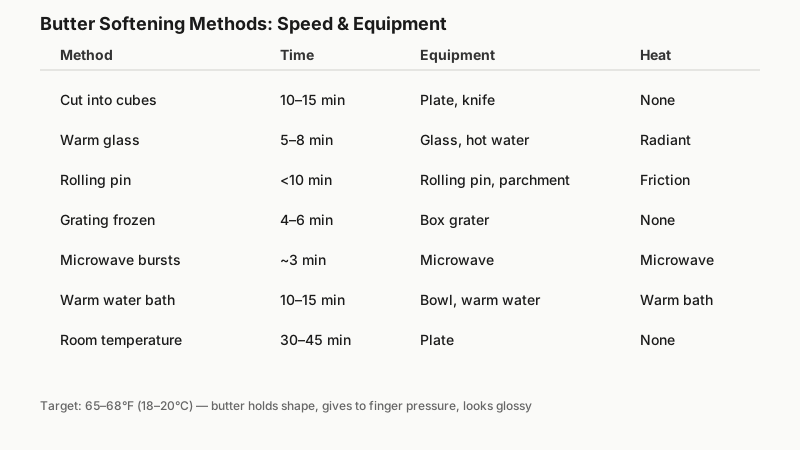
| Method | Time Required | Risk of Over-Softening | Best For | Equipment Needed |
|---|---|---|---|---|
| Cut into cubes | 10–15 minutes | Low | Any recipe; most control | Knife and plate |
| Warm glass trick | 5–8 minutes | Very low | Precise softening; any recipe | Glass or bowl |
| Rolling pin | Variable (5–10 min) | Medium | Pliable butter; spreading applications | Rolling pin, parchment paper |
| Grating | 4–6 minutes | Low | Mixing into dough; biscuits and scones | Box grater |
| Microwave (low power) | 3–4 bursts (2–3 min) | High | When time is critical | Microwave |
| Warm water bath | ~10 minutes | Very low | Reliable, hands-off softening | Bowl, warm water |
| Hand warmth | 30–60 seconds | Low | Small amounts only (few tablespoons) | None |
Common Mistakes to Avoid
Using the microwave on full power. This is the most frequent error. Full power turns the outside rubbery or starts melting pockets inside before the surface shows any sign.
Leaving butter near the oven while it preheats. The heat from a preheating oven is uneven and often too intense, especially near the top vent. Butter left there frequently melts on one side while the other stays cold.
**Confusing “softened” with “melted.” ** They’re not interchangeable in baking. Creaming melted butter with sugar produces a greasy, flat result. If you’ve accidentally melted butter for a cookie recipe, you can make pan cookies (like brownies or bar cookies) instead — recipes that call for melted butter explicitly work fine.
Skipping the check. Butter temperature matters more in precision baking than in, say, sautéing vegetables. Spend two seconds pressing it with a fingertip before you start. If it leaves a clean indent without resistance, it’s ready.
A Note on Butter Types
European-style butters with higher fat content (typically 82–84% versus the standard American 80%) tend to soften slightly faster and can go from soft to greasy more quickly. If you’re using a high-fat cultured butter, shave a minute or two off your timing estimates.
Salted and unsalted butter soften at the same rate — salt doesn’t meaningfully affect how fast the fat warms. The choice between them comes down entirely to flavor and recipe requirements.
If you’re curious about other ways to transform butter for cooking, How to Make Clarified Butter and Ghee at Home walks through separating out milk solids for a longer-lasting, nutty-flavored fat.
Conclusion
Softening butter quickly is less about any single trick and more about matching the method to your time constraints and the specific recipe. Cut-and-wait is foolproof and costs nothing. The warm glass trick is elegant and precise. The microwave works if you use low power and short bursts. Grating solves the problem before it starts for flaky baked goods.
Keep a stick of butter on the counter in a covered butter dish if you bake regularly — it keeps safely at room temperature for up to a week in most climates, and you’ll never need to think about this problem again.