How to Render Chicken Fat: Step-by-Step Guide to Schmaltz

What Is Rendered Chicken Fat — and Why Bother?
Rendered chicken fat — known in Ashkenazi Jewish cooking as schmaltz — is one of the most versatile and underrated cooking fats you can make at home. It carries a deep, savory richness that neutral oils simply can’t replicate. Roasted vegetables, sautéed onions, matzah ball soup, crispy potatoes: every one of these dishes becomes measurably better with a spoonful of good schmaltz in the pan.
The process of rendering means gently melting raw fat until the liquid gold separates from any solid tissue. You’re left with a pure, shelf-stable cooking fat and, as a bonus, crispy bits of browned skin and fat called gribenes — essentially chicken crackling, and arguably the cook’s reward for the effort.
The case for rendering your own chicken fat is practical as well as culinary. If you buy whole chickens or skin-on parts regularly, you’re probably trimming and discarding fat that could instead become a premium cooking ingredient. It costs nothing extra, takes about 45 minutes, and stores in the refrigerator for up to three months.

What You Need Before You Start
Sourcing the Fat
The best fat for rendering comes from the fat deposits around a chicken’s cavity opening, inner thighs, and back — the soft, yellowish pads that you typically pull away when breaking down a whole bird. Chicken skin is equally useful; it’s roughly 50 percent fat by weight and renders down beautifully.
A few practical tips:
- Collect and freeze as you go. Keep a zip-lock bag in the freezer. Every time you break down a chicken, add the trimmed fat and skin. Once you have around 300–400 g (roughly 10–14 oz), you have enough to make a worthwhile batch.
- Quality matters. Fat from pasture-raised or free-range chickens tends to be yellower and more flavorful than fat from conventionally raised birds. The color comes from carotenoids in a more varied diet.
- Fresh or frozen both work. Thaw frozen fat overnight in the refrigerator before rendering.
If you’re starting from a whole bird rather than trimmings, How to Roast a Whole Chicken: Crisp Skin Starts With Prep explains how to prep the chicken in a way that leaves you with plenty of fat and skin to render afterward.
Equipment
- A heavy-bottomed saucepan or skillet (stainless steel or enameled cast iron works well — avoid reactive metals)
- A fine-mesh strainer or cheesecloth
- A heat-proof glass jar or ceramic container for storage
- A wooden spoon or silicone spatula
How to Render Chicken Fat: The Full Method
Step 1 — Chop or Cut Small
Cut the fat and skin into roughly ½-inch pieces. Smaller pieces mean more surface area, which speeds up rendering and helps you avoid scorching. You can also pulse the raw fat a few times in a food processor if you want to work faster.
Step 2 — Optional Water Start
Many classic recipes add about 2–3 tablespoons of cold water to the pan before adding the fat. This may sound counterintuitive, but the water creates a steam buffer that slows down the initial heating and prevents the fat from browning too fast before it’s had a chance to fully liquefy. The water evaporates completely by the end of rendering, so it doesn’t dilute anything.
If you prefer to skip the water, use your lowest burner setting and watch closely in the first 10 minutes.
Step 3 — Low and Slow on the Stovetop
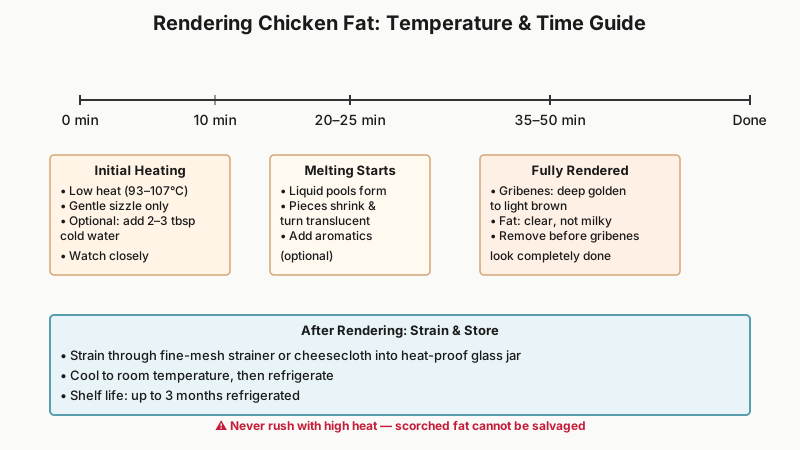
Place the cut fat and skin in your pan over low heat — around 93–107°C (200–225°F) is the sweet spot. You want a very gentle sizzle, not an aggressive fry. Stir occasionally to prevent sticking.
After 20–25 minutes, you’ll notice significant liquid pooling in the pan. The solid pieces will begin to shrink and turn translucent, then gradually golden.
Adding aromatics (optional but traditional): Once the fat has begun to melt noticeably — roughly halfway through — you can add:
- 1 medium onion, roughly chopped (this is the classic schmaltz approach; the onion caramelizes slowly in the fat and adds a subtle sweetness)
- A few cloves of garlic
- Fresh thyme or a bay leaf
The onion pieces will be strained out at the end but leave their flavor behind in the fat.
Step 4 — Watch for Doneness
The fat is fully rendered when the solid pieces (gribenes) have turned a deep golden to light brown and the liquid fat is clear — not milky or cloudy. Total time is usually 35–50 minutes depending on batch size and stove. Do not rush this by cranking the heat; scorched fat smells and tastes bitter, and there’s no fixing it.
Remove from heat slightly before the gribenes look completely done — they continue cooking in the residual heat.

Step 5 — Strain and Store
Set a fine-mesh strainer over your storage jar. Carefully pour the hot fat through the strainer. If you want an exceptionally clear result, line the strainer with a double layer of cheesecloth. The liquid will be a warm amber-gold color.
Let it cool uncovered at room temperature for 20 minutes, then seal and refrigerate. Rendered chicken fat solidifies in the fridge to a creamy, pale yellow — similar in consistency to soft butter.
Storage times:
- Refrigerator: 2–3 months in a sealed jar
- Freezer: Up to 1 year
Always use a clean, dry spoon when dipping into the jar to avoid introducing moisture or bacteria.
What to Do With the Gribenes
Don’t discard the strained crispy bits. Lightly salted gribenes are an excellent snack, a topping for egg dishes, or stirred into bread dough. They’re the chicken equivalent of lardons or pork crackling — salty, savory, and deeply satisfying.
Those leftover chicken bones and scraps don’t have to go to waste either, since How to Make Homemade Chicken Stock: Why Roasting Bones Deepens Flavor shows how to turn them into a rich, flavorful base.
How to Use Rendered Chicken Fat in Cooking
Schmaltz is both a cooking fat and a flavor agent, which makes it more versatile than most people expect.
Sautéing and pan-frying: Swap it 1:1 for butter or vegetable oil when sautéing onions, mushrooms, or leafy greens. The smoke point of rendered chicken fat is approximately 375°F (190°C), which puts it comfortably in the range for most pan-cooking, though not for deep-frying at very high temperatures.
Roasted and fried potatoes: Toss cut potatoes with a tablespoon of schmaltz before roasting — the results rival duck-fat potatoes. For pan-fried potatoes, melt a generous spoonful in a cast-iron skillet and don’t touch the potatoes for five minutes; you’ll get a crust that oil alone can’t produce.
Matzah balls and dumplings: Traditional matzah ball recipes call for schmaltz specifically. The fat coats the matzah meal and keeps the interior tender while the outside stays firm. Neutral oil works but tastes flat by comparison.
Spreads: Schmaltz at room temperature spreads like softened butter. A thin layer on rye bread, topped with a pinch of coarse salt, is a traditional Ashkenazi snack that needs no improvement.
Finishing soups and stews: A small spoonful stirred into chicken soup just before serving adds body and depth without obvious oiliness.
Seasoning cast iron: Chicken fat can be used to season cast-iron and carbon-steel pans in lieu of flaxseed oil. Apply a thin coat and bake the pan upside down at 375°F for an hour.

Troubleshooting Common Problems
Fat is browning too fast: Your heat is too high. Remove from the burner for a minute, let it cool slightly, then return on the lowest setting. The damage can’t always be undone, but stopping early can prevent an outright burnt batch.
Finished fat is milky or cloudy: This usually means water is still present — either from the water-start method or from condensation. The fat will clarify once the water evaporates; just return it to low heat for another 5–10 minutes, uncovered.
Fat has an off-smell after a few weeks: Chicken fat is susceptible to oxidation if stored in a jar that isn’t airtight or if it’s been contaminated with water or food particles. Always use clean utensils, seal tightly, and trust your nose — rancid fat smells distinctly sour or painty.
Gribenes are soft instead of crispy: They firm up as they cool. Spread them on a paper towel after straining and let them sit for 10–15 minutes.
A Note on Flavor Variations
Once you’ve mastered the basic method, the fat itself becomes a canvas. A few directions worth exploring:
- Garlic schmaltz: Add 4–5 smashed cloves in the last 15 minutes of rendering. The garlic turns golden and gentle, and the fat picks up a background savoriness.
- Herb-infused: Woody herbs like rosemary and thyme hold up to the gentle heat. Strip a few sprigs in for the last 20 minutes, then strain out with the solids.
- Spiced: A pinch of smoked paprika and a small dried chili stirred in near the end can shift the fat toward a more Spanish or North African register — excellent for paella-style rice.
The Practical Case for Keeping Schmaltz on Hand
Rendered chicken fat sits in a category of ingredients that professional cooks reach for instinctively but home cooks often overlook: fats with real flavor. Butter browns and burns; olive oil has its own character that doesn’t work everywhere; neutral oils do nothing interesting. Schmaltz fills a specific gap — neutral enough to disappear into a dish, flavorful enough to lift it.
Making it costs almost nothing if you’re already cooking chicken regularly. The 45-minute effort yields a jar that will improve dozens of meals. Store it next to your olive oil, use it freely, and you’ll wonder why you didn’t start doing this sooner.