How to Keep Avocados From Browning: 7 Fixes Ranked, Best To Worst

Sliced an avocado, used half, and watched the other half turn a dull grey-brown within the hour. Sound familiar? That browning isn’t rot — it’s oxidation, a chemical reaction triggered the moment the flesh meets oxygen. The good news: you can slow it down dramatically with a few simple techniques. Some work better than others, and a couple of popular hacks (we’ll name them) are nearly useless. Here’s a practical breakdown.
Why Avocados Brown in the First Place
Avocado flesh contains an enzyme called polyphenol oxidase (PPO). When you cut the fruit, you break open cells and expose PPO to phenolic compounds and oxygen simultaneously. The result is melanin — the same class of pigment behind a bruised apple or a cut mushroom darkening on a cutting board.
Temperature, surface area, and light exposure all speed up the reaction. That’s why a roughly mashed guacamole browns faster than a clean half left pit-side down, and why a thin slice deteriorates quicker than an intact quarter.
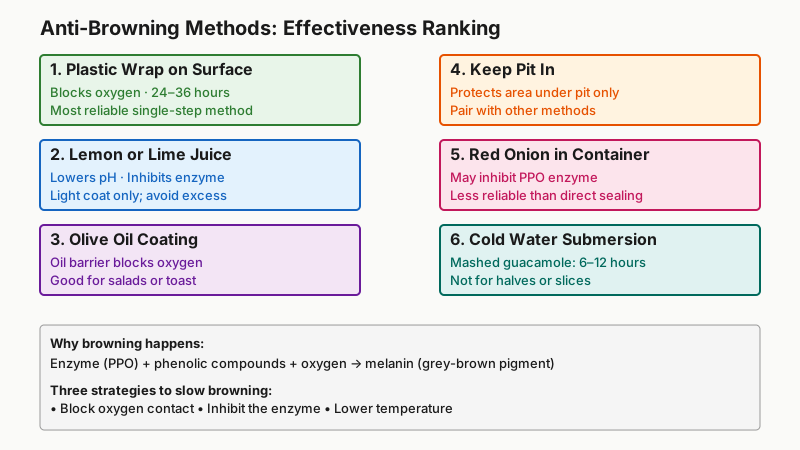
The practical upshot: your anti-browning strategies should either block oxygen contact, slow the enzyme, or lower the temperature (or all three at once).

If you’re starting with an avocado that isn’t quite ready yet, our guide to How to Pick and Ripen Avocados at Exactly the Right Time will help you get the timing right before browning even becomes an issue.
7 Methods Ranked by Effectiveness
1. Plastic Wrap Pressed Directly onto the Surface
This is the most reliable single-step method for storing a halved avocado. Lay a piece of cling wrap directly on the flesh — not just over the top of the bowl — so there’s no air pocket between the plastic and the avocado. Press out any trapped air bubbles from the center outward.
Why it works: it physically blocks oxygen. A gap of even a few millimetres lets the reaction proceed. When done correctly, this can keep the flesh green for 24–36 hours in the refrigerator.
2. Lemon or Lime Juice
Citric acid lowers the surface pH and slightly inhibits PPO activity. It also provides a thin acidic barrier that reacts with incoming oxygen before it reaches the flesh itself. Brush or squeeze a thin coat over the exposed surface before storing.
The trade-off: too much juice and the flavour shifts noticeably, especially on a delicately flavoured Hass avocado. A light application — enough to coat, not pool — is the right amount.
For guacamole specifically, lime juice does double duty: it’s already a core ingredient, so adding a bit extra to the surface before placing cling wrap on top costs you nothing.
3. Olive Oil Coating
A thin film of olive oil over the cut surface acts as a physical oxygen barrier, similar in principle to pressing down plastic wrap. Food scientists have noted that oil-sealed surfaces brown more slowly because the fat layer resists water-soluble oxygen penetration.
Use a pastry brush or your fingertip to apply the thinnest possible layer. This works particularly well for avocado halves destined for salads or toast, where a trace of olive oil integrates naturally into the flavour.
4. Store with the Pit In (Partial Credit Only)
You’ve probably heard that leaving the pit in slows browning. This is partially true — but only for the small area of flesh directly beneath the pit, where it physically blocks oxygen contact. The exposed flesh around the pit browns at the normal rate.
Keeping the pit in is worth doing (it’s free and effortless) but should be paired with one of the other methods for meaningful results.
5. Red Onion in the Container
This technique has circulated widely online, and it has a plausible mechanism: sulfur compounds released by cut onion may inhibit PPO activity. Place a few thick slices of red onion in an airtight container, then rest the avocado flesh-side up on top, without the two touching.
Anecdotally, it does extend green colour by several hours compared to simply leaving the avocado uncovered. The onion flavour does not transfer to the avocado when the two don’t make contact. That said, it’s less reliable than direct oil or plastic wrap sealing.
6. Cold Water Submersion
For storing mashed avocado or guacamole, pressing a thin layer of cold water over the surface (about half a centimetre) creates an oxygen barrier. Before serving, simply pour it off — the water doesn’t absorb into the guacamole significantly in short storage periods.
This works reliably for 6–12 hours and is popular in restaurant prep kitchens where guacamole is made in the morning and held until service. The technique only applies to guacamole or mashed avocado in a bowl, not to halves or slices.

7. Commercial Produce Keeper Sprays
Several food-safe antioxidant sprays formulated for produce use citric acid, ascorbic acid (vitamin C), or a combination of both in a fine mist. When applied to cut avocado, they raise the antioxidant concentration on the surface significantly beyond what you’d get from a squeeze of citrus.
These products genuinely work — ascorbic acid is a potent reducing agent that out-competes PPO for available oxygen. However, they’re an added cost and not something most home cooks keep on hand. If you store a lot of cut fruit regularly, they can be worth it. (Note: some products in this category may carry affiliate links in retail contexts — this article has no commercial relationship with any brand.)
| Method | How Long It Keeps | Works By | Best For | Downsides |
|---|---|---|---|---|
| Plastic wrap pressed directly on surface | 24–36 hours | Physically blocks oxygen contact | Halved avocados in fridge | Requires airtight seal; air pockets defeat it |
| Lemon or lime juice | Several hours (unstated exact duration) | Lowers pH, inhibits PPO, reacts with incoming oxygen | Halves and guacamole | Flavour shifts with excess; requires light application |
| Olive oil coating | Several hours (unstated exact duration) | Physical oxygen barrier via fat layer | Halves for salads or toast | Thin layer only; less effective than wrap |
| Pit left in | Normal browning rate around pit | Blocks oxygen only beneath pit | Any avocado half | Only protects small area; should pair with another method |
| Red onion in container | Several hours longer than uncovered | Sulfur compounds may inhibit PPO | Halves in airtight container | Less reliable than direct sealing methods |
| Cold water submersion | 6–12 hours | Creates oxygen barrier on surface | Mashed avocado or guacamole | Only works for mashed forms; not for halves |
| Commercial produce keeper sprays | Longer than citrus alone (exact duration unstated) | Ascorbic acid out-competes PPO for oxygen | Regular users of cut fruit | Added cost; not kept on hand by most home cooks |
The Methods That Don’t Work Well
Avocado keeper storage containers (the moulded plastic cases with a clip lid) don’t actually limit oxygen access effectively. There’s still air trapped inside, and the browning proceeds at nearly the same rate as leaving the half uncovered on a plate. The pit-holder design is clever but functionally insufficient on its own.
Rubbing with butter gets suggested occasionally, but the water content in butter is higher than in olive oil, and it provides a less uniform seal. The flavour impact is also more noticeable.
Vinegar does inhibit PPO through its acidity, but white vinegar in particular overwhelms the delicate flavour of avocado quickly. A light splash of apple cider vinegar in guacamole is tolerable; vinegar on a plain half is generally too harsh.
Combining Methods for Maximum Effect
The best results come from layering techniques. For a halved avocado:
- Brush the surface lightly with lime juice
- Press cling wrap directly onto the flesh
- Refrigerate immediately
This combination addresses the reaction from multiple angles: the acid inhibits the enzyme, the plastic eliminates oxygen contact, and cold temperature slows the reaction rate. Done this way, you can realistically expect 24–48 hours before meaningful browning begins.
For guacamole:
- Make sure the lime juice in your recipe is adequate (at least one lime per two avocados)
- Smooth the surface flat
- Pour a thin layer of cold water on top
- Press plastic wrap directly onto the water surface before sealing the container
That double-layer approach (water and plastic) is what professional kitchens use to hold guacamole overnight.

These same principles of limiting air exposure and adding acid apply broadly, as covered in our guide How to Store Cut Vegetables and Keep Them Fresh.
Freezing: When You Need Longer Storage
None of the above methods is a substitute for freezing if you need storage beyond two days. Mash the avocado with a small amount of lime juice, press it into an airtight container or freezer bag with the air squeezed out, and freeze. It keeps well for up to three months.
Frozen-and-thawed avocado isn’t ideal for slicing — the texture softens — but it works perfectly in smoothies, dressings, and guacamole. Label it with the date so you use the oldest stock first.
Do not freeze whole avocados — the skin traps moisture and the texture becomes unpleasantly watery on thawing.
A Note on Already-Browned Avocado
If you open a stored avocado and find a thin grey-brown layer on the surface, don’t discard the whole thing. The browning is superficial — scrape off the oxidised layer with a spoon or knife and the bright green flesh underneath is perfectly fine to eat. The browning is an aesthetic issue, not a safety one.
The only time you should discard avocado is if it smells sour or off, shows actual mould, or has blackened, stringy interior flesh — those are signs of genuine spoilage, not oxidation.
Conclusion
Oxidation is a chemical reality, not something you can fully stop — only slow. The most effective individual method is pressing plastic wrap directly onto the flesh and refrigerating promptly. Combine that with a light acid coat, and you have a reliable system that covers most everyday use cases without any special equipment or expense. Save the more involved techniques (water submersion, commercial sprays) for bulk prep or longer holds. And when storage runs past two days, the freezer is your best option.
Sources
- https://www.sciencedirect.com/science/article/abs/pii/S0963996911003176
- https://www.seriouseats.com/how-to-keep-guacamole-from-turning-brown
- https://www.foodnetwork.com/how-to/packages/food-network-essentials/how-to-keep-avocados-from-browning
- https://ifst.onlinelibrary.wiley.com/doi/abs/10.1111/j.1365-2621.1995.tb05573.x