How to Pack a Suitcase Efficiently: Roll, Fold, and Skip Overpacking

Stop Overpacking Before You Even Open the Suitcase
The single biggest mistake most travelers make happens before a single item of clothing is folded: they pick the wrong bag. If you start with a 29-inch checked behemoth for a four-day trip, you will fill it. Choosing a bag that’s slightly smaller than you think you need is the most underrated packing discipline there is.
Once you’ve committed to the right-sized case, the goal is simple — get everything you need in, protect it from damage, and be able to find things when you arrive. The tips below are ordered roughly by when they apply in the packing process.

1. Start With a Packing List (No, Really)
A written list is the foundation. Without one, you default to “what if” thinking and end up with four backup outfits for a weekend city break.
Here’s a simple framework:
- Categories, not items. List tops, bottoms, shoes, toiletries — then fill in the specifics. It forces you to think in outfits rather than individual pieces.
- The 1-2-3 rule for clothing. One outfit per day, but pack only two-thirds of what you think you need. Most trips have unexpected laundry access or outfit-reuse moments.
- Check the weather and itinerary together. A conference in a cold city still needs one smart outfit; a beach trip still needs one layer for evenings.
Keep your list in a notes app and refine it after every trip. Within a few trips, you’ll have a master list that requires only minor tweaks.
2. The Rolling vs. Folding Debate — and Why Both Have a Place
Travel writers have been arguing about rolling versus folding for years. The honest answer: each method has a specific use.
Roll these items:
- T-shirts, jeans, casual trousers, and knitwear. Rolling reduces creasing on casual fabrics and makes cylindrical shapes that fill gaps efficiently.
Fold these items:
- Dress shirts, blazers, and structured clothing. Rolling a button-down creates wrinkles along the placket that rolling doesn’t help. Instead, fold it inside-out along the body’s center seam, button the buttons, and layer it flat on top of everything else.
Bundle-wrapping (a method popularized by travel packing specialists) is worth learning for carry-on trips. You wrap garments around a central core object — a packing cube or toiletry bag — like layers of an onion. The idea is that no garment has a fold; each just wraps around the core. It genuinely reduces creasing on dress clothes.
3. Use Packing Cubes — But Don’t Overcomplicate Them
Packing cubes have become popular enough that most travel retailers stock them in multiple sizes. They’re useful, but only if you use them with a system.
A practical setup for a week-long trip in a medium checked bag:
- Large cube: bottoms (trousers, jeans)
- Medium cube: tops and underwear
- Small cube or pouch: cables, chargers, adapters
- Separate clear zip bag: toiletries (doubles as your security tray bag at airports)
The main benefit isn’t really compression — most fabric cubes don’t save dramatic space. The benefit is findability. You don’t rummage through the whole suitcase to find a clean T-shirt on day three.
Compression cubes (with a second zip that squeezes air out) do save measurable space — useful for bulkier items like fleeces and knitwear.

4. The Right Order to Load Your Suitcase
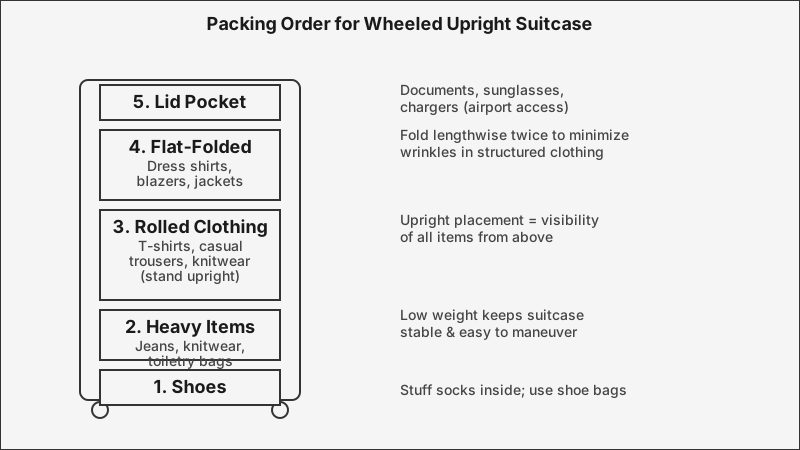
Packing order matters more than most people realize. Load in roughly this sequence for a wheeled suitcase that sits upright:
- Shoes go in first (at the wheel end, which becomes the “bottom” when upright). Stuff socks inside them to preserve their shape and use the space. Consider shoe bags to keep the rest of your clothes clean.
- Heavy, dense items next — jeans, thick knitwear, toiletry bags. Keeping weight low and close to the wheels makes the suitcase easier to maneuver and less likely to tip.
- Rolled clothing in the middle layer — stand rolls upright like logs so you can see everything from above, rather than stacking them flat.
- Delicate and flat-folded items on top — dress shirts, suit jackets (fold the jacket in half lengthwise, then in half again; it wrinkles far less than you’d expect).
- Loose small items in the lid pocket — documents, sunglasses, chargers you’ll want at the airport.
5. Toiletries: The Category Most People Get Wrong
Toiletries are dense, liquid, and fragile — a bad combination. A few rules:
Decant, don’t pack full-size bottles. A full-size shampoo bottle for a five-day trip makes no sense. Refillable silicone travel bottles (30–100ml sizes) are sold widely; fill them before every trip. Airlines in most countries enforce a 100ml per-container liquid limit for carry-on bags.
Double-bag anything that can leak. Even if a lid seems tight, pressure changes in the hold can force liquid out. A simple zip-lock bag inside your toiletry bag saves an otherwise ruined shirt.
Keep a pre-packed toiletry bag. If you travel more than a few times a year, keep a small bag permanently stocked with travel-size essentials — toothpaste, pain reliever, a small deodorant, razor, and whatever your non-negotiables are. You grab it, you go.
6. Wear Your Bulkiest Items
This is so obvious it almost doesn’t warrant saying — but plenty of people pack their hiking boots, heavy coat, or chunky trainers in the bag and then wonder why nothing fits. Wear them to the airport. Your bag is for things you can’t wear.
Similarly, wearing an extra layer on the plane saves meaningful suitcase space. A light down jacket or cardigan worn through security can go in the overhead bin and doesn’t count against your checked bag weight.
7. Managing Weight Limits
Most checked bag limits fall between 20kg and 23kg (44–50lb), though budget airlines vary significantly — sometimes as low as 15kg. Overweight fees are expensive and avoidable.
- Own a luggage scale. They cost very little and prevent the check-in desk surprise entirely. Weigh your packed bag at home.
- Distribute weight between bags. If you’re traveling with a carry-on and a personal item, put heavier items in the carry-on where there’s no weight limit (most airlines only enforce carry-on size, not weight, for overhead bins — though this varies by carrier).
- Know your airline’s policy in advance. Low-cost carriers in particular have varied, frequently updated baggage rules. Check the airline’s website for the specific route you’re flying.

8. Minimize Wrinkles on Arrival
Nothing undermines efficient packing quite like arriving with a bag full of wrinkled clothes. Beyond the rolling and folding techniques above:
- Use dry-cleaning bags. Placing a dry-cleaning poly bag between folded dress shirts dramatically reduces friction-based wrinkles. Hotels often have them; so does any dry cleaner.
- Hang clothes immediately. As soon as you check in, hang anything that wrinkled slightly. Bathroom steam from a hot shower can relax minor creases within 20–30 minutes.
- Pack a travel-size wrinkle-release spray. It genuinely works on most fabrics and weighs almost nothing.
9. The Carry-On Strategy
If you’re traveling carry-on only — the most efficient mode of travel, since you skip baggage claim and never risk lost luggage — two rules matter more than the rest:
- Know the size limits cold. The most common carry-on maximum for major international airlines is 55 x 40 x 20cm (22 x 16 x 8 inches), but this varies. A bag that fits one airline may get gate-checked on another.
- Use a personal item for your “day bag.” Most airlines allow a personal item (backpack or tote) under the seat in addition to the overhead carry-on. This is where your laptop, documents, and anything you might want during the flight lives — not in the overhead bag.
Stretching a carry-on across a full week is a different discipline again: it’s decided by outfit planning and a laundry plan, not by packing technique. How to Pack a Carry-On for a Week walks through that in full.
10. After the Trip: Reset Your System
Efficient packing is a habit built between trips, not just during them.
- Unpack fully within 24 hours. Leaving a suitcase half-packed is how you lose things.
- Note what you didn’t use. Those two backup outfits you never touched? Off the list next time.
- Restock your toiletry kit while you remember what ran out.
- Store your suitcase empty but ready. Some travelers keep a small “always-packed” kit (charger, adapter, earplugs, eye mask, a few toiletry basics) in a pouch inside their stored bag. It cuts packing time dramatically for the next trip.
Putting It All Together
Efficient suitcase packing isn’t about a single magic trick — it’s a system. Pick the right bag size, build a refined packing list, use rolling and folding for what each does best, load in the right order, and manage your toiletries sensibly. The first time you do all of this together, it will feel slow. By the third trip, it takes under 45 minutes for a week-long bag.
The real reward isn’t just a neater suitcase. It’s arriving without the low-grade anxiety of wondering if you forgot something — and leaving with space for whatever you find along the way.