How to Pack a Carry-On for a Week: Plan Outfits Before You Fold

Why Carry-On-Only Travel Is Worth the Effort
Checked baggage fees have climbed steadily across most major airlines, and even when a bag flies free, you lose time at carousels and risk lost luggage. Packing everything you need for a full week into a single carry-on is genuinely achievable — and once you do it once, you’ll rarely go back.
This guide covers how to pack a carry-on for a week without feeling cramped, underprepared, or wearing the same outfit twice in an obvious way. The strategies here work whether you’re heading to a beach town, a city, or a mix of both.

Choosing the Right Bag
Before a single shirt goes in, the bag itself matters more than most people realize.
Know Your Size Limits
Most major carriers in the US and Europe allow a carry-on of roughly 22 × 14 × 9 inches (56 × 36 × 23 cm), though budget airlines like Ryanair and Spirit enforce stricter rules. A bag at the outer edge of allowable dimensions — say, a 40-liter hard-shell or a 45-liter soft spinner — gives you the most usable volume without triggering a gate-check.
Always check the specific airline’s carry-on policy before you buy a bag. Policies differ meaningfully, and an oversized bag bought for one carrier may be gate-checked on another.
Hard Shell vs. Soft Bag
Hard shells protect fragile items and compress to a known volume, which is good for overpacking prevention. Soft-sided bags can flex slightly into an overhead bin and often include external pockets that hard shells lack. Either works for a week — it comes down to what you’re packing.
Don’t Ignore the Personal Item
Most airlines allow both a carry-on and a personal item (a backpack or tote that fits under the seat). That underseat bag can hold a laptop, a day bag, your liquid kit, and bulky items like headphones or a jacket. Treat these two bags as a system, not separately.
The Core Method: Outfit Planning Before Packing
Random packing — grabbing items you like and hoping they fit — is how you end up with three pairs of jeans and no dress shoes. The fix is simple: plan outfits, not items.
Build Around a Color Palette
Choose two or three neutral base colors (navy, grey, olive, black, tan) and one or two accent colors. Every item you pack should work with at least two other items in the bag. A navy linen shirt can pair with khakis for dinner, jeans for sightseeing, and shorts for a casual afternoon — that’s three outfits from one shirt.
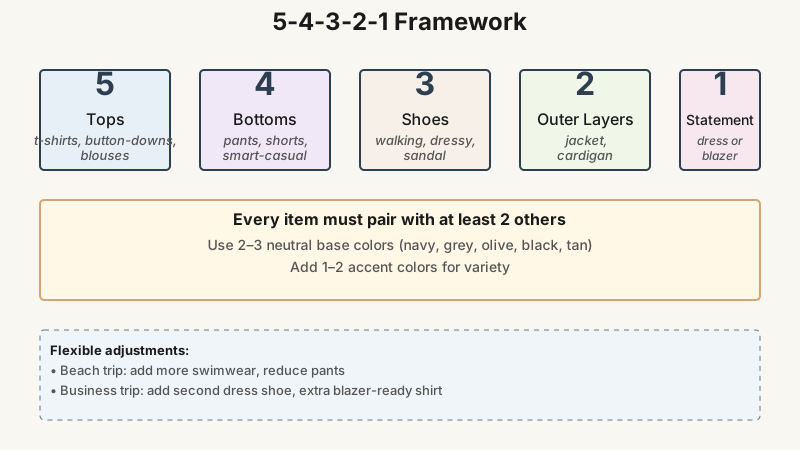
The 5-4-3-2-1 Framework
A reliable starting point for a week-long trip:
- 5 tops (a mix of t-shirts, button-downs, or blouses)
- 4 bottoms (two pants, one shorts, one that doubles as formal or smart-casual)
- 3 pairs of shoes (one comfortable walking shoe, one dressier option, one sandal or flip-flop)
- 2 outer layers (a packable jacket, a light cardigan or hoodie)
- 1 statement piece (a dress, a blazer, or anything that shifts the vibe significantly)
This framework is flexible. A beach trip skews toward more swimwear and fewer pants. A business trip might swap the sandal for a second dress shoe and add one more blazer-ready shirt.
The Shoes Problem
Shoes eat space faster than almost anything else. Three pairs for a week is a reasonable ceiling. Wear your bulkiest pair on the plane. Pack shoes sole-to-sole inside a shoe bag or at the bottom of the suitcase along one side. Stuff socks inside the shoes to reclaim dead space.

Packing Techniques That Actually Work
The how of packing is almost as important as what you pack.
Cubes, Rolling and Folding — the Short Version
Packing cubes are the single biggest upgrade for carry-on efficiency. They compress clothing into predictable blocks that stack cleanly. Use one cube per category — tops, bottoms, underwear/socks — and label them if you travel often. Compression cubes, which add a second zipper to flatten contents further, earn their small extra cost if you tend to overpack.
Inside the cubes, roll casual items (t-shirts, jeans, knitwear) and flat-fold structured ones (shirts, blazers, anything prone to collar distortion). That combination is practical enough for almost every trip.
None of this is carry-on-specific — it applies to any bag. If you want the full treatment, including load order, weight limits and wrinkle control, see How to Pack a Suitcase Efficiently. What follows here is the part that only matters when everything has to fit in one small bag.
The Layering Order
- Bottom of bag: Heaviest items (shoes, toiletry kit, electronics brick)
- Middle: Packing cubes with clothing
- Top: Items you need on the plane or immediately on arrival (a light jacket, your personal document pouch, snacks)
This keeps the bag’s weight low for stability on wheels and means you never dig through the whole bag for one thing.
Managing the Liquids Rule
For flights departing from countries that follow TSA-style rules (US, UK, EU, Australia, and others), liquids in carry-on bags must be in containers of 100ml or less and fit in a single 1-quart (approximately 1-liter) clear zip-lock bag. That’s a real constraint — plan for it deliberately.
Practical workarounds:
- Use solid toiletries: shampoo bars, solid conditioner, solid cologne, and solid sunscreen take up almost no space and face zero liquid restrictions.
- Buy toiletries at your destination if it’s a major city — most hotel mini-markets or pharmacies carry the basics.
- Refillable silicone travel bottles work well for specialty products you can’t replace easily.
Destination-Specific Adjustments
Warm-Weather Destinations
Light fabrics pack smaller. Linen, merino wool, and moisture-wicking synthetics compress well, resist wrinkles, and dry fast if you hand-wash. You can easily drop to two pairs of shoes (sandals and one walking shoe) and replace a full outer layer with a light wrap or long cardigan that doubles as a beach cover-up.
Cold-Weather Trips
This is the real challenge. Bulky wool sweaters and heavy coats are carry-on killers. The workaround:
- Wear your heaviest and largest item on the plane — a thick coat, chunky boots, a heavy sweater.
- Pack merino wool base layers instead of thick midlayers where possible. Merino is warm, light, and handles multiple wears before needing a wash.
- Use a compression packing cube specifically for knitwear.
- A packable down jacket (like the kind that stuffs into its own pocket) delivers real warmth in the volume of a football.
Business Travel
A blazer or sport coat takes up genuine space but transforms every outfit. Lay it flat at the top of the bag last, folded inside-out to protect the outer fabric. Pack wrinkle-resistant dress shirts inside dry-cleaning bags — the slippery plastic reduces friction and wrinkling significantly. One pair of proper dress shoes, worn on the flight out, handles most formal needs.
What to Leave Behind (The Edit Is the Skill)
Every experienced carry-on traveler has a version of the same story: the item they obsessively packed for ten trips that they never once used. Common offenders:
- Multiple pairs of jeans. Jeans are heavy and slow to dry. One pair maximum; consider swapping a second pair for chinos or a lighter bottom.
- The full makeup kit. A curated travel set — foundation, mascara, brow pencil, lip color, concealer — covers most situations in a fraction of the space.
- Books. A Kindle or phone-based reading app replaces several pounds of books.
- ’Just in case’ items. A portable steamer, three pairs of sunglasses, backup shoes. If it’s only there for a remote scenario, leave it.
- Full-size anything. Full-size shampoo, conditioner, body lotion, and similar items almost never need to make a one-week trip.
A useful test: take everything you plan to pack, lay it on the bed, and remove 20% of it. You will almost certainly not miss what you removed.

Laundry Options on the Road
A week is long enough that laundry becomes an option rather than a luxury. Doing even one load mid-trip — or hand-washing a few items — effectively doubles your wardrobe without adding any weight.
- Hotel laundry service is convenient but expensive. Reserve it for urgent or delicate items.
- Laundromats exist in virtually every city of any size. A two-hour laundromat stop is a reasonable trade-off to avoid checking a bag.
- Hand washing in the sink works well for underwear, socks, and lightweight tops. A small tube of travel laundry soap (or even a bar of hotel soap) gets most things clean. Hang to dry overnight — fast-drying fabrics are ready by morning.
If laundry mid-trip is part of your plan, pack one extra day of underwear and socks above whatever math you’d otherwise use. That’s your buffer.
A Final Pre-Flight Checklist
Before you zip up:
- Does the bag close without forcing? (If you’re fighting the zipper, remove one item.)
- Can you lift the bag into an overhead bin yourself comfortably?
- Is your liquids bag accessible without unpacking everything?
- Do you have your chargers, power bank, and adapters?
- Documents, wallet, and phone in your personal item — not buried in the suitcase?
- Valuables (jewelry, medication, anything irreplaceable) in your personal item or on your person?
A carry-on that passes this checklist is a carry-on that won’t slow you down at security, board quickly, and go exactly where you go — no claim ticket required.