How to Organize a Bookshelf: Cut Friction Before You Sort

A messy bookshelf isn’t just an aesthetic problem — it’s a friction problem. Every time you can’t find the book you want, you lose a small bit of momentum. Get the system right once, and a bookshelf practically runs itself.
This guide covers seven proven organizational methods, explains the trade-offs of each, and helps you pick the one (or the hybrid) that fits how you actually read and live.
Start Before You Sort: Declutter First
Before you pull out a labeling system or obsess over color-coding, do a ruthless pass. Take every book off the shelf — yes, every single one — and sort into three piles:
- Keep: Books you’ve read and would recommend, reference titles you use regularly, and anything with sentimental weight you’re honest about.
- Donate or sell: Books you finished but won’t reread, duplicates, and anything you bought with good intentions but abandoned.
- Toss: Books that are water-damaged, outdated editions with superseded information, or falling apart.
Most people discover they own 20–30% more books than their shelves can comfortably hold. Solving the space problem by removing books is always cleaner than trying to squeeze an extra shelf in.
Once you have only the keepers, measure your shelf space and roughly count the books. That sets the scope for whichever method you choose next.

If purging feels harder on your bookshelf than it should, How to Organize a Small Closet: Purge First, Then Map The Space offers a similar purge-first approach that works for any cluttered space.
The 7 Main Methods for Organizing a Bookshelf
1. Alphabetical by Author’s Last Name
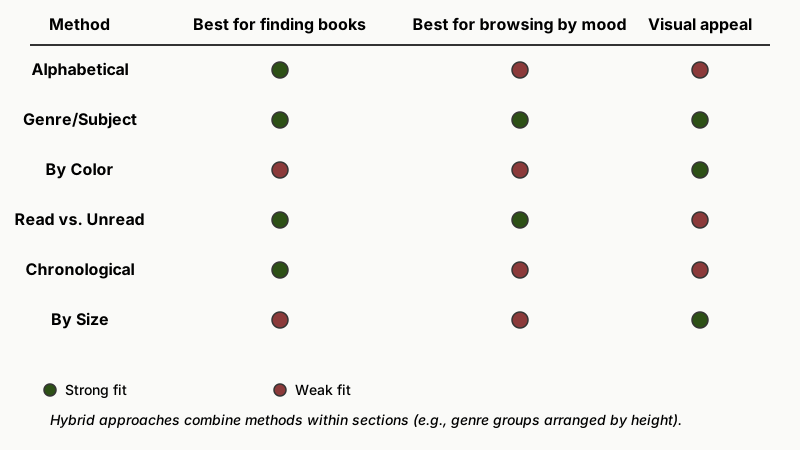
This is the default in most public libraries and many home libraries for fiction. It works best when:
- You have a large collection (50+ novels)
- You frequently look for a specific author rather than browsing by mood
- Multiple people in the household share the shelves
The downside: it’s rigid. Adding a new author means shifting books around, and you lose all sense of genre or subject grouping. A reader who wants to browse “thrillers” won’t get much help from an alphabetical spine.
2. By Genre or Subject
Group fiction into broad buckets — literary fiction, science fiction, mystery, horror — and nonfiction by subject: history, science, memoir, cooking, personal finance. Within each genre, you can alphabetize by author or just arrange loosely.
This method works well for readers who shop their shelves by mood. “I want something dark and atmospheric tonight” lands you in the right section immediately. It also makes a bookshelf feel intentional without requiring precision.
Practical tip: use a small label or a different-colored bookend to mark each section. You don’t need anything fancy — a strip of painter’s tape with a Sharpie label does the job.
3. By Color
Color organization is visually striking and genuinely enjoyable to maintain — but it’s functionally near-useless unless you have a photographic memory for spine colors. You’ll find yourself squinting at a row of blue books trying to remember which shade of blue Donna Tartt uses.
Where it works: decorative shelves, coffee table book displays, bookshelves that serve more as room design than active reading libraries. If you track your collection digitally (apps like Goodreads or LibraryThing let you log every title), you can afford to organize physically by color and search digitally when you need a specific book.
4. By Read vs. Unread
Simple and surprisingly effective for heavy readers: one side of the shelf (or one bookcase) for unread books, another for books you’ve finished. Your to-read pile is always visible and never gets buried under books you already know.
Some readers take this further with a “re-read” section for favorites they return to. The key benefit is that it creates a natural reading queue without needing a list or app.
5. Chronologically
For nonfiction, especially history, biography, or science, chronological order by the book’s subject matter can create an intuitive timeline on the shelf. A row of books about World War II, arranged from pre-war context through the aftermath, works as a reading curriculum.
This method requires more upfront thought and doesn’t transfer well to mixed shelves, but for dedicated subject shelves, it’s elegant.
6. By Size
Pure size organization — tall books on the left, shorter ones on the right within each shelf — looks cleaner than a random jumble and makes better use of vertical shelf space. It’s not functionally great for finding books, but it prevents large-format art books from getting wedged into gaps they don’t fit.
A hybrid approach many people use: organize by subject or genre first, then arrange within each section by height. You get visual tidiness without sacrificing findability.
7. By Emotional or Personal Meaning
This one sounds soft but it’s seriously underrated. Arrange books the way you’d arrange a curated room: the books that shaped you on the most prominent shelf, travel reads grouped near a globe or map, cookbooks in or near the kitchen, reference books at desk height.
It’s not a system that scales to a 500-book collection, but for a single prominent bookcase in a living room or study, it makes a shelf feel genuinely personal rather than just organized.

Practical Tips That Apply to Any Method
The same zone-first logic applies beyond books, as shown in How to Organize a Cluttered Garage: Zones Before Shelving, Not After.
Don’t Double-Stack Unless You Have To
Books stored in a second row behind the front row are essentially invisible. If you’re double-stacking, you have more books than shelf space — return to step one (declutter) or buy another shelf before you develop a system.
Leave Room to Breathe
Packing books so tightly that you need two hands and some effort to extract one is a guarantee you’ll stop using the shelf well. Leave a few inches of empty space per shelf row so you can easily pull books in and out. That empty space also gives you room for new acquisitions without immediately disrupting the whole system.
Use Bookends Strategically
Bookends stop the leaning-tower effect on partially filled shelves. Decorative bookends work fine for light loads; for heavier or hardcover-heavy shelves, look for bookends with a non-slip base or ones that hook underneath the shelf itself.
Add Functional Objects Thoughtfully
A small plant, a framed photo, or a decorative object placed between book groups breaks up the visual density and makes a shelf look considered. The rule of thumb most interior stylists use: no more than two or three objects per shelf row, and they should vary in height.
Go Digital for Large Collections
If you own hundreds of books, no physical system will replace having a searchable digital catalog. LibraryThing offers a robust free tier; Goodreads is more social but works well for tracking. Some readers use a simple spreadsheet. Scanning ISBNs with a phone camera is much faster than typing titles — most catalog apps support this.
Choosing the Right Method for You
The best organizing method is the one you’ll actually maintain. Ask yourself these questions:
How do you look for books? If you search by author, alphabetize. If you browse by mood, genre-sort. If you can’t remember the author or title but remember the cover color, color-sort with a digital backup.
Who else uses the shelf? Shared shelves benefit from more explicit systems (genre labels, alphabetical) so everyone can find and return books without asking.
How often does your collection change? Heavy readers who rotate books frequently need a flexible system — rigid alphabetical sorting becomes a chore when you’re adding a dozen books a month. Genre sections with loose internal order tolerate new additions better.
Is the shelf decorative or functional? A shelf in a living room that visitors see might warrant more visual attention (color, objects, breathing room). A study shelf that’s purely functional can be denser and more systematically organized.
Most people land on a hybrid: subject or genre as the primary grouping, alphabetical or height-based within each group, with a few objects placed to break up long runs of spines.

Maintaining the System Over Time
Organizing a bookshelf is a one-afternoon project; keeping it organized is a habit. A few things help:
- Return books to their section, not just to any gap. It takes three extra seconds and saves a ten-minute search later.
- Do a light re-sort twice a year. Books drift. Donations accumulate. A short seasonal pass keeps things from sliding back to chaos.
- Log new books when you buy them. Adding a title to your digital catalog right when it arrives (before it gets shelved) keeps the list accurate.
- Resist the urge to collect beyond your shelf space. The library and e-books exist for a reason. A physical collection has a natural limit set by the space you have for shelves.
Conclusion
Organizing a bookshelf doesn’t require a perfect system — it requires a consistent one. Pick the method that matches how you actually use your collection, declutter before you sort, and leave yourself enough physical and mental room to maintain it without friction. A well-organized shelf isn’t just easier to navigate; it makes you more likely to reach for a book in the first place. That’s the point.