How to Make Homemade Tortillas: Flour & Corn Mastered

Store-bought tortillas get the job done, but they tend to taste like cardboard wrapped in plastic. Once you’ve eaten a fresh flour tortilla—still warm, slightly blistered, with that faint wheaty richness—you’ll understand why home cooks in northern Mexico have never outsourced this task. The same goes for corn tortillas: two ingredients, five minutes of pressing, and you get something that actually tastes like corn.
This guide covers both styles in full, including dough troubleshooting, equipment shortcuts, and how to store tortillas without them turning into cardboard themselves.
Flour Tortillas: The Northern Mexico Classic
Flour tortillas originated in the northern Mexican states of Sonora and Chihuahua, where wheat cultivation took hold after Spanish colonization. The classic recipe is minimal: flour, fat, salt, and warm water. That’s it.
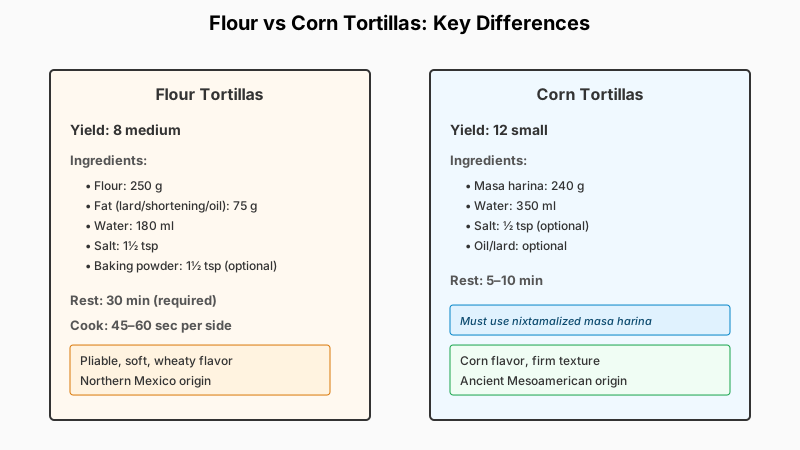
Ingredients (makes 8 medium tortillas)
- 2 cups (250 g) all-purpose flour, plus extra for rolling
- 1½ tsp fine salt
- 1½ tsp baking powder (optional but gives a slight puff)
- ⅓ cup (75 g) lard, vegetable shortening, or neutral oil
- ¾ cup (180 ml) warm water (around 40°C / 105°F)
Lard produces the most flavorful, pliable tortilla. Shortening is a neutral middle ground. Oil works and is fully vegan, though the texture is slightly less supple.
Method
1. Mix the dry ingredients. Whisk flour, salt, and baking powder together in a large bowl.
2. Cut in the fat. Add lard or shortening and work it into the flour with your fingers until the mixture resembles coarse sand—similar to making pastry. If using oil, just pour it in and stir.
3. Add water and knead. Pour in the warm water gradually, mixing as you go. Once a shaggy dough forms, knead it in the bowl or on a lightly floured surface for 2–3 minutes until smooth and soft. It should feel like Play-Doh: pliable, not sticky.
4. Rest the dough. This is non-negotiable. Cover the dough with a damp cloth or plastic wrap and let it rest for at least 30 minutes at room temperature. The gluten relaxes, which is what allows you to roll the dough thin without it springing back at you.
5. Divide and roll. Pinch the dough into 8 equal balls. On a lightly floured surface, roll each ball into a thin circle roughly 20–22 cm (8 inches) in diameter. Aim for consistent thinness rather than a perfect circle—irregular edges are a mark of a handmade tortilla, not a flaw.
6. Cook. Heat a dry cast-iron skillet or comal over medium-high heat until very hot. Cook each tortilla for about 45–60 seconds per side. You’ll see bubbles forming on the surface—that’s what you want. Flip when the underside shows light brown spots. A properly cooked flour tortilla should have golden patches but remain pliable.
7. Keep warm. Stack cooked tortillas on a plate and cover with a clean kitchen towel, or tuck them into a tortilla warmer. The steam trapped between them keeps them soft.

Common Flour Tortilla Problems
- Dough keeps springing back: Not rested long enough. Give it another 15 minutes.
- Tortillas turn out stiff after cooking: Dough was too lean (not enough fat), or they were overcooked.
- Dough is too sticky to roll: Add flour one tablespoon at a time. Humidity affects how much flour absorbs water.
- Tortillas crack when folded: They dried out. Keep them covered as soon as they come off the pan.
Corn Tortillas: Two Ingredients, Total Control
Corn tortillas are older, simpler, and arguably more fundamental to Mexican cooking. They require masa harina—a flour made from dried corn that has been nixtamalized (cooked and soaked in an alkaline lime solution). This process, developed by Mesoamerican civilizations thousands of years ago, unlocks nutrients in corn and creates the characteristic flavor and texture of a real tortilla.
You cannot substitute regular cornmeal or corn flour. They won’t bind, and the flavor is completely different. Masa harina brands widely available internationally include Maseca and Bob’s Red Mill.
Ingredients (makes 12 small tortillas)
- 2 cups (240 g) masa harina
- 1½ cups (350 ml) warm water
- ½ tsp fine salt (optional but recommended)
Some cooks add a teaspoon of oil or lard to improve pliability—worth doing if your masa harina seems dry or your tortillas keep cracking.
Method
1. Mix the dough (masa). Combine masa harina and salt in a bowl. Add warm water and mix with your hands until a smooth, uniform dough forms. It should feel like soft clay—firm enough to hold a shape but moist enough not to crack when pressed. If it cracks, add water a tablespoon at a time.
2. Rest briefly. Let the masa sit covered for 5–10 minutes. This gives the masa harina time to fully hydrate.
3. Divide into balls. Roll the masa into balls roughly the size of a golf ball (about 35–40 g each).
4. Press. Here’s where a tortilla press earns its place. Line the press with two sheets of plastic (cut from a zip-lock bag—the plastic needs to be thick enough not to tear). Place a masa ball in the center, close the press, and apply firm, even pressure. Open, rotate the tortilla 180°, and press again for an even thickness.
No press? Use the bottom of a heavy skillet or a cutting board weighted down with your palm. It takes a bit more effort but works perfectly well.
5. Cook. Cook each tortilla on a dry, very hot comal or cast-iron skillet for about 50–60 seconds on the first side, then flip. Cook a further 50 seconds, then flip again—this second flip often triggers the tortilla to puff up slightly, a sign it’s cooking through properly. Total cooking time is around 2 minutes per tortilla.
6. Keep warm. Same rule as flour tortillas: stack under a towel or in a warmer immediately.

Common Corn Tortilla Problems
- Tortillas crack when pressed or folded: Masa is too dry. Add water teaspoon by teaspoon.
- Tortillas stick to the plastic: The masa is too wet. Add a small amount of masa harina.
- Tortillas fall apart after cooking: Likely too thin, or the skillet wasn’t hot enough. A cool surface causes them to steam instead of sear, which weakens the structure.
- Bland flavor: Use warm water rather than cold—it activates the flavor compounds in masa harina more effectively. A pinch more salt also helps.
Equipment Worth Having (and What You Can Skip)
Tortilla press: Essential for corn tortillas if you make them regularly. A good cast-iron or heavy aluminum press costs roughly $20–$40 and lasts decades. For occasional use, improvise with a skillet.
Comal: A flat, round griddle—traditional for tortillas. A well-seasoned cast-iron skillet does exactly the same job. Avoid nonstick pans; they don’t get hot enough and produce a steamed, pallid result.
Tortilla warmer: The insulated fabric or ceramic type keeps tortillas soft for 30–45 minutes. A folded kitchen towel inside a bowl does the same thing.
Kitchen scale: Worth using. Cup measurements for flour vary wildly depending on how you scoop. A scale removes that variable entirely.
If you enjoy hands-on dough work like this, you’ll probably also like Homemade Pizza Dough: A Step-by-Step Guide That Works, which walks through another kitchen staple that rewards good technique and the right tools.
Storing and Reheating Homemade Tortillas
Freshly made tortillas taste best within an hour of cooking, but they store reasonably well.
Room temperature: Stack them in a zip-lock bag or airtight container. They’ll stay soft for up to 24 hours.
Refrigerator: Up to 5 days. Stack with squares of parchment paper between them if you want to separate individual tortillas easily.
Freezer: Both flour and corn tortillas freeze well for up to 3 months. Separate layers with parchment before freezing so they don’t fuse into a single disc.
Reheating: The best method is 30 seconds per side on a dry hot skillet. A microwave works in a pinch—wrap a stack in a damp paper towel and heat for 30–45 seconds. Avoid reheating in an oven unless you’re making tostadas, because dry heat turns a soft tortilla into a cracker.

Flavor Variations Worth Trying
Once you’ve got the basics down, the dough is a canvas.
- Spinach flour tortillas: Replace 2–3 tablespoons of water with blended spinach. You get a vivid green color and a subtle earthiness.
- Chipotle flour tortillas: Stir 1–2 teaspoons of chipotle powder into the dry ingredients. Good for smoky tacos.
- Blue corn tortillas: Use blue masa harina in place of white or yellow. The flavor is slightly nuttier and the color is striking.
- Whole wheat flour tortillas: Substitute up to half the all-purpose flour with whole wheat. The texture is denser and slightly chewier, which suits hearty fillings like braised beef or roasted vegetables.
For another example of how just a few humble ingredients can be transformed with practice, check out Homemade Pasta from Basic Ingredients: Just Flour, Eggs, and Time.
Putting It Together: Which Tortilla for What?
This isn’t a rigid rule, but it’s a useful guide. Corn tortillas pair naturally with Mexican classics: tacos al pastor, enchiladas, tostadas, chilaquiles. Their sturdiness and flavor hold up against braised or sauced fillings without going soggy fast. Flour tortillas lean toward burritos, quesadillas, fajitas, and the flour-tortilla taco tradition of northern Mexico and the American Southwest.
The honest answer is: make both and eat whatever you want with whatever you want. But if you’re making enchiladas, use corn. If you’re rolling a burrito, use flour.
Final Notes
Making tortillas from scratch takes maybe 45 minutes total, including resting time—and that drops to 20 minutes once you’ve done it a few times. The return on that investment is real: better flavor, no preservatives, and the satisfaction of watching a ball of dough become something people actually reach for.
Start with flour tortillas if you’re new to this—the dough is more forgiving than masa. Once that’s second nature, move to corn. After a few batches, you’ll find yourself annoyed by store-bought tortillas in a way you weren’t before. That’s not a warning. It’s the point.