How to Defrost Frozen Meat Safely: Stop Bacteria in Its Tracks

Frozen meat is one of the best tools in a cook’s arsenal — it extends shelf life without preservatives and lets you buy in bulk. The problem isn’t the freezing. It’s the thawing. Done carelessly, defrosting creates exactly the conditions bacteria need: warmth, moisture, and time.
This guide covers every practical defrosting method, what actually happens to meat during each one, and how to avoid the bacterial danger zones that cause foodborne illness. Whether you’re thawing a chicken breast for tonight’s dinner or a whole brisket for the weekend, the method matters.
Why Bacteria Explode During Improper Thawing
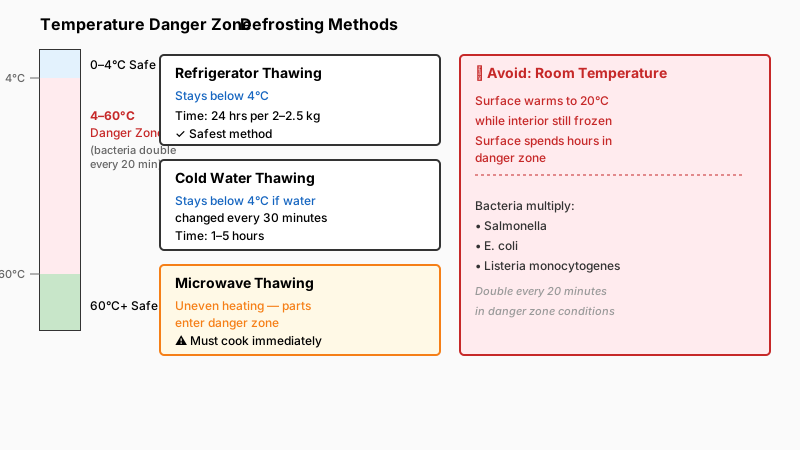
Bacteria don’t disappear when meat freezes — they go dormant. The moment the temperature begins to rise above 0°C (32°F), they wake up and start multiplying. The critical range to understand is the temperature danger zone: 4°C to 60°C (40°F to 140°F). Inside this window, bacteria like Salmonella, E. coli, and Listeria monocytogenes can double in number every 20 minutes under ideal conditions.
The outer surface of a piece of meat always warms faster than the center. Leave a thick chicken thigh on the counter for two hours and the surface may reach room temperature (around 20°C/68°F) while the center is still partially frozen. That surface — wet, warm, protein-rich — is a perfect bacterial incubator. By the time the center has thawed, the exterior may have spent hours in the danger zone.
The U.S. Food and Drug Administration (FDA) and the U.S. Department of Agriculture (USDA) both advise against thawing meat at room temperature for this reason. The same guidance applies to most food safety agencies worldwide, including the UK Food Standards Agency and Food Standards Australia New Zealand.

The Four Safe Defrosting Methods (And How to Do Each One Right)
1. Refrigerator Thawing: The Gold Standard
Thawing in the refrigerator keeps meat at a consistent temperature of 4°C (40°F) or below — below the danger zone the entire time. Bacteria remain dormant or multiply so slowly that the risk stays negligible.
How to do it:
- Place the meat in a dish or tray to catch any drips, preventing cross-contamination of other fridge items.
- Keep it on the bottom shelf, away from ready-to-eat foods.
- Allow roughly 24 hours per 2–2.5 kg (4–5 lbs) of meat. A single chicken breast may take 12–24 hours; a whole turkey can take several days.
Key advantage: Once thawed, the meat can stay safely in the fridge for an additional 1–2 days (for poultry and ground meat) or 3–5 days (for beef, pork, and lamb cuts) before cooking. You also have the option to refreeze it — though there’s a texture trade-off.
Drawback: Requires planning. If you forgot to move meat from the freezer the night before, this method won’t save your dinner plans.
2. Cold Water Thawing: Fast and Safe When Done Correctly
This method is significantly faster than refrigerator thawing but requires your attention. The principle is that moving cold water conducts heat away from and into the meat much faster than still air, while the low temperature keeps bacteria suppressed.
How to do it:
- Keep the meat sealed tightly in its original packaging or a leak-proof zip-lock bag. Any water infiltration introduces bacteria and degrades texture.
- Submerge the package in cold tap water.
- Change the water every 30 minutes. This is non-negotiable — the water warms up around the package and will eventually enter the danger zone if left unchanged.
- Cook the meat immediately after thawing. Do not refrigerate and hold it further.
Timing: A 500g (1 lb) package can thaw in about an hour. A 4 kg (9 lb) roast may take 4–5 hours.
Common mistake: Using warm or hot water to speed things up. This surfs the meat through the danger zone and defeats the purpose entirely.
3. Microwave Thawing: Acceptable but Demanding
Microwave defrosting is fast — but it’s also uneven. Microwaves heat unevenly, meaning some parts of the meat will begin to cook while others are still frozen. Those partially cooked areas cross into the danger zone rapidly.
How to do it:
- Use your microwave’s specific “defrost” setting, which cycles power on and off to reduce uneven heating.
- Check and rotate the meat every few minutes.
- Cook the meat immediately after microwave thawing. No exceptions. You cannot put it back in the fridge — parts of it have already entered the temperature danger zone.
Best for: Thin cuts like chicken breasts, fish fillets, ground meat patties. Thick roasts or bone-in cuts are poorly suited to microwave thawing because the disparity between outer and inner heating is too large.
Practical note: Microwave-thawed meat often has degraded texture at the edges — slightly grayish and partially cooked-looking. This is normal, but it’s a reason many cooks use this method only as a last resort.
4. Cooking From Frozen: Underrated and Perfectly Safe
You don’t have to thaw meat at all. Cooking from frozen bypasses the defrosting problem entirely — the meat goes from the freezer directly into the heat, so it never spends time in the danger zone.
How to do it:
- Add approximately 50% more cooking time than a thawed equivalent would require. A chicken breast that takes 25 minutes thawed may need 35–38 minutes from frozen.
- Use a meat thermometer to verify doneness — internal temperature is the only reliable guide.
- This works well in the oven, on the stovetop, and in slow cookers (with one caveat: some slow cooker manufacturers advise against starting with fully frozen meat because the heating is slow enough that large cuts can spend too long below safe temperatures before reaching a safe internal temp).
Best for: Steaks, chicken pieces, fish fillets, burgers, sausages. Less ideal for whole roasts where the temperature differential between frozen center and outer surface creates very uneven cooking.

Safe Internal Temperatures: The Real Test of Doneness
Thawing method matters, but the final proof of safety is always the internal temperature of the cooked meat. A meat thermometer is a non-negotiable tool — color, texture, and “juice clarity” are unreliable indicators.
According to USDA guidelines:
- Poultry (chicken, turkey, duck): 74°C / 165°F
- Ground meat (beef, pork, lamb): 71°C / 160°F
- Whole cuts of beef, pork, veal, lamb: 63°C / 145°F (with a 3-minute rest)
- Fish and shellfish: 63°C / 145°F
Insert the thermometer into the thickest part of the meat, away from bone, and wait for the reading to stabilize.
Special Situations: Different Cuts, Different Considerations
Ground Meat
Ground meat has a much larger surface area exposed during processing, which means more potential bacterial contact throughout the product — not just on the outside. It’s the highest-risk category. Always use the refrigerator method if possible, cook it immediately after cold-water or microwave thawing, and cook it to the full 71°C / 160°F internal temperature.
Whole Poultry
A whole chicken or turkey has cavities that trap air and warm slowly, creating pockets where bacteria can multiply even as the outside seems fine. The refrigerator method is almost always the best option. For a 4–5 kg (9–11 lb) turkey, plan for 24 hours in the fridge for every 2 kg (4–5 lbs) of weight.
Fish and Seafood
Fish thaws faster than red meat due to lower fat content and thinner cuts. Cold water thawing is particularly effective — most fillets thaw in 30–45 minutes under running cold water while still sealed. Never thaw shellfish like shrimp or scallops at room temperature.
If shrimp is on your defrosting list, our guide Defrost & Cook Frozen Shrimp Without Watering Them Down covers the specific tricks that keep them from turning rubbery or waterlogged.
Vacuum-Sealed Meat
Vacuum sealing slows bacterial growth even during thawing by limiting oxygen exposure. However, it does not make counter thawing safe — the temperature danger zone still applies regardless of packaging. Thaw vacuum-sealed meat using the same refrigerator or cold-water methods.

What Not to Do: Myths Worth Busting
“I’ve always left meat on the counter and nothing’s ever happened.” Foodborne illness doesn’t announce itself with an off smell or visible slime every time. Many dangerous bacteria — Listeria, Salmonella — produce no detectable odor. You can get lucky dozens of times and then not once.
“Hot water thaws faster and I’m in a hurry.” Hot water thawing is genuinely risky. The outer surface of the meat jumps into the danger zone almost immediately. That is why the USDA lists only three safe thawing methods — the refrigerator, cold water, and the microwave — and hot water is not one of them.
“I can thaw it overnight on the counter and it’ll be fine.” An overnight thaw at room temperature — often 6–10 hours depending on your kitchen — leaves meat at room temperature for far longer than the FDA’s recommended maximum of two hours in the danger zone. This is exactly the scenario that produces the conditions for foodborne illness.
“Rinsing the thawed meat removes bacteria.” Rinsing raw meat under the tap doesn’t remove meaningful amounts of bacteria and actively spreads them via water droplets onto your sink, countertops, and nearby surfaces. The USDA specifically recommends against rinsing raw poultry.
Frequently Asked Questions
Can I refreeze meat that’s already been thawed?
Yes — but only if it was thawed in the refrigerator and still feels cold (4°C / 40°F or below). Meat thawed by cold water or microwave must be cooked before refreezing. Be aware that each freeze-thaw cycle causes some moisture loss and textural degradation, so quality declines even if safety is maintained.
How long is thawed meat safe in the refrigerator before cooking?
Poultry and ground meat: 1–2 days after thawing. Whole cuts of beef, pork, or lamb: 3–5 days. These windows assume your refrigerator is holding at or below 4°C (40°F).
Is it safe to thaw meat in a cooler bag?
Only if the cooler contains ice and is maintaining a temperature at or below 4°C (40°F). A warm cooler bag without ice is no better than a counter — it traps warmth rather than dissipating it.
Does marinating help or hurt during thawing?
Marinating in the refrigerator while meat thaws is perfectly safe and efficient — you’re thawing and flavoring simultaneously. Never marinate at room temperature; the acid in a marinade doesn’t neutralize bacteria the way some people assume.
Why does thawed meat sometimes look gray or discolored?
Myoglobin — the protein that gives red meat its color — reacts to oxygen and temperature changes. A gray or brownish tinge on thawed meat is often just oxidation, not spoilage. Smell is a better indicator, but remember it’s not a perfect one. If in doubt, discard.
The Bottom Line
The refrigerator method is the safest and most forgiving defrosting approach. Cold water thawing is a solid alternative when you’re short on time, as long as you change the water every 30 minutes and cook immediately. Microwave thawing works in a pinch if you cook the meat right away. And cooking from frozen is a genuinely underused option that skips the defrosting problem altogether.
What doesn’t work — no matter how common it is — is leaving meat out at room temperature. The bacteria don’t care about your schedule. The rule is simple: keep it cold until it’s hot.
Once your meat is safely thawed, take texture a step further with Tender Meat Every Time: Acidic & Enzymatic Marinades to lock in flavor and tenderness before cooking.
Sources
- https://www.fsis.usda.gov/food-safety/safe-food-handling-and-preparation/food-safety-basics/big-thaw-safe-defrosting-methods
- https://www.fsis.usda.gov/food-safety/safe-food-handling-and-preparation/food-safety-basics/safe-minimum-internal-temperature-chart
- https://www.food.gov.uk/safety-hygiene/chilling
- https://www.fda.gov/food/buy-store-serve-safe-food/safe-food-handling