How to Cook Frozen Vegetables Without Sogginess

Why Frozen Vegetables Go Soggy (And How to Stop It)
Frozen vegetables have a reputation problem. Pull a bag of broccoli or zucchini out of the freezer, cook it the most obvious way, and you often end up with a limp, waterlogged mess that no amount of seasoning can save. The good news is that the sogginess isn’t inevitable — it’s almost always a technique problem, and every one of those problems is fixable.
Before getting into methods, it helps to understand what’s actually happening. When vegetables are flash-frozen commercially, ice crystals form inside their cell walls. When those crystals melt during cooking, the cell walls rupture and release water. That’s why frozen vegetables produce so much liquid. If that water has nowhere to go — if the pan is crowded, the heat is too low, or the vegetables are sitting in a steamy, closed pot — they braise in their own moisture instead of roasting, sautéing, or crisping up. The result is soft and wet.
The fix is almost always about heat management and surface area. Give the water somewhere to escape quickly, and your vegetables will behave like fresh ones.

The Best Cooking Methods for Crisp, Tender Results
High-Heat Roasting in the Oven
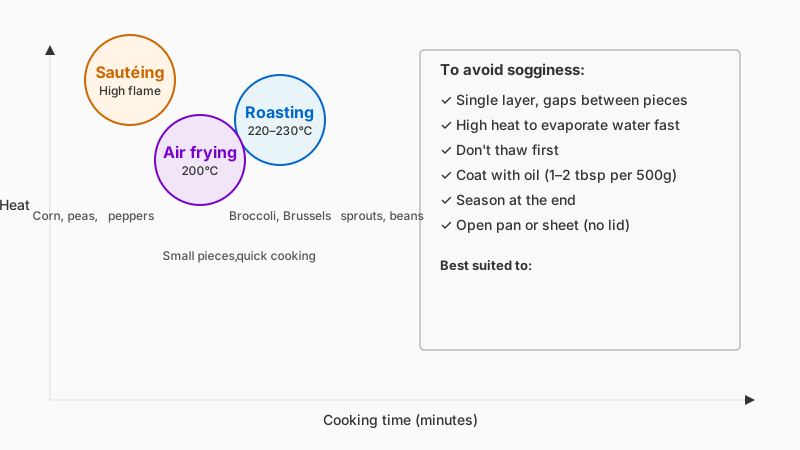
Roasting is arguably the most reliable method for getting frozen vegetables with real texture. The dry, intense heat of an oven at 220–230°C (425–450°F) drives off moisture fast and creates at least some browning — the Maillard reaction that makes vegetables taste more savory and complex.
A few specifics that matter:
- Don’t thaw first. It sounds counterintuitive, but putting vegetables straight from the freezer onto the hot pan means less surface moisture at the start. If you thaw them, you’re adding extra liquid to deal with.
- Use a rimmed baking sheet, not a baking dish. Sides trap steam. A flat, rimmed sheet lets moisture evaporate freely.
- Spread them in a single layer with gaps. Crowding is the single biggest mistake. Each piece needs room for moisture to escape. If you have a lot, use two pans rather than one packed pan.
- Preheat the pan. Slide the empty baking sheet into the oven for five to ten minutes before you add the vegetables. A hot surface sears the bottom immediately, reducing steam-up time.
- Coat with enough fat. A tablespoon or two of oil per 500g of vegetables creates a light barrier between the water and the pan surface. Olive oil, avocado oil, or any high-smoke-point fat works well.
- Flip once, halfway through. This gives both sides a chance to dry out and crisp. Don’t flip repeatedly — you’ll cool things down.
Typical roasting times from frozen: broccoli and cauliflower take 20–25 minutes; green beans, 18–22 minutes; Brussels sprouts, 25–30 minutes; thinner vegetables like corn or peas are better suited to other methods.
If you want to take your oven skills further, Roasting Vegetables for Perfect Caramelized Edges shows how to get that same deep caramelization with fresh produce.
Sautéing and Stir-Frying on the Stovetop
A screaming-hot pan is the key word here. If the pan is merely warm, frozen vegetables drop the temperature, sit in melting water, and steam. If the pan is properly hot — cast iron or a carbon steel wok over high heat — the water evaporates almost instantly and browning starts before the vegetables get soft.
What to do:
- Heat the pan until you see the first wisps of smoke.
- Add oil and let it shimmer for 20–30 seconds.
- Add vegetables in a single layer — working in batches if needed.
- Leave them undisturbed for 2–3 minutes. Resist the urge to stir constantly. Contact with the hot surface is what creates texture.
- Toss or stir once, cook another 1–2 minutes, and season at the end.
Salt draws water out of food. Adding salt at the beginning of a sauté pulls more moisture from the vegetables and makes sogginess more likely. Season at the end, or at least in the final minute.
Small, quick-cooking frozen vegetables — corn kernels, edamame, peas, sliced peppers — shine with this method. Larger, denser pieces like whole Brussels sprouts or thick broccoli crowns are better roasted.

Air Frying: The Fastest Route to Crisp
If you have an air fryer, frozen vegetables are one of its best use cases. The rapid circulating air pulls moisture away from all sides simultaneously, and the compact cooking chamber heats quickly and consistently.
- Set the air fryer to 200°C (390°F).
- Toss vegetables with a small amount of oil — less than you’d use for roasting, since the air movement does more work.
- Cook in a single layer (don’t fill the basket more than halfway).
- Shake or flip at the halfway point.
Broccoli, green beans, and Brussels sprouts in an air fryer typically take 10–14 minutes from frozen and come out noticeably crispier than oven-roasted equivalents, with good browning on the edges.
When Steaming or Boiling Is Actually Fine
Some frozen vegetables are better softened than crisped — peas, spinach, corn, and edamame fall into this category. For these, steaming (rather than boiling) is the right call. A steamer basket keeps them above the water so they cook in vapor rather than submerging and absorbing liquid.
If you do boil, use a large pot of well-salted water, cook for the minimum time on the package, and drain immediately. Spread them on a clean kitchen towel or paper towels for two minutes before serving — this step alone removes a surprising amount of surface water that would otherwise dilute sauces or dressings.
Microwave cooking can work for soft-style vegetables too, but the standard sealed-bag or tightly-covered-bowl approach traps steam and leaves them watery. Microwave them in a single layer in a loosely covered dish, stop a minute short of the package time, and drain off any pooled liquid before serving. Used this way, the microwave is fine for peas, corn, or spinach you’re folding into another dish — just don’t expect it to crisp anything.
For more ideas on making the most of whatever’s in your freezer and cupboards, check out Cook With What You Have: A Practical Pantry Guide.
If preserving bright color matters as much as texture, our companion piece How to Cook Tender Vegetables Without Losing Their Color offers extra tips worth pairing with these methods.