Fix a Sticky Kitchen Drawer or Cabinet Door: Wax, Sand, Realign, Done

Sticky drawers and cabinet doors are one of those low-grade household annoyances that somehow never make it to the top of the to-do list — until you yank a drawer handle clean off, or a cabinet door swings open and won’t close again. The good news: most fixes take under an hour, cost next to nothing, and require tools you almost certainly already own.
This guide walks through every realistic cause of a sticky drawer or cabinet door — wood swelling, worn hardware, misaligned hinges, built-up grime — and gives you a concrete fix for each one.
Why Kitchen Drawers and Cabinet Doors Stick
Before reaching for sandpaper, it helps to understand what’s actually causing the problem. There are four main culprits:
- Moisture and wood swelling. Kitchen humidity from cooking and dishwashers causes wood to expand, especially in older or solid-wood cabinetry. This is the single most common cause.
- Worn or dirty slides and runners. Metal and plastic drawer slides accumulate grease, food debris, and dust. Over time, they lose their lubrication and drag.
- Hinge misalignment. Cabinet door hinges — particularly the adjustable European-style cup hinges found in most modern kitchens — drift out of alignment with daily use.
- Paint or finish buildup. A fresh coat of paint that wasn’t given time to cure, or layers applied over existing coats, can glue drawer faces and door edges together.
- Structural shifts. Houses settle over years. A cabinet frame that’s racked even a few millimetres can bind a drawer or throw a door out of square.
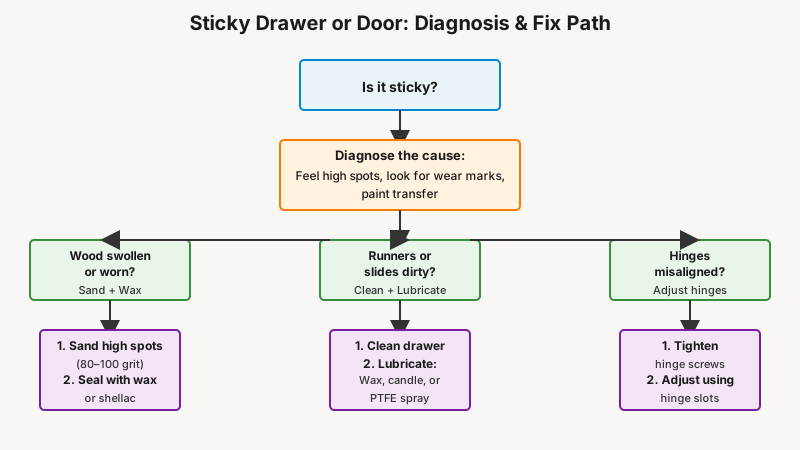
Diagnose before you fix. Run your hand along drawer sides and cabinet edges — feel for the high spots, look for paint transfers or raw wood wear marks that show you exactly where friction is occurring.

Fixing a Sticky Kitchen Drawer
Method 1: Clean and Lubricate the Runners
Start here. Remove the drawer completely — most drawers lift out by pulling forward and angling upward, though some have a release tab on the slide. Wipe the drawer sides and runners with a slightly damp cloth to remove grease and grit, then dry thoroughly.
For lubrication, you have several solid options:
- Paste wax (such as beeswax or carnauba-based furniture wax): Rub directly on wood runners or the sides of the drawer box. It’s the classic fix and works exceptionally well on bare wood.
- A white candle or bar of soap: These household standbys deposit a thin layer of wax or stearic acid on wood surfaces. Rub along the bottom edges and runners, then slide the drawer in and out a few times to distribute it.
- PTFE (Teflon) dry lubricant spray: Better suited for metal or plastic slides. It doesn’t attract dust the way silicone or WD-40 can, and it lasts longer in a kitchen environment.
- Avoid WD-40 on wood: It’s a water displacer, not a true lubricant, and it can actually dry wood out and attract dirt over time.
After lubricating, replace the drawer and test. If it still drags, move to the next method.
If old candle wax rather than fresh wax is part of the problem, check out How to Remove Candle Wax from Any Surface (12 Methods) for removal tips before you reapply lubricant.
Method 2: Sand the Friction Points
If lubrication alone doesn’t solve the problem, the wood is likely swollen. Look for shiny or paint-worn spots — those are your contact points. Use 80- or 100-grit sandpaper and sand only the high spots, working with the grain. Remove material gradually; it’s easy to take off too much.
After sanding, wipe away dust with a tack cloth and apply a thin coat of paste wax or shellac to seal the raw wood and slow future moisture absorption. This is important — bare sanded wood re-swells faster than sealed wood.
Method 3: Adjust or Replace the Drawer Slides
For drawers with metal side-mount or under-mount slides, sticking often means a bent slide rail, a missing ball bearing, or slides that have simply worn out. Inspect them with the drawer removed:
- Bent rails can sometimes be gently straightened with pliers.
- Slides that wobble side-to-side may just need their mounting screws tightened — the screw holes can elongate over years of use. If they’re stripped, move the slide slightly and drill new pilot holes, or use slightly larger screws.
- If slides are more than a decade old and grinding, replacement is usually the better call. Standard 450mm (18-inch) side-mount slides cost very little and are widely available. Match the extension type (full extension vs. three-quarter) and the load rating to your originals.

Fixing a Sticky Cabinet Door
Method 4: Adjust the Hinges First
Modern frameless (European-style) cabinet hinges are adjustable in three axes — height, depth, and side-to-side — using just a Phillips screwdriver. This is often all you need.
- Side-to-side adjustment: The small screw on the mounting plate (the part screwed to the cabinet interior wall) shifts the door left or right. If the door is catching on an adjacent door or the frame, this is your fix.
- Depth adjustment: The main screw on the hinge arm moves the door in or out relative to the cabinet face. Use this if the door is proud of surrounding doors or bowing out at the hinge side.
- Height adjustment: Some hinges allow the mounting plate to slide up or down in a slot before tightening. Useful if the door sags at the bottom.
Make quarter-turn adjustments, close the door, and assess. Repeat until the door sits flush and closes cleanly.
For older face-frame cabinets with traditional butt hinges, check whether hinge screws are loose (tighten or replace with longer screws, or pack stripped holes with wooden toothpicks dipped in wood glue). A sagging hinge is almost always the cause when a door that previously worked fine now drags at the bottom.
Method 5: Plane or Sand the Door Edge
If hinge adjustment doesn’t fully solve the problem — especially after a humid season — the door itself has swollen. Identify exactly where it’s binding:
- Slide a piece of thin card around the door gap while it’s closed. Where the card won’t pass, friction is occurring.
- Mark those spots lightly in pencil.
- Remove the door from its hinges. For European hinges, press the release tab and the door detaches in seconds.
Use a hand plane, a belt sander, or a sanding block to remove material from the marked edge. Work slowly and check the fit frequently — you’re aiming for a 2–3mm gap all around the door.
Seal the newly exposed raw wood immediately with primer, paint, or a penetrating oil finish. An unsealed door edge is the fastest route back to the same problem next summer.
Method 6: Strip Paint Buildup
If previous owners painted cabinet doors without removing them — a common shortcut — paint may have bridged the gap between the door and frame. This is obvious when you can see a ridge of paint that’s been peeled or cracked by repeated opening.
Score along the paint line with a utility knife to break the seal, then open the door carefully. Sand or scrape the edge to remove the buildup, and repaint with the door open so paint can’t bond across the gap. Allow full cure time before closing — most oil-based paints need 24–48 hours; latex takes 1–2 hours before light use but can still stick if shut too soon in warm conditions.
If your cabinets are also coated in sticky grease rather than just paint, our guide How to Remove Grease Buildup from Kitchen Cabinets can help you tackle that separate issue.
Method 7: Check for Cabinet Frame Racking
If you’ve adjusted hinges, sanded doors, and the problem keeps returning, the cabinet box itself may be out of square. Set a large square or a straightedge against the interior corners. A racked frame will show a gap at one corner.
Fix racking by adding a wood block brace across the back interior of the cabinet, or by placing shims between the cabinet and wall before re-securing the mounting screws. This is less common but worth checking, especially in older kitchens or if you’ve noticed the floor or walls settling.

When to Call a Professional
Most sticky drawer and door problems are DIY-friendly. However, call a cabinet maker or carpenter if:
- Multiple cabinets throughout the kitchen are sticking simultaneously — this can indicate a foundation movement issue that goes beyond surface repairs.
- The drawer box or cabinet frame is cracked, warped, or delaminating. Particle-board or MDF carcasses that have absorbed water often can’t be meaningfully repaired; replacement is more cost-effective.
- Custom or high-end cabinetry where incorrect adjustments could void a warranty.
Prevention: Stopping the Problem Before It Starts
A few habits significantly reduce sticky drawer and door problems:
- Run the range hood exhaust fan whenever cooking. Steam from boiling water is a primary driver of kitchen humidity and wood swelling.
- Wax wooden drawer runners annually. Even once a year with a candle stub is enough to maintain a smooth, moisture-resistant surface.
- Don’t paint drawers and doors while installed. Always remove them, paint the edges, and reinstall after full cure.
- Tighten loose hinge screws once a year. It takes two minutes and prevents the slow-sag that eventually causes doors to bind.
- Keep the kitchen between 40–60% relative humidity if you have a humidistat. At higher levels, solid-wood cabinets will swell seasonally regardless of other measures.
Frequently Asked Questions
Why does my kitchen drawer stick only in summer?
Seasonal humidity is the most likely cause. Wood expands as it absorbs atmospheric moisture, and kitchen air is particularly humid in warm months due to cooking and open windows. The fix is to sand the friction points during humid weather (when the wood is fully expanded), then seal the raw wood so it re-absorbs moisture more slowly.
Can I use WD-40 to lubricate a sticky wooden drawer?
It’s not recommended. WD-40 is primarily a water displacer and light solvent, not a lasting lubricant. It can temporarily help but tends to attract dust and grime and may dry out wood fibers over time. Paste wax, beeswax, or a candle rubbed on the runners is more durable and gentler on wood.
How do I know if my cabinet hinge needs adjusting or replacing?
If the hinge moves freely and the adjusting screws turn without stripping, it needs adjusting. If the arm is visibly bent, the cup is cracked, or the screws spin in place, replace it. European cup hinges are inexpensive and easy to source — just bring the old one to a hardware store to match the hole diameter (usually 35mm) and arm type.
My cabinet door closes but immediately springs back open. What causes that?
This usually means the door is too far out from the frame (adjust the depth screw on the hinge) or the catch isn’t engaging. Magnetic catches and roller catches wear out and can be replaced for under a few dollars. Also check that the door isn’t bowing — a warped door can prevent the catch from making contact across the full strike plate.
I sanded my drawer and it still sticks after a week. What did I miss?
Most likely the raw sanded wood re-absorbed humidity before you sealed it. Always apply paste wax, shellac, or primer to any freshly sanded wood on drawer sides or door edges. Without a seal, exposed wood grain acts like a sponge and the problem returns quickly — sometimes within days in a humid kitchen.