Remove Grease & Burnt-On Food from Cookware — No Scrubbing

Burnt-on food and greasy residue are the two kitchen problems that make washing up feel like manual labor. The good news is that neither requires a Brillo pad and fifteen minutes of forearm effort. The chemistry of what bonds food to metal — and what breaks that bond — means there are several reliable, low-effort methods that do the hard work while you wait.
This guide covers every major cookware surface: stainless steel, cast iron, carbon steel, nonstick, enamel-coated, and copper. The approach differs per material, so skip to your relevant section if you’re in a hurry.

Why Food Burns On (and Why Scrubbing Rarely Wins)
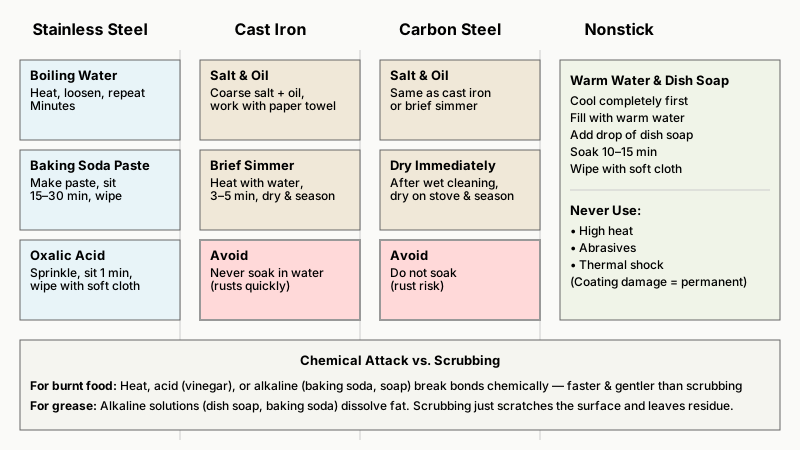
When food burns or polymerizes onto a pan, it chemically bonds to the surface — especially on bare metals like stainless steel and carbon steel. Scrubbing physically tries to shear those bonds, which often scratches the surface and still leaves residue behind. Soaking, heat, acid, and alkaline agents attack the bond chemically, which is faster, gentler, and more effective.
Grease, meanwhile, is just solidified fat. It’s hydrophobic (repels water) but dissolves readily in alkaline solutions — dish soap, baking soda, and washing soda are your best tools.
Stainless Steel: The Boiling Water Trick and Beyond
Stainless steel is the most forgiving material for this kind of cleaning, because it can handle high heat, acid, and alkaline solutions without damage.
Method 1 — Boiling Water Deglaze
- Add about an inch of water to the pan and bring it to a boil on the stove.
- Use a wooden spoon or silicone spatula to loosen what’s already softened — not scrubbing, just nudging.
- Pour out the water and repeat if needed.
- Finish with a wipe of dish soap and a soft cloth.
This mimics what professional cooks call deglazing, and it dissolves most food residue within minutes.
Method 2 — Baking Soda Paste Soak
For heavier carbonized buildup:
- Coat the burnt area with a thin layer of baking soda.
- Add just enough water to make a paste and let it sit for 15–30 minutes.
- The alkaline environment breaks down grease and loosens carbonized food.
- Wipe away with a soft cloth or silicone scraper. No metal pads needed.
Method 3 — Bar Keepers Friend (Oxalic Acid)
Bar Keepers Friend contains oxalic acid, which dissolves the iron oxide layer that often causes discoloration and helps release baked-on residue. Wet the pan, sprinkle a small amount, let it sit for one minute, then wipe. It’s safe for stainless steel and won’t scratch if you use a non-abrasive cloth.
Cast Iron: No Water Soaking — Use Salt or Heat
Cast iron cannot be soaked in water — it will rust. But it also doesn’t need to be.
Coarse Salt Scrub (No Metal, No Soap)
- While the pan is still warm (not scalding), pour in a tablespoon of coarse kosher or sea salt.
- Add a few drops of neutral cooking oil.
- Use a folded paper towel to work the salt around the pan.
The salt acts as a mild abrasive that physically lifts food without scratching the seasoning layer. The oil helps carry residue away. You’re not scrubbing — the salt does the work.
The Water-Boil Method for Cast Iron
For badly burnt cast iron:
- Add a small amount of water (not a full soak) and heat the pan on the stove.
- The steam and gentle simmer will lift stuck food in 3–5 minutes.
- Pour off, dry immediately and thoroughly on the stove over low heat.
- Re-season with a thin layer of oil while still warm.
Never leave cast iron sitting wet. Rust forms faster than you’d expect.

What About Soap on Cast Iron?
Modern dish soaps (with surfactants rather than pure lye) won’t strip a well-built seasoning layer with occasional use. The old rule about “never use soap” comes from an era of harsh lye-based soap. That said, repeated soap washing will thin your seasoning over time — reserve it for genuine grease emergencies, not routine cleaning.
Carbon Steel: Similar to Cast Iron, but Lighter
Carbon steel pans (common in professional French cookware) behave almost identically to cast iron: they rust, they build a seasoning layer, and they respond well to the salt-and-oil method or a brief simmer with a small amount of water. The same rules apply — dry immediately, re-season after any wet cleaning.
Nonstick Pans: Gentle Heat and Dish Soap Only
Nonstick coatings (PTFE-based or ceramic) are the most delicate surface here. High heat and abrasives will damage the coating, and once damaged, nonstick pans cannot be repaired.
The Right Approach
- Let the pan cool completely before adding water. Thermal shock can warp or crack coatings.
- Fill with warm (not boiling) water and a drop of dish soap.
- Let it soak for 10–15 minutes.
- Wipe with a soft cloth or silicone sponge.
For stubborn spots: add water and dish soap, then heat gently on the stove over low heat for five minutes. This softens residue without exceeding temperatures that damage PTFE (which degrades above around 500°F / 260°C).
Never use baking soda paste or Bar Keepers Friend on nonstick — both are abrasive enough to compromise the coating over time.
Enamel-Coated Cookware (Le Creuset Style)
Enamel is essentially glass fused to iron. It’s nonreactive and fairly tough, but it chips under sudden temperature changes and scratches under metal or harsh abrasives.
Baking Soda Soak
- Fill the pot with warm water and add two tablespoons of baking soda.
- Bring to a simmer on the stove for 8–10 minutes.
- Turn off the heat and let it cool naturally.
- The loosened residue wipes away with a cloth.
Dish Soap and Time
For light grease buildup, a 20-minute soak in hot soapy water is often enough. Enamel doesn’t absorb grease the way bare metal does, so the bonds are weaker to begin with.
Avoid: metal scourers, chlorine bleach, and sudden cold-water rinses on a hot pot.
Copper Cookware: Acid Is Your Friend
Copper develops a patina (tarnish) quickly and requires gentler cleaning than most people expect. Acidic solutions work best.
Lemon and Salt Method
- Cut a lemon in half and dip the cut face in fine salt.
- Rub over the interior and exterior of the pan.
- The citric acid dissolves oxidation and loosens food residue without abrasives.
- Rinse with warm water and dry immediately.
For interior cooking surfaces that are tin-lined: treat them like nonstick — gentle soap and warm water only. Tin linings are soft and scratch easily.
Oven-to-Table Dishes and Baking Sheets: The Hydrogen Peroxide Method
Baking sheets and roasting pans accumulate polymerized grease over months of use, leaving a dark, sticky film that warm water barely touches.
Baking Soda and Hydrogen Peroxide
- Sprinkle baking soda generously over the surface.
- Spray or pour 3% hydrogen peroxide (standard pharmacy-grade) over the top.
- Let it fizz and sit for 30–60 minutes — or up to two hours for heavy buildup.
- Wipe away. The oxidizing reaction breaks polymerized grease bonds without any scrubbing.
This method is safe for aluminum, stainless steel, and most enamel-coated bakeware. Avoid it on bare carbon steel or cast iron, as the moisture will promote rust.
Dealing with Old, Thick Grease Buildup on the Outside of Pans
The exterior of pans — especially the bottom — often accumulates layers of burnt grease from years of stovetop cooking. For stainless and aluminum exteriors:
- Washing soda (sodium carbonate, stronger than baking soda) dissolved in hot water and applied as a soak is the most effective no-scrub option.
- Leave the pan in the solution for one to four hours.
- The grease will have softened enough to wipe away with a cloth or silicone scraper.
For cast iron exteriors: the self-cleaning oven method (running the pan through an oven’s self-clean cycle at around 900°F) strips all seasoning and old grease in one shot, leaving bare metal that you then re-season from scratch. It’s drastic but thorough.
If that greasy film has migrated beyond your cookware and onto nearby surfaces, How to Remove Grease Buildup from Kitchen Cabinets tackles the same sticky problem on cabinet doors.
Quick-Reference: Method by Surface
| Cookware | Best No-Scrub Method | Avoid |
|---|---|---|
| Stainless steel | Boiling water deglaze; baking soda paste; Bar Keepers Friend | Heavy metal scourers |
| Cast iron | Salt + oil; brief water simmer | Prolonged soaking, soap routine |
| Carbon steel | Salt + oil; brief water simmer | Soaking, dishwasher |
| Nonstick | Warm water soak; low-heat simmer with soap | Baking soda, high heat, abrasives |
| Enamel-coated | Baking soda simmer; hot soapy soak | Metal scourers, thermal shock |
| Copper (tin-lined) | Lemon + salt exterior; gentle soap interior | Abrasives on tin lining |
| Baking sheets | Baking soda + hydrogen peroxide | Soaking aluminum too long |
Preventing Buildup in the First Place
The single most effective long-term strategy is deglaze while the pan is still hot — add a splash of water right after cooking and wipe. Food bonds are weakest when hot. Waiting until the pan is cold and dry makes every method harder.
For baking sheets, lining with parchment or a silicone mat eliminates polymerized grease buildup almost entirely. A small habit that saves significant cleaning time.
Since grease and odors tend to hide in more than just your pots and pans, How to Clean a Dishwasher Properly: Where Grease And Odor Hide shows you where they collect in another everyday appliance.
Frequently Asked Questions
Does soaking cast iron in water ruin it?
Yes, if done for more than a few minutes. Water causes cast iron to rust quickly. Use the brief simmer method instead and dry the pan immediately and completely over low heat on the stove.
Can I use a dishwasher for any of these cookware types?
Stainless steel is the only type from this list that’s generally dishwasher-safe (check your manufacturer’s guidance). Cast iron, carbon steel, nonstick, copper, and most enamel-coated cookware should be hand-washed — the high heat and harsh detergents damage them.
Is baking soda or Bar Keepers Friend more effective for stainless steel?
Bar Keepers Friend works faster on stubborn carbonized residue and tarnish because oxalic acid actively dissolves iron oxides. Baking soda is gentler and better for routine degreasing. Use BKF for tough jobs; baking soda for maintenance.
Why does my nonstick pan still smell burnt after cleaning?
If residue has been heated past the point of breakdown, it can impregnate the surface of a damaged PTFE coating. A persistent burnt smell from a nonstick pan, even after cleaning, usually means the coating is compromised and the pan should be replaced.
Does hydrogen peroxide damage cookware?
At 3% concentration (standard pharmacy grade), it’s safe for stainless steel, enamel, and aluminum bakeware when used as a short soak. Don’t use it on bare iron or carbon steel — even brief exposure promotes rust — and don’t use higher concentrations than 3%.
The Bottom Line
Removing burnt-on food and grease is mostly about choosing the right chemical reaction for your surface, then stepping away and letting it work. Boiling water loosens bonds in minutes. Baking soda creates an alkaline environment that breaks down fat. Acid dissolves oxidation on copper. Hydrogen peroxide oxidizes polymerized grease on baking sheets. The common thread is that time and chemistry replace elbow grease — which is exactly what your cookware (and your patience) deserves.