Organize Your Closet by Season and Outfit: Edit First, Zone Later

Why Seasonal and Outfit-Based Organization Actually Works
Most closet advice stops at “fold your shirts” or “buy matching hangers.” That’s fine as far as it goes, but it doesn’t solve the real problem: you can’t find what you need when you need it, and half your wardrobe sits invisible at the back.
Organizing by season and outfit type simultaneously is the approach that bridges both gaps. You filter the clutter by time of year so only relevant clothes are accessible, and then you arrange what remains by how you actually wear it — as complete outfits or outfit-ready groupings — so getting dressed in the morning takes minutes, not guesswork.
This method works equally well in a small apartment wardrobe, a reach-in double rail, or a walk-in closet. The principles scale.
Step 1 — The Foundation: Edit Before You Organize
No system survives a bloated wardrobe. Before you introduce any structure, do a ruthless, honest edit.
If your closet is also cramped and short on square footage, How to Organize a Small Closet: Purge First, Then Map The Space tackles the space-planning side of the problem in more detail.
The One-Year Rule (With a Caveat)
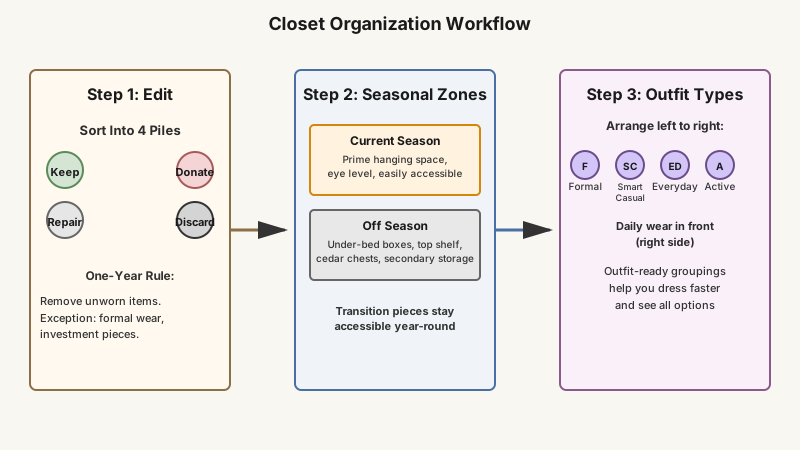
The standard advice is to remove anything you haven’t worn in a year. It’s a reasonable baseline. The caveat: formal wear, occasion pieces, and quality investment items (a well-made wool coat, a suit) earn a longer grace period. The question to ask is: Does this still fit, do I still like it, and is there a real occasion I’d wear it to within the next 12 months? If no to any, out it goes.
Sort Into Four Piles First
- Keep — fits, suits you, gets worn
- Donate/sell — good condition but not right for you anymore
- Repair — worth fixing, commit to a deadline or donate it
- Discard — worn out, stained, beyond saving
Do this pile-sorting before anything goes back in the closet. Organizing clothes you shouldn’t own wastes everyone’s time.

Step 2 — Set Up Your Seasonal Zones
Once you’ve edited, divide your wardrobe into two broad seasonal halves: current season (what you’re actively wearing) and off season (everything else). The goal is for only current-season clothes to live in your prime, eye-level space.
What Counts as “Current Season”?
Most climates break into two main rotations — warm and cool — with a transition overlap. In practice:
- Spring/Summer: Lightweight fabrics, short sleeves, sandal-friendly pieces, linen, cotton shorts
- Autumn/Winter: Knitwear, wool trousers, heavier outerwear, thermal layers
- Transition zone: Layering pieces that genuinely work across both — denim jackets, light cardigans, long-sleeve cotton shirts — can stay accessible year-round
If you live somewhere with minimal seasonal temperature shift (tropical climates, mild coastal cities), you may skip the seasonal swap and focus entirely on outfit-based zoning instead.
Where to Store Off-Season Clothes
Off-season items belong out of your prime hanging and shelf space. Options:
- Under-bed storage boxes (vacuum bags are excellent for bulky knitwear — they genuinely compress volume without damaging natural fibers if used correctly)
- Top-shelf bins in your existing closet
- A secondary wardrobe or storage wardrobe in another room
- Cedar-lined chests for wool and cashmere (cedar deters moths naturally)
Label everything clearly. When you rotate seasons — typically twice a year — take the opportunity to re-edit at the same time.
For more ideas on organizing shared linen and storage spaces that often hold off-season bins, take a look at How to Organize a Linen Closet: Empty It Before You Sort.
Step 3 — Organize Current-Season Clothes by Outfit Type
This is the layer most people skip, and it makes the biggest day-to-day difference. Within your current-season zone, group clothes by the type of outfit they belong to rather than by garment category.
Define Your Outfit Categories
Your categories should match your actual life. Common ones:
- Work / professional — office-appropriate pieces, business casual
- Smart casual / going out — elevated weekend wear, dinner outfits
- Everyday casual — jeans, t-shirts, relaxed pieces you reach for constantly
- Active / gym — workout clothes, running gear
- Occasion / formal — dresses, suits, ties, evening wear
Some people add a lounge/home section for what they wear in the evenings at home. That’s optional and depends on whether you actually want to manage it.
How to Physically Arrange It
On a hanging rail, move from left to right: formal → smart casual → everyday → active. This puts the least-used items at the far left and the clothes you grab daily front and center. On shelves, the same principle applies top to bottom — everyday at eye level, occasion wear lower or higher.
Within each outfit zone, organize by color — light to dark or grouped by tone. This makes it faster to pick a top in the right color for the trousers you’ve already pulled out.

The “Complete Outfit” Method
For those who genuinely struggle with decision fatigue in the morning, go one step further: hang full outfit combinations together. Top + bottom (or the dress) + a blazer or jacket if relevant, all on one hanger cluster or using an outfit hanger with multiple bars.
Pre-planning five to seven go-to outfits at the start of each week and hanging them together at one end of the rail is a popular productivity technique. You decide once — on a Sunday evening — and simply grab on Monday, Tuesday, and so on. It sounds fussy but in practice takes about ten minutes and eliminates the mental overhead of choosing daily.
Step 4 — Handle Accessories, Shoes, and the Problem Items
Shoes
Shoes should follow the same seasonal logic. Pull out off-season footwear — heavy boots in summer, sandals in winter — and box or bin them. For current-season shoes, clear stackable boxes let you see what’s inside without guessing. Original boxes work if you photograph the contents and tape the photo to the front.
Arrange shoes near the outfit category they match. Trainers near the active zone, heels near the occasion zone — or at least adjacent, so the mental pairing is easy.
Accessories
Belts, scarves, hats, and bags are the items that derail otherwise tidy closets. A few specific solutions:
- Belts: Roll and store upright in a drawer divider, or use a rail hook
- Scarves: Fold over a dedicated hanger or roll into a drawer by weight (light summer scarves, heavy winter ones stored separately)
- Bags: Store upright on a shelf with their structure maintained — stuff with tissue or old t-shirts to keep shape
- Hats: A row of hooks on a wall or the inside of a closet door; keep current-season hats accessible
The Problem Category: “Might Wear Again” Clothes
Every closet has them: the item you wore once, almost donates, then rescues. Limit yourself to a small, deliberate “trial” section — five items maximum. If you haven’t touched them within that season, they leave. No negotiation.
Step 5 — Maintaining the System Without Letting It Collapse
Any organizational system decays if you don’t build in maintenance habits. The good news: maintenance is far easier than setup.
The Twice-a-Year Seasonal Swap
Schedule two deliberate closet rotations per year — one in spring (moving heavy winter pieces out) and one in autumn (pulling them back in). Use a recurring reminder on your phone. During each swap, re-edit: anything that didn’t get worn that season needs a hard look.
The One-In, One-Out Rule
For every new item of clothing you bring in, one leaves. This is the single most effective way to keep a closet from bloating again. It sounds harsh until you try it for six months and notice your wardrobe has become easier to use, not harder.
The “Put It Back” Habit
Return clothes to their correct zone after every wear — not just back in the closet, but back in the right section. This takes five seconds per item and is the only daily habit the system actually requires.

Choosing Closet Tools and Storage Products
You don’t need to spend a lot. Most people overbuy storage products before they’ve edited, which makes the problem worse. Buy only after you’ve completed your edit and know exactly how much space you’re working with.
That said, a few items genuinely help:
- Slim velvet hangers: Reduce rail space used by 30–40% compared to plastic ones, and clothes don’t slip off
- Drawer dividers: Essential for folded items; rigid ones work better than fabric for everyday use
- Clear stackable shoe boxes: Real space-saver if you have many shoes
- Vacuum storage bags: Best for bulky off-season knitwear and duvets
- Shelf dividers or risers: Convert a single deep shelf into two usable levels
- Labeled bins or baskets: Good for top shelves where you can’t easily see inside
Avoid over-investing in matching bins or designer organizers until you know the system works for you. Start functional, then refine.
Conclusion: Build a Closet That Works for Your Life
The best closet organization system is the one you’ll actually maintain. Seasonal zoning reduces visual noise and keeps only relevant clothes accessible. Outfit-based grouping cuts decision time and ensures the clothes you own actually get used.
Start with the edit — that step does more work than any bin or hanger. Then build your seasonal zones, arrange by outfit type, and set up the basic maintenance habits. Do the twice-a-year swap and the one-in, one-out rule, and the system takes care of itself.
A well-organized closet isn’t about aesthetics for its own sake. It’s about starting every morning without friction, knowing exactly what you have, and wearing the clothes you actually own.