How to Make a Weekly Cleaning Schedule That You'll Actually Stick To

Most cleaning schedules fail within two weeks — not because people are lazy, but because the schedule was unrealistic from the start. Too many tasks crammed into a single Saturday, no flexibility for busy nights, and a format that feels like a punishment rather than a plan.
This guide walks you through building a weekly cleaning schedule that fits your actual life: your home’s size, your household’s habits, and the time you genuinely have available. The result is a routine you’ll follow not because you have to, but because it stops the chaos before it starts.
Step 1: Audit Your Home Before You Write Anything Down
Before assigning tasks to days, you need a clear picture of what your home actually requires. This sounds obvious, but most people skip it — and end up with a generic internet schedule that doesn’t match their space.
Walk every room and ask:
- How often does this room get dirty or cluttered?
- What’s the single task that makes the biggest visible difference here?
- How long does that task realistically take?
A kitchen used for daily cooking needs daily attention. A formal dining room used twice a week probably doesn’t. A household with a dog sheds more than one without. A toddler changes the calculus entirely.
Jot down every recurring task — vacuuming, mopping, wiping counters, cleaning toilets, changing sheets, scrubbing the shower, taking out trash, cleaning mirrors, dusting shelves. Don’t organize yet; just list.
Then sort by frequency:
- Daily tasks: These are the ones that compound fast if skipped — dishes, wiping kitchen counters, a quick bathroom wipe-down, picking up clutter.
- Weekly tasks: Vacuuming, mopping, scrubbing toilets and sinks, changing bed linens, cleaning the stovetop, wiping appliance fronts.
- Monthly or occasional tasks: Cleaning inside the oven, washing windows, wiping baseboards, decluttering a cabinet.
Monthly tasks don’t belong on your weekly schedule — put them somewhere else, like a separate monthly checklist. Keeping them off the weekly list prevents overwhelm.

If your audit reveals more than just a cleaning problem, our guide How to Declutter Your Home Step by Step (That Actually Works) can help you tackle the clutter that makes cleaning harder in the first place.
Step 2: Map Your Time Honestly
A schedule only works if the time exists. Take a week and note which days you get home late, which mornings are rushed, which evening you genuinely have 30 free minutes. Most people have two or three “lighter” days and two or three genuinely difficult ones.
A realistic daily cleaning window for most households:
- Weekday evenings: 10–20 minutes
- Weekend mornings or afternoons: 30–60 minutes
If that sounds like too little, here’s the reframe: 15 minutes of focused cleaning — no phone, no half-watching TV — covers more ground than you expect. Wiping a bathroom down thoroughly takes about 8 minutes. Vacuuming a two-bedroom apartment takes 15–20 minutes. These tasks feel longer because we usually do them at the worst possible time, already tired and resentful.
The load-spreading principle: distribute your weekly tasks across multiple short sessions rather than one long weekend blitz. This keeps the home consistently clean instead of swinging between chaos and frantic catch-up.
Step 3: Build the Weekly Framework
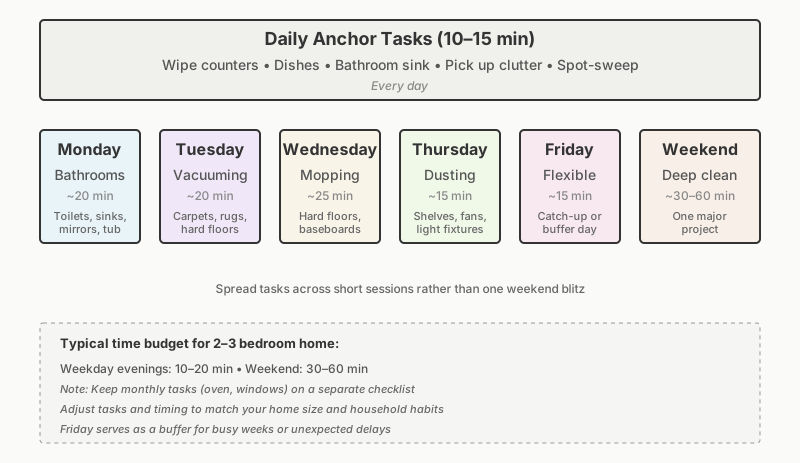
Here’s a practical structure that works for a typical 2–3 bedroom home. Adapt the specific tasks, not the framework itself.
Daily Anchor Tasks (10–15 minutes)
These happen every day because skipping them causes visible deterioration overnight:
- Wipe kitchen counters and stovetop
- Wash or load dishes into the dishwasher
- Quick wipe of bathroom sink
- Pick up clutter in main living areas
- Sweep or spot-vacuum high-traffic areas if needed
For more ideas on keeping the busiest room in the house under control day to day, see 10 Tips for Keeping a Clean Kitchen Every Day.
Assign Weekly Tasks Across the Days
The key is to assign one or two focused tasks per day rather than leaving everything to the weekend. Here’s a sample structure:
Monday — Bathrooms Scrub toilets, clean sinks and faucets properly, wipe mirrors, clean the tub or shower. For one bathroom, this is about 20 minutes.
Tuesday — Vacuuming Vacuum all carpets and rugs, plus hard floors if you use a vacuum for both. Put on a podcast and it’s done before the episode gets interesting.
Wednesday — Mopping & Hard Floors Mop kitchen and bathroom floors, wipe baseboards if they need it. Wednesday works because the weekend traffic hasn’t started yet.
Thursday — Dusting & Surfaces Dust shelves, ceiling fans, blinds, and light fixtures. Wipe down switches and door handles — places that collect fingerprints but rarely get attention.
Friday — Kitchen Deep Clean Clean inside the microwave, wipe appliance fronts, scrub the sink, clean out the fridge of anything past its prime. Starting the weekend with a clean kitchen changes the whole feeling of Saturday morning.
Saturday — Laundry & Linens Change and wash bed linens, do main laundry loads. This is the high-volume task that needs more time, so it earns the weekend slot.
Sunday — Reset & Prep Light tidying, taking out all trash, wiping tables. No heavy cleaning — this day is about preparing for the week ahead without burning energy you’ll need Monday.

Step 4: Write It Down in a Format You’ll Actually Use
The format matters. A schedule buried in a notes app you never open is no schedule at all.
Options that actually work:
- A physical whiteboard or chalkboard in the kitchen or laundry room — visible, easy to check off, and satisfying to erase.
- A printed weekly template slipped into a clear sleeve on the fridge — low-tech, highly effective.
- A recurring task in a to-do app (Todoist, TickTick, Apple Reminders) with daily or weekly recurrence — useful if you live by your phone’s notifications.
- A shared family calendar when multiple people share responsibility — Google Calendar works, or a paper command center near the door.
Avoid over-engineering it. A one-page printed grid with the days of the week and tasks listed under each is enough. Elaborate color-coded spreadsheets are satisfying to build and rarely survive contact with real life.
Step 5: Divide Tasks If You Share Your Home
A cleaning schedule in a shared household — whether with a partner, roommates, or kids — has to account for who’s doing what. Unspoken assumptions are the number one cause of friction around housework.
A few principles that help:
Assign by preference or availability, not just fairness. If one person genuinely doesn’t mind vacuuming and hates scrubbing bathrooms, that’s useful information. Optimize for willingness where possible.
Use zones instead of tasks. Some households find it easier to assign rooms (“you own the bathrooms this week”) rather than individual tasks. It’s clearer and easier to hold each other to.
Rotate monthly, not weekly. Swapping tasks every week creates confusion. A monthly rotation gives each person enough time to develop a rhythm with their assigned jobs.
Involve kids with age-appropriate tasks. Children as young as four can put away toys and wipe low surfaces. By eight, most kids can vacuum or help with laundry. Involving them early builds the habit; treating cleaning as something adults do for kids is a setup for future conflict.
Step 6: Troubleshoot the Common Failure Points
Even a well-designed schedule breaks down eventually. Here’s how to handle the most common problems.
“I missed two days and now the whole week feels ruined.”
This is the all-or-nothing trap. If you miss Tuesday’s vacuuming, it doesn’t mean the schedule failed — it means Tuesday was hard. Do it Thursday instead. A cleaning schedule is a framework, not a contract with penalties.
“The tasks take longer than I estimated.”
Time your tasks once with a timer. People consistently overestimate how long cleaning takes when they’re dreading it, and underestimate when they’re in the middle of it. Actual data beats guesswork.
“The schedule works for a week, then I stop.”
This usually means one of two things: the tasks are too concentrated (not spread out enough), or the schedule has no margin for a bad day. Build in one “flex day” per week — a day with no assigned task where you catch up or rest. You won’t always need it, and when you do, it keeps the whole system from collapsing.
“I live alone and the schedule feels like overkill.”
Scale down radically. A single person in a one-bedroom apartment might only need three or four real weekly tasks beyond daily maintenance. Don’t copy a schedule built for a family of four.

Making It Stick: The Habit Layer
A schedule is a plan. A habit is what actually keeps the house clean.
The most effective way to turn a schedule into a habit is to attach tasks to existing anchors — things you already do without thinking. Wiping down the kitchen counter immediately after cooking, before sitting down to eat. Running the vacuum on Tuesday evenings because that’s when you always watch your favorite show anyway. Cleaning the bathroom sink on Sunday mornings as part of getting ready.
This is called “habit stacking” — a concept well-documented in behavioral psychology research, notably by researchers studying routine formation. The new behavior borrows automaticity from the old one.
The other piece: lower the activation energy. Keep your cleaning supplies accessible, not locked in a cabinet under the sink. A spray bottle and a cloth on the counter edge is the difference between wiping the stovetop now and telling yourself you’ll do it later.
Conclusion: Start Simpler Than You Think You Should
The single biggest mistake people make when creating a weekly cleaning schedule is starting with too much. They list every possible task, assign it all, and burn out by Wednesday of week one.
Start with daily anchor tasks plus two or three weekly ones. Run that for two weeks. Add more only once those feel automatic. A schedule that covers 60% of what needs doing and actually happens beats a perfect schedule that gets abandoned.
The goal isn’t a spotless home at all times — it’s a home that doesn’t require a full-day emergency clean when guests show up unexpectedly. A consistent, modest weekly schedule gets you there faster than any ambitious plan you’ll eventually drop.