Fixing Drywall Dents Without Filling or Sanding
Dents in drywall are annoying, but they rarely require a full spackle-and-sand job. A shallow dent caused by a doorknob tap, a moved picture frame, or a furniture bump can often disappear with the right trick and a few minutes of work. The methods below skip the dusty, multi-day process of filling and sanding and target the specific situations where that shortcut actually holds up.
When Skipping Filler Is a Realistic Option
Not every dent qualifies. A true shallow dent compresses the paper face and the gypsum core slightly without tearing either. The surface is dimpled but intact. If the paper is torn, the gypsum is crumbled and loose, or the dent is deep enough that you can feel the edge sharply with a fingernail, filler will produce a better result. Use the methods here for smooth, clean depressions that have not broken through the paper face.
There are two main no-fill approaches worth knowing: the moisture-rebound method and the thermal expansion method. A third option, self-adhesive texture patches, handles dimples where light texture is missing but no structural repair is needed.
The Moisture-Rebound Method
Compressed gypsum and paper will sometimes absorb moisture, swell, and partially spring back toward their original position. This works best on dents that are no deeper than roughly the thickness of a fingernail.
What you need: A clean damp sponge or cloth, and a hair dryer on a low heat setting.
Steps:
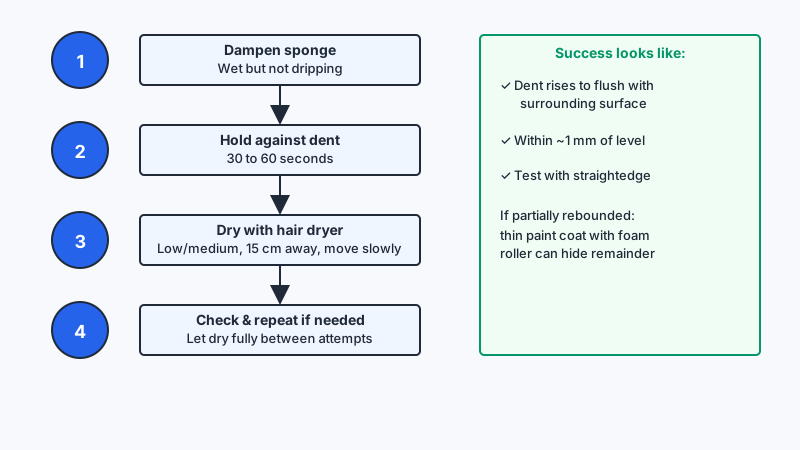
- Dampen a sponge until it is wet but not dripping.
- Hold it against the dent for about 30 to 60 seconds. Do not soak the wall; the goal is controlled moisture.
- Pull the sponge away and immediately hold a hair dryer on a low or medium setting about 15 centimetres from the surface. Move it slowly in small circles.
- As the surface dries, the paper and gypsum can contract back upward. Watch for the dent to shallow out.
- Repeat the cycle once or twice if the dent is still visible. Let the area dry fully between attempts.
Results vary depending on how old the dent is, the thickness of the paper facing, and the humidity of the room when the dent was made. Older dents that have been compressed for months are less likely to rebound than fresh ones.
What success looks like: The dent rises enough to sit flush or within a millimetre of the surrounding surface. Touch it with a straightedge to check. If it rebounds most of the way but not quite, a very thin skim of paint with a foam roller can visually close the gap without any filler.
The Thermal Expansion Method
A variation on the moisture method uses a damp cloth and a steam iron held close to (but not touching) the surface. The steam forces moisture into the compressed gypsum faster than a sponge alone.
Steps:
- Lay a thin cotton cloth flat against the dent.
- Set your steam iron to a medium setting.
- Hold the iron about 2 to 3 centimetres above the cloth, triggering the steam burst, for no more than 5 to 10 seconds per pass.
- Remove the cloth and let the surface cool and dry before checking progress.
- Run a hair dryer on low heat over the area to help it dry evenly.
Apply steam in short bursts only. Prolonged heat and moisture can bubble paint or soften the paper facing further, making the damage worse. Do not press the iron against the wall.
Using Texture Primer Spray for Shallow Surface Dimples
Some dents are less about depth and more about the loss of the original paint texture. Orange-peel and knockdown textures in particular leave a shallow dimple that catches light and shows up clearly even when the dent itself is nearly flat.
For these, a texture-matched aerosol primer can fill the visual gap without mixing joint compound or wet sanding:
- Shake the can for the full time shown on the can (usually around a minute).
- Mask off a 30-centimetre zone around the dent with painter’s tape and paper.
- Test the spray pattern on a piece of cardboard first. Adjust distance until the texture matches the surrounding wall.
- Apply one thin mist coat, let it flash off, and compare the texture to the wall.
- Once dry, prime if needed and repaint with a touch-up brush or small roller.
The key variable is distance: closer produces heavier, wetter texture; further away produces finer, drier texture. Neither is universally correct; match your wall’s existing pattern.
Why Paint Alone Sometimes Hides a Dent
Flat or matte paint scatters light and can mask very shallow surface irregularities that eggshell or semi-gloss paint would reveal. If the dent is genuinely barely-there but shows only under raking light, try touching up with a foam roller loaded with flat or matte paint in the correct colour before attempting any repair. Roll past the dent rather than dabbing at it. The slight build-up of two coats can visually fill a fraction-of-a-millimetre depression.
This is not a structural fix and will not work on anything deeper than a very subtle surface irregularity, but it saves time when the situation calls for it.
If the damage is actually a small hole rather than a shallow dent, How to Patch a Small Hole in Drywall: Making Doorknob Dents Disappear walks through the extra steps needed to close the gap first.
Matching Paint After a No-Filler Repair
The repair itself is only half the job. A perfect dent correction fails visually if the touch-up paint does not match the surrounding wall. A few practical points:
- Sheen matters more than colour: A colour-matched paint in a different sheen level reads as a patch even in soft light. Confirm the sheen (flat, eggshell, satin, semi-gloss) before buying touch-up paint.
- Feather the edges: Apply paint with a small foam roller rather than a brush whenever possible. Brush marks create a texture edge that shows under light. Roll from the centre outward, extending several centimetres past the repair zone.
- Let the first coat dry fully before judging: Wet paint looks darker and more uniform than dry paint. A mismatch that seems glaring when wet often disappears once dry.
- Age and fading: If the surrounding paint has faded over years, a fresh colour match will still look brighter. Light feathering into the surrounding wall with a very lightly loaded roller reduces this contrast.
For tips on blending new paint into an existing wall without redoing the whole surface, check out Touch Up Wall Paint Without Repainting the Whole Room.
Frequently Asked Questions
Does the moisture method work on textured ceilings?
Rarely well. Ceiling drywall is under compression from gravity, and popcorn or spray texture adds fragility. Moisture introduced from below can loosen texture and cause it to drop. For textured ceilings, a compatible texture spray repair is safer than the moisture rebound method.
How deep a dent can these methods actually fix?
The moisture-rebound and thermal methods work reliably on dents roughly 1 to 2 millimetres deep at most. Anything deeper, or any dent with a visible shadow from normal (non-raking) light, typically needs at least a thin skim of joint compound to close the gap properly. These methods are for the dents you feel more than you see.
Will the dent come back after a moisture repair?
If the dent rebounded fully and the paint dried without bubbling, the repair is stable. Gypsum that has re-expanded and dried in position does not re-compress on its own. However, if the source of the original impact is still present (a door that swings without a stopper, a chair that hits the wall repeatedly) the dent will return.
Can I use these methods on plaster walls?
Plaster behaves differently from drywall. Traditional lime or gypsum plaster is denser and does not rebound from moisture the way drywall paper and gypsum board do. Moisture applied to old plaster can soften the keys that hold it to the lath and cause sections to crack or fall. For plaster walls, stick to purpose-made patching plaster and light sanding.
What if the dent has a small crack radiating from it?
A crack changes the diagnosis. Cracks indicate that the gypsum core has fractured rather than compressed, and moisture methods can widen a crack by softening the surrounding material. Use a setting-type joint compound or a fibreglass mesh patch tape for any dent that has cracked edges.