Cooking Artichokes at Home: From Raw to Table
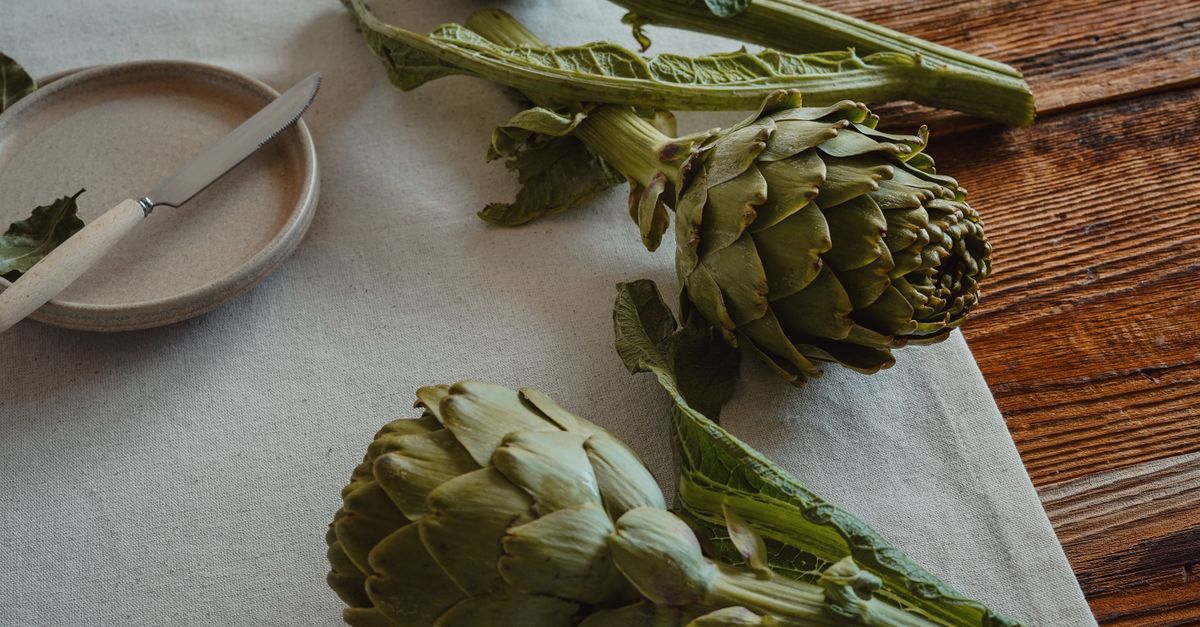
Artichokes intimidate a surprising number of home cooks. The layered, armored exterior doesn’t hint at what’s inside, and most recipes give vague directions like “cook until tender” without explaining what tender actually means for a vegetable that stays firm long after lesser greens have gone to mush. This guide covers the whole process — prep, four core cooking methods, and how to eat the result — so you can buy artichokes with confidence.
What to Look for Before You Even Cook
The best artichoke is a tight one. Squeeze it gently: the leaves should squeak against each other. A head that feels loose or dry is past its prime. Weight matters too — a fresh artichoke is dense for its size. Browning on the tips is usually cosmetic (often frost damage), but leaves that are splayed open or shriveled signal age.
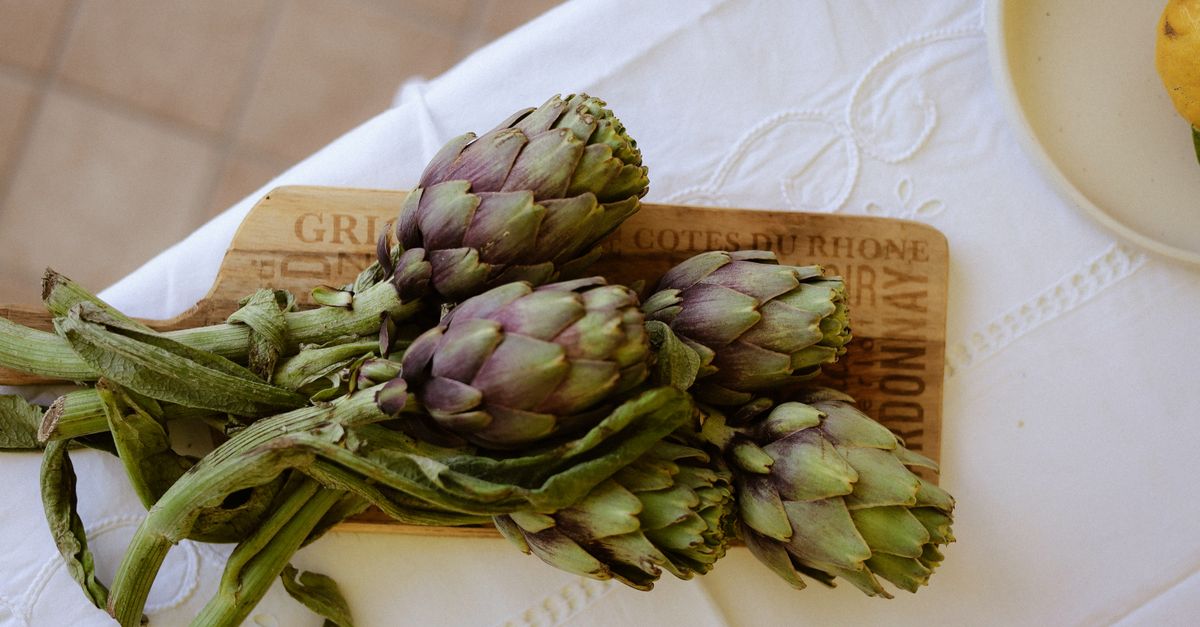
Globe artichokes sold in most grocery stores are typically Cynara cardunculus var. scolymus, and they peak in spring, with a second smaller harvest in fall. Baby artichokes are the same variety — just the lower buds on the same plant — and are fully edible down to the choke, which makes them a shortcut: less trimming, no hollowing.
Prep: The Part Nobody Explains Clearly
Artiching (yes, that’s the verb) requires a bit of attention because cut surfaces oxidize to brown within minutes. Fill a bowl of cold water with the juice of half a lemon before you start, and drop each piece in as you finish trimming.
Trimming a Whole Artichoke
- Snap off the toughest outer leaves. The first two or three rows are usually woody and fibrous — pull them back until they snap at the base.
- Cut the top. Use a serrated knife to slice off the top quarter of the artichoke. This removes the spiky tips and exposes the inner leaves. Sharp kitchen shears work for snipping the thorny tip of any remaining outer leaves.
- Trim the stem. The stem is actually edible — it’s continuous with the heart — so keep as much as you can. Peel the fibrous outer layer with a vegetable peeler or paring knife.
- Rub cut surfaces with lemon immediately.
For a stuffed or halved artichoke, you’ll also scoop out the choke — the fuzzy center — with a melon baller or a spoon. It’s inedible (technically edible, but unpleasant and scratchy).
Four Ways to Cook Artichokes
Boiling (the Classic Route)
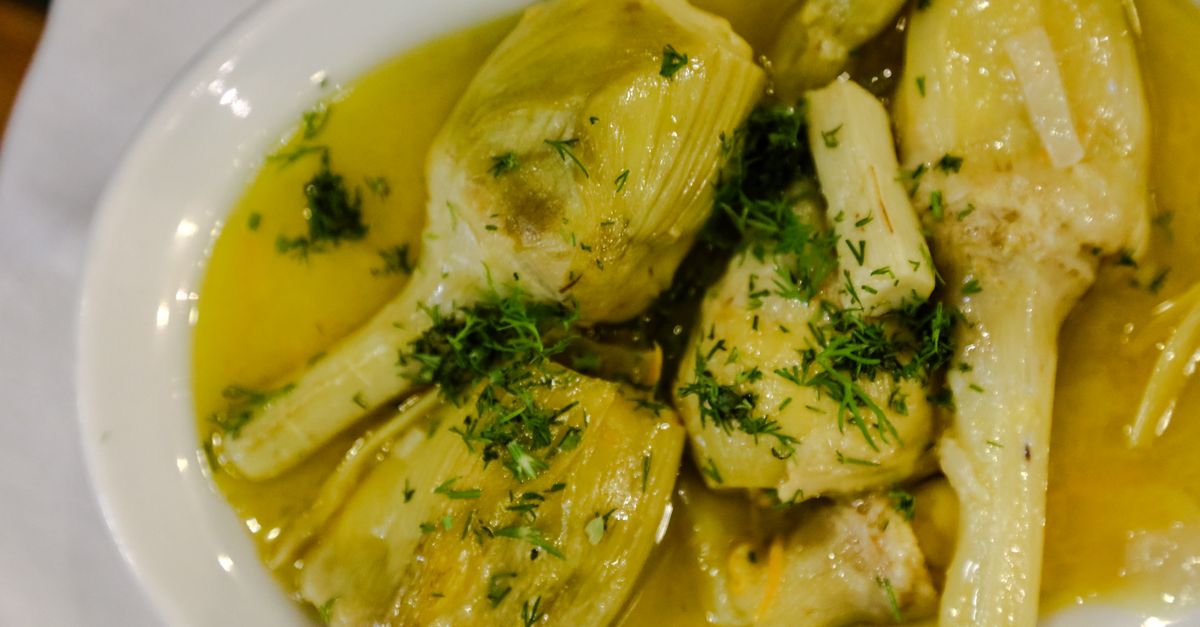
Boiling is the lowest-effort method and the most forgiving. Add enough salted water to a pot to fully submerge the artichokes. A few aromatics — a halved lemon, a bay leaf, a garlic clove — improve the flavor of the water, which the artichoke absorbs slightly.
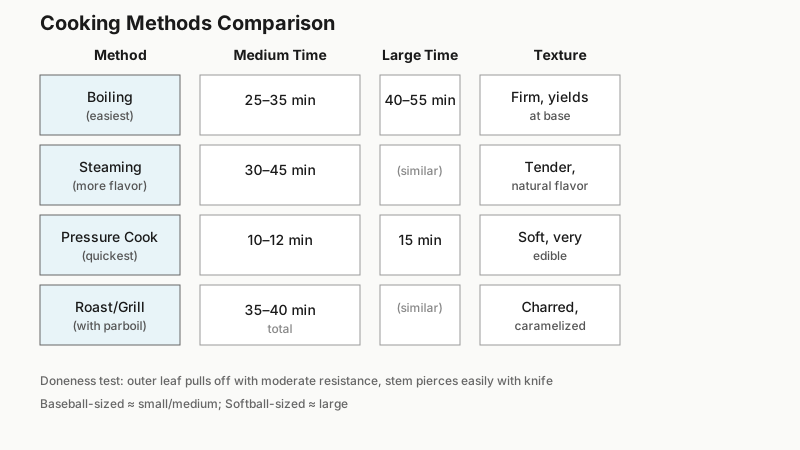
Place artichokes base-down (or use a steamer basket). If they bob, weight them with a heatproof plate. Boil on medium heat: small artichokes (baseball-sized) take about 25–35 minutes; large ones (softball-sized) take 40–55 minutes. Test by pulling off an outer leaf — it should come off with moderate resistance, and the base of the leaf should be yielding, not crunchy. Alternatively, pierce the stem with a knife; it should slide in with little resistance.
Drain upside down for a few minutes so water doesn’t pool in the leaves.
Steaming (more flavor, longer time)
Steaming preserves slightly more of the artichoke’s natural flavor because the vegetable isn’t sitting in water. Set up a pot with about two inches of salted water and a steamer basket or insert. Bring to a boil, add artichokes, cover tightly, and reduce to a steady simmer.
Timing is similar to boiling — expect 30–45 minutes for medium heads — but check more frequently, as the steam level can vary. If the pot runs dry, you’ll scorch the bottom (and the artichokes will taste of it).
Pressure Cooking (the fast method)
A pressure cooker or Instant Pot cuts cook time dramatically. Add one cup of water, place artichokes on the trivet, seal, and cook on high pressure for 10–12 minutes for medium artichokes, 15 minutes for large ones, with a quick release. The texture is slightly softer than boiled but very edible. This is the method worth using on a weeknight.
Roasting and Grilling (for more character)
If you want caramelized, slightly charred edges, roasting or grilling is the move. But artichokes need a head start — they’re too dense to cook through on dry heat alone.
Roasting method: Parboil or steam artichokes for 15–20 minutes first. Then halve them, scoop out the choke, brush generously with olive oil, and season with salt and pepper. Roast cut-side down at 200°C / 400°F for 20–25 minutes until the edges are browned and the heart is tender.
Grilling method: Same parboil step, then finish cut-side down on a medium-high grill for 5–8 minutes. The grill marks add bitterness in a pleasant way. A squeeze of lemon right off the grill is not optional.
For extra flavor on the grill, check out Simple Spice Blends: How to Make and Use Them at Home to build a custom rub for your artichokes.
What to Serve with Artichokes
The leaves are made to be dipped. Common pairings:
- Garlic butter — melt butter with a smashed garlic clove; simple, excellent
- Aioli or mayonnaise — the richness offsets the slight bitterness of the leaves
- Vinaigrette — a sharper option that works especially well with grilled artichokes
- Lemon-tahini sauce — less traditional but genuinely good
To eat a leaf, drag the fleshy base across your lower teeth — that’s the edible part. The fibrous upper portion goes in a discard bowl. Once you’ve worked through the outer leaves and a few inner rows, you’ll reach the pale, papery inner leaves (entirely edible) and then the choke, which you scoop out before eating the heart beneath.
The heart is the densest, most flavorful part, and it’s worth the whole exercise.
If you want an easy, luxurious dip for your leaves, our guide to How to Make Clarified Butter and Ghee at Home shows how to make the rich melted butter that pairs perfectly with artichokes.
Troubleshooting Common Problems
Artichoke is still tough after the recipe time: Cook longer. Artichoke density varies significantly with size and age. An extra 10 minutes is rarely the wrong call.
Leaves are mushy but stem feels raw: Next time, cook at a lower simmer; violent boiling creates uneven results. Or trim the stem less so it cooks more evenly.
Everything turned brown: Happens with oxidation from under-lemon-ing, or from leaving cut artichokes exposed too long. Cosmetic, not unsafe, but preventable with the lemon water bath.
Bitter flavor: Mild bitterness is native to artichokes (it’s the cynarin, the compound that also makes water taste sweet immediately after). Strong unpleasant bitterness usually means the artichoke was old, or it wasn’t rinsed well enough after trimming.
Frequently Asked Questions
Can you eat the entire artichoke?
Not quite. The leaves are partly edible (the fleshy base only), the heart is fully edible, and the stem is edible after peeling. The choke — the fuzzy mass above the heart — is not pleasant to eat and should be removed. Baby artichokes are the exception: their choke hasn’t developed fully, so the whole thing is edible.
Do artichokes need to be refrigerated before cooking?
Yes. Store unwashed artichokes in a plastic bag in the refrigerator. They’ll keep for about a week, though quality starts to decline noticeably after four to five days. Don’t wash them until you’re ready to cook.
Can you cook artichokes ahead of time?
Absolutely — and it’s often easier. Boil or steam them fully, then refrigerate for up to three days. Reheat by steaming for a few minutes, or serve at room temperature, which works well with vinaigrette.
Why does water taste sweet after eating artichokes?
That’s the cynarin effect. Cynarin (1,3-dicaffeoylquinic acid) in artichokes temporarily inhibits sweet taste receptors; when it’s washed away by drinking, the receptors rebound and water can taste sweet. It’s real, but how strongly you experience it is individual — some people barely notice.
Are canned or jarred artichoke hearts a fair substitute?
For cooked dishes — pasta, pizza, dips, grain bowls — yes, and they’re actually convenient since the hardest work is already done. For a whole-leaf eating experience, no substitute exists. Canned hearts are typically packed in brine or oil, so rinse and taste before adding salt to a dish.