Best Storage Bins for Decluttering Closets: A Buyer's Guide

A cluttered closet rarely has a space problem — it has a system problem. The right storage bins don’t just contain your stuff; they create categories, make items findable in seconds, and prevent the re-clutter that wipes out a weekend’s worth of organizing work. But walk down any home-goods aisle and you’ll find dozens of shapes, materials, and sizes competing for your attention (and your shelf space). This guide cuts through the noise.
Below you’ll find a breakdown of the best bin types by closet situation, a plain look at materials and their trade-offs, sizing advice, and five specific products worth considering — so you can buy once and actually stay organized.

Why the Wrong Bin Makes Decluttering Harder
This sounds counterintuitive, but a bin that’s too large encourages hoarding: out of sight, out of mind. A bin that’s too small gets overfilled and never properly closed. A bin without a lid collects dust in deep closets; a lidded bin stacked five high becomes inaccessible. Every bin choice carries a trade-off, and the best one depends on three factors:
- What you’re storing — soft items like blankets tolerate flexible fabric bins; shoes and tools need rigid walls.
- Where it’s going — top shelf vs. floor vs. a hanging rod determines ideal dimensions.
- How often you access it — seasonal items can live in opaque, lidded containers; daily items need open-front or clear bins.
Get those three right and almost any bin works. Get them wrong and no bin, however well-reviewed, will stick.
If you haven’t yet tackled the closet space itself, our guide How to Organize a Small Closet: Purge First, Then Map The Space walks through purging and mapping before you buy a single bin.
Storage Bin Materials: Honest Trade-Offs
Clear Plastic Bins
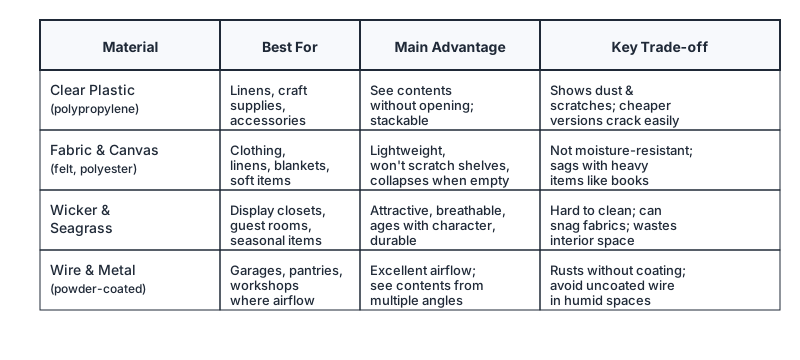
Clear polypropylene or acrylic bins are the gold standard for visibility. You can spot a missing phone charger or a spare button-down without pulling everything off the shelf. Stackable, snap-lid options hold up well to humidity, making them solid for linen closets. The downside: they show dust and scratches over time, and the cheaper versions crack along the hinge tabs within a year of regular use. Spend slightly more for bins with reinforced lids and clip-lock closures if they’ll be stacked.
Best for: Linen closets, craft supplies, accessories, kids’ small toys.
Fabric Bins and Baskets
Woven fabric bins — typically polyester felt or canvas — are the most forgiving. They’re lightweight, won’t scratch shelves, and compress when empty. Collapsible versions store flat between seasons. The trade-off is that they aren’t moisture-resistant and can sag when packed with heavy items like books or tools. Look for bins with interior stiffening panels if you want them to keep their shape on open shelves.
Best for: Clothing, linens, blankets, soft accessories on open shelving.
Wicker and Seagrass Baskets
These look attractive in open closets or on floating shelves where aesthetics matter. They’re breathable (good for items that shouldn’t be sealed in plastic), and they age with character. The problem: they’re hard to wipe clean, the weave can snag delicate fabrics, and irregularly shaped weaves waste interior space. Reserve them for items with low turnover — guest towels, seasonal décor, heirloom linens.
Best for: Display-style closets, guest rooms, items that need breathability.
Wire and Metal Bins
Open-wire bins are common in pantry and garage closets. Air circulates freely, and you can see contents from multiple angles without labels. They rust without a protective coating, so avoid uncoated wire in humid spaces like bathroom linen closets. Powder-coated or chrome-finished versions hold up much better.
Best for: Garages, pantries, workshop closets where airflow matters.

Sizing Your Bins: The Shelf-Depth Rule
Most standard closet shelves are 12–16 inches deep. A bin deeper than the shelf will overhang — fine for a bottom shelf, awkward at eye level. A bin shallower than the shelf wastes space and often slides backward, disappearing into the back of the closet.
A practical sizing approach:
- Measure shelf depth, subtract 1–2 inches for a bin that sits flush without overhanging.
- For height, remember that if you’re stacking, each bin’s height plus its lid needs to fit within your shelf-to-shelf clearance.
- For width, buy bins that fit two or three across a standard 24–36" shelf — this creates natural categories side by side.
A common mistake: buying all the same size. Mixing a few large bins (bulky sweaters, extra bedding) with medium bins (accessories, workout gear) and small bins (batteries, spare cables) gives you flexible zoning without wasted air space inside oversized containers.
The Best Storage Bins for Closets, by Use Case
For Clothing and Soft Items: Sterilite 3-Drawer Wide Weave Tower
Not a traditional bin, but a small drawer tower earns a place in walk-in closets for folded t-shirts and activewear. Drawers keep items accessible without creating a dig-to-find situation. If drawer towers aren’t for you, the IKEA SKUBB box series offers fabric bins specifically dimensioned for the PAX wardrobe system — and they work well on standard shelves too, with a flat bottom and zip-lid option for seasonal storage.
For Visibility: IRIS USA Weathertight Storage Box
IRIS USA makes some of the most consistently well-reviewed clear storage boxes on the market. The Weathertight line features a gasket-sealed lid — overkill for most closets, but genuinely useful for attic-adjacent storage or damp basements. The clip-lock corners resist popping open when stacked. Available in multiple sizes, they’re stackable and nest when empty.
For Open Shelving Aesthetics: Threshold Fabric Storage Bin (Target)
Target’s house-brand bins (sold under the Threshold label) are a strong value for open-shelf closets. The structured felt walls hold shape reasonably well, they come in neutral tones that match most interiors, and handles make pulling them from high shelves easy. They’re not the most durable option — the bottom can bow under heavy loads — so pair them with lighter items.
For Shoes: Shoe Storage Boxes by Stackers or Similar Clear-Lid Options
Dedicated shoe bins serve a specific need: they protect leather and suede from dust while letting you identify the pair at a glance. Look for drop-front or hinged-lid designs so you don’t have to unstack the whole column to grab a pair from the bottom. Many are sold as sets of 6 or 12, which encourages a consistent look and keeps costs per unit reasonable.
For Heavy or Seasonal Items: HDX Heavy-Duty Tote
For winter coats, extra bedding, or anything genuinely bulky, a rigid high-density polyethylene (HDPE) tote with a snap-on lid is more reliable than fabric. The HDX brand (sold at Home Depot) offers thick-walled totes with reinforced bases and latching lids at a competitive price. These aren’t pretty enough for open shelving, but stacked in a utility closet or on a high shelf, they’re hard to beat for longevity.

Labeling: The Step Most People Skip
Buying the right bins is only half the system. Without labels, a bin becomes a mystery box within three months. You don’t need a label maker — masking tape and a marker work perfectly. For fabric bins, a chalk label or a labeled card slipped into a clear pocket sewn onto the front is more flexible if your contents change seasonally.
Consistent labeling by category (not by person or by room) also makes it easier to relocate items when life changes — a bin labeled “Winter Accessories” can move from a hall closet to a bedroom closet without re-labeling.
Frequently Asked Questions
How many bins do I actually need for a standard reach-in closet?
Most reach-in closets (roughly 6 feet wide) have 2–3 shelves. A practical starting point is 2–3 bins per shelf — enough to create category zones without overcrowding. Start with fewer bins than you think you need; adding more is easier than returning bins that don’t fit.
Should storage bins be opaque or clear?
Clear bins work better for items you access frequently — you find things faster without unpacking. Opaque bins are fine for seasonal or rarely accessed items, provided you label them clearly. A mixed approach (clear for active use, opaque for archive storage) is the most practical.
What’s the best way to prevent bins from sliding on closet shelves?
Non-slip shelf liner cut to size stops bins from migrating toward the edge. For wire shelving, look for bins specifically designed with feet that grip the wire grid, or add a solid shelf liner panel first.
Is it worth buying matching bins throughout the closet?
Matching bins create a calmer visual environment, which makes clutter feel less overwhelming — but uniformity is less important than fit and function. Prioritize bins that are the right size for each zone; matching color or brand is a nice-to-have, not a requirement.
How do I stop a reorganized closet from getting cluttered again?
The most common reason a decluttered closet reverts is that the system requires too many decisions. One bin per category, a label on every bin, and a rule that nothing sits on top of a closed bin keeps entropy in check. The system should make putting things away easier than leaving them out.
Bringing It Together
The best storage bin for your closet isn’t a specific brand — it’s the one that matches your shelf depth, holds the right category of item, and makes retrieval effortless. Clear plastic bins win on practicality for most people; fabric bins win on aesthetics; heavy-duty totes win on durability for bulk storage. Use a mix.
Once you’ve chosen your bins, the decluttering process itself becomes easier: you’re not trying to organize chaos — you’re filling a pre-defined system. That shift in mindset, more than any particular product, is what makes a reorganized closet stay organized.
For the bigger picture beyond closets, How to Declutter Your Home Step by Step (That Actually Works) lays out a room-by-room approach to clearing clutter for good.