Best Chef Knives for Home Cooks: German Or Japanese Blade Style

A great chef’s knife changes how you cook — not dramatically, not overnight, but quietly and consistently. Prep time drops. Onions stop bruising. Chicken breaks down cleanly. If you’re going to own one serious kitchen tool, this is it.
This guide covers what actually matters when choosing a chef’s knife for home use, then recommends specific knives across different styles, budgets, and hand sizes — with honest notes on where each one falls short.

What Makes a Chef’s Knife Good for Home Cooking
Professional kitchen needs and home cooking needs diverge more than knife marketing admits. A line cook breaks down 30 chickens a shift; you might do one every two weeks. That changes which traits actually matter.
Edge retention over raw sharpness. A laser-ground blade that sharpens to a frightening edge but dulls after 20 uses is worse for home cooks than a slightly softer steel that holds a working edge for months with occasional honing. Home cooks hone infrequently and sharpen even less. Steel hardness around 58–62 HRC is a practical sweet spot — hard enough for good retention, forgiving enough that a clumsy honing stroke or an accidental tap on the faucet doesn’t chip the edge.
Weight and balance that fits your grip. There’s no universally correct weight. Heavier knives (200–250 g) do some of the work through mass; lighter knives (150–180 g) reward fast wrist work. The balance point — ideally right at or just forward of the bolster — matters more than weight alone. If a knife feels front-heavy in the store, it will fatigue your wrist at home.
Handle comfort for a pinch grip. Most experienced cooks use a pinch grip: thumb and index finger pinch the blade just forward of the bolster, other fingers wrap the handle. Any knife you’re considering should be evaluated in this grip, not with all fingers on the handle.
Blade geometry, not just steel. A thick spine behind an edge that’s not thinned properly will wedge through dense vegetables (carrots, sweet potatoes) rather than slicing. Look for a gradual taper from spine to edge, not a wedge profile.
German vs. Japanese: Choosing the Right Style
The most common framing — German vs. Japanese — maps roughly onto two design philosophies, though the lines blur constantly.
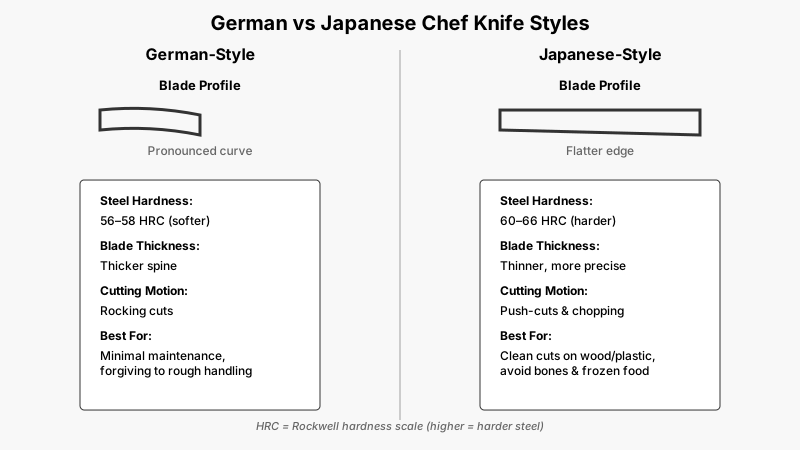
German-style knives (Wüsthof, Henckels, Victorinox, Messermeister) tend toward softer steel (56–58 HRC), thicker spines, full bolsters, and a pronounced curve along the cutting edge that suits rocking cuts. They’re more tolerant of dishwashers (still don’t do it), rough honing, and sideways force. A German knife is the practical choice if you want something that requires minimal fussing.
Japanese-style knives (Global, Shun, MAC, Miyabi, Masamoto) typically use harder steel (60–66 HRC), thinner blades, and a flatter edge profile that suits push-cuts and chopping. The trade-off: harder steel chips more easily on hard foods (frozen meat, bone) and on hard surfaces (glass, ceramic cutting boards). If you’ll do most of your cutting on a wood or plastic board and stay away from bones, a Japanese-style blade rewards you with a noticeably thinner, more precise cut.
The hybrid middle ground. Several knives — MAC Professional, Wüsthof Ikon, and a growing wave of American makers — sit between camps: harder than traditional German steel but less brittle than full Japanese hardness, with a curve profile that suits both rocking and push cuts. For most home cooks who don’t want to think about it, this range is worth prioritizing.

| Feature | German-Style | Japanese-Style | Hybrid Middle Ground |
|---|---|---|---|
| Steel Hardness (HRC) | 56–58 | 60–66 | Between German and Japanese |
| Blade Thickness | Thicker spine | Thinner blade | Medium |
| Cutting Edge Profile | Pronounced curve | Flatter | Suited to both rocking and push cuts |
| Best Cutting Motion | Rocking cuts | Push-cuts and chopping | Both rocking and push cuts |
| Dishwasher Tolerance | More tolerant | Less tolerant | Moderate |
| Edge Chipping Risk | Lower | Higher on hard foods and surfaces | Lower than full Japanese |
| Ideal Cutting Surface | Any surface | Wood or plastic boards | Any surface |
| Best For | Minimal maintenance | Precise, thin cuts | Home cooks who want versatility |
Recommended Knives by Budget and Style
The Everyday Workhorse (Under $60)
Victorinox Fibrox Pro 8-inch is the honest answer at this price. The blade is stamped rather than forged, which purists note but most people never notice in use. It’s lighter than most German knives, the handle has a secure non-slip grip even with wet hands, and it takes an edge well. The bolster is minimal, which makes sharpening easier. No, it won’t impress a knife enthusiast. It will do everything a home cook needs for years.
The Step-Up Choice ($80–$150)
MAC Professional Series 8-inch (MTH-80) is the knife that serious home cooks keep buying after they’ve tried more expensive options. It’s Japanese in style — thinner blade, harder steel — but uses a dimpled edge that reduces food sticking. The handle suits medium-to-large Western hands reasonably well, though very large hands may feel pinched. This knife gets sharper than anything in its price range and holds that edge with routine honing. The one caveat: don’t use it on frozen food.
Wüsthof Classic 8-inch belongs in this range (street price varies, but often $130–$145). It’s the reliable, no-surprise choice: comfortable full bolster, high-carbon stainless steel that’s harder than entry-level German knives, and a proven track record. It won’t wow you, but it won’t frustrate you either.
The Serious Investment ($150–$300)
Shun Classic 8-inch brings Damascus-clad VG-MAX steel and a striking visual. Performance is excellent for most vegetables and proteins. The D-shaped handle is designed for right-handers — left-handed cooks should look specifically for a left-hand or ambidextrous handle. Like all hard Japanese steel, treat the edge with respect: no halving squash with a whack through the rind without first assessing the trajectory.
Wüsthof Ikon 8-inch is often overlooked in favor of the Classic but uses a higher steel hardness (X50CrMoV15 at a higher hardness specification) and a more ergonomic handle without a full bolster, making it easier to sharpen through the full length of the blade.
For Smaller Hands or Those Who Prefer a 6-Inch
Not everyone needs an 8-inch blade. A 6-inch chef’s knife — or a 165–180mm gyuto — gives similar versatility with better control for cooks with smaller hands or limited counter space. The MAC Superior 6.5-inch and Victorinox Fibrox 6-inch both deserve mention here. Performance per inch is the same as their 8-inch siblings; just make sure your cutting board is adequate (a 6-inch knife on a small board gets crowded fast).

Maintenance Matters More Than You Think
The gap between a $50 knife in good condition and a $150 knife that’s never been honed is almost entirely in favor of the $50 knife. A few habits make a large difference:
- Hone regularly. A honing rod (smooth or very fine-grit ceramic, not a coarse grooved steel) realigns the edge before it degrades. Two or three strokes before each session is enough. This is not sharpening — it’s maintenance.
- Use wood or plastic boards. Glass and ceramic cutting boards are the fastest way to ruin any edge. Bamboo, while popular, is harder than many woods and harder on edges than end-grain maple or plastic.
- Hand-wash and dry. Dishwashers expose blades to alkaline detergent, high heat, and vibration. Even stainless blades dull faster this way. Hand-washing takes 15 seconds.
- Store in a knife block, on a magnetic strip, or in a blade guard. Loose in a drawer, knife edges collide with other metal — that’s the same as running them across a rough stone.
Sharpening (actually removing steel to restore the edge bevel) is needed far less often — once or twice a year for most home cooks, depending on volume. A whetstone gives the best result; a quality pull-through sharpener is a reasonable compromise if you won’t learn to use a stone.
Once you’ve invested in a great blade, keeping its edge sharp is essential, and our guide How to Sharpen Kitchen Knives at Home: Why Honing Alone Won’t Cut It explains why a proper sharpening routine matters.
Frequently Asked Questions
Do I need a forged knife, or is stamped fine?
Forged knives start as a single rod of steel, are shaped under heat and pressure, and typically have a bolster and thicker spine. Stamped knives are cut from a flat sheet and then ground. Forged blades are generally denser and better balanced, but the best stamped knives (like the Victorinox Fibrox) comfortably outperform mediocre forged knives. For home cooks, construction method matters less than geometry, steel quality, and how well the knife is maintained.
What’s the ideal blade length for a home cook?
Most resources default to 8 inches, and for good reason — it handles everything from garlic to a whole chicken without feeling unwieldy on a standard 18×12-inch cutting board. If your board is smaller or your hands are smaller, try a 6-inch or 6.5-inch first. An overly long knife that feels awkward gets used less, which defeats the point.
Should I buy a knife set or just a chef’s knife?
For most home cooks, a quality chef’s knife plus a paring knife handles 90% of tasks. A serrated bread knife is the third logical addition. Full sets are often padded with knives you’ll rarely use, at a lower average quality than buying three specific knives thoughtfully. Spend the budget on the best chef’s knife you can, then fill in gaps.
How do I know when a knife actually needs sharpening vs. just honing?
Run the blade — spine first, then edge — slowly over the back of your thumbnail at a low angle. A sharp edge catches slightly; a dull one slides off cleanly. If honing doesn’t restore that catch within a session or two, the edge needs sharpening, not just realignment.
Are expensive Japanese knives worth it for someone who cooks a few nights a week?
Usually not without a learning curve. The performance ceiling is higher, but so is the maintenance demand and the fragility. A MAC MTH-80 or Wüsthof Classic gives most home cooks 95% of the cutting performance at a fraction of the complexity. If you genuinely enjoy sharpening and caring for tools, the investment makes sense. If you want to cook dinner without thinking about the knife, stay in the $60–$150 range.
Pulling It Together
The best chef’s knife for a home cook isn’t the sharpest, heaviest, or most expensive one. It’s the one you’ll actually reach for every time you cook — because it fits your hand, matches your cutting style, and stays in good shape without demanding obsessive upkeep.
For most people, that’s either the Victorinox Fibrox (if budget is genuinely tight) or the MAC MTH-80 (if you want to invest once and stop thinking about it). Everything else in this guide is a legitimate alternative depending on your grip size, cutting style, and appetite for maintenance.
Buy one good knife before you buy anything else. Use it until it teaches you what you actually want. Then decide if you want more.