12 Tips for a More Efficient Laundry Routine
Laundry is one of those chores that expands to fill whatever time you give it. A single load might take five minutes to load, but between the waiting, the forgetting, and the re-washing of that mildewed pile left in the drum, most people spend far more time on laundry than they need to. These tips are about changing that — not by buying expensive gadgets, but by building smarter habits and understanding how your machines and fabrics actually work.
1. Sort Smarter, Not More
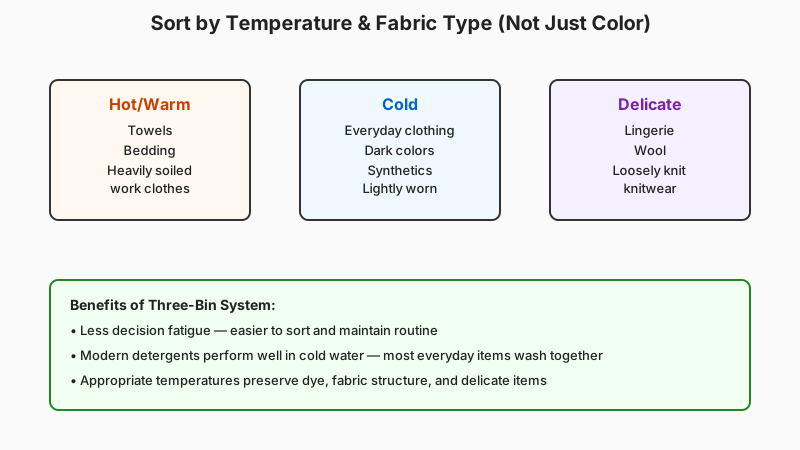
The classic rule — darks, lights, whites — is useful but often overkill for everyday laundry. A more practical approach is sorting by wash temperature and fabric type rather than color alone.
- Hot/warm loads: towels, bedding, heavily soiled work clothes
- Cold loads: everyday clothing, dark colors, synthetic fabrics, lightly worn items
- Delicate loads: lingerie, wool, loosely knit knitwear, anything with embellishments
Three bins instead of five means less decision fatigue, and modern detergents are engineered to perform well in cold water — so most of your regular clothes can go in a single cold load together without bleeding or damage.

2. Stop Overwashing Your Clothes
This is the single biggest source of unnecessary laundry volume. Many items don’t need washing after every wear.
- Jeans: 5–10 wears before washing (washing them less preserves dye and fabric structure)
- T-shirts and underwear: after every wear
- Sweaters worn over a base layer: 3–5 wears
- Pajamas: 3–4 wears
- Jackets and coats: a few times per season
Airing clothes out after wearing them — hanging them on a chair or door hook overnight — removes body odor and moisture, extending the time between washes. Fewer loads per week means the laundry pile stops feeling like an emergency.
3. Build a Laundry Schedule and Stick to It
The “I’ll do it when the basket fills up” approach leads to marathon laundry days and the chaos of five loads all needing folding at once. A fixed schedule changes the whole dynamic.
For a household of two adults, one or two loads per week is usually sufficient if you follow the overwashing tip above. For families with children, spreading loads across two or three days — rather than doing all laundry on one day — makes folding and putting away far more manageable.
Try attaching laundry to an existing routine: start a load before breakfast, move it to the dryer after your morning coffee, fold it at night while watching something. That structure means laundry happens automatically instead of through willpower.
4. Pre-Treat Stains Immediately
A stain that gets pre-treated within a few minutes of happening almost always comes out. The same stain, left until laundry day, might be permanent. Keep a small spray bottle of stain remover (or even just a bar of soap) near your laundry area and in the kitchen.
For protein-based stains (blood, egg, sweat): cold water first, always. Hot water sets protein stains permanently.
For grease stains: apply a small amount of dish soap directly to the fabric and let it sit for 10–15 minutes before washing.
For red wine or coffee: blot (don’t rub), then apply club soda or a mixture of dish soap and hydrogen peroxide. Test hydrogen peroxide on an inconspicuous area first — it can lighten some fabrics.
For a deeper dive into which methods actually work on specific stains, check out How to Remove Common Stains from Clothes: Why Speed Beats Scrubbing.
5. Load Your Washer Correctly
Overloading is the most common washer mistake. When a drum is packed too tightly, clothes don’t circulate properly, detergent residue doesn’t rinse out fully, and fabrics wear faster. A properly loaded washer should have room for your hand to fit flat on top of the clothing.
Underloading wastes water and energy. If you have only a few items, use a quick or half-load setting if your machine has one.
Front-loaders and high-efficiency (HE) top-loaders require HE-designated detergent and much less of it than the measuring lines suggest — using too much detergent in an HE machine causes excess suds, which paradoxically leaves clothes less clean and can damage the machine over time.

6. Use the Right Wash Cycle for the Job
Most people use the same cycle for everything. That’s a missed opportunity for efficiency.
- Quick/express cycle (30 minutes or less): Suitable for lightly worn items that aren’t actually dirty — worn once, no sweat, no stains. Saves significant water and energy.
- Normal cycle: Everyday clothes with moderate soil.
- Heavy duty: Reserved for genuinely soiled items — muddy sports gear, work clothes with real grime.
- Delicate/gentle: For any item that stretches, shrinks, or snags easily.
Using a quick cycle where appropriate can cut your energy and water use substantially without any sacrifice in cleanliness.
7. Wash in Cold Water by Default
About 90% of a washing machine’s energy consumption comes from heating water. Switching to cold water for most loads is one of the most effective ways to reduce both energy bills and environmental impact without changing anything else.
Modern cold-water detergents (Tide coldwater, Persil, and similar) are specifically formulated with enzymes that activate at lower temperatures, and studies from consumer testing organizations consistently show cold-water washing achieves comparable cleanliness to warm for the vast majority of household laundry. Reserve warm or hot water for towels, bedding, and heavily soiled items where sanitization matters.
8. Don’t Let Wet Laundry Sit
Wet clothes left in a closed washer drum for more than an hour or two start to smell. The solution isn’t re-washing (which wastes a full load’s worth of water and energy) — it’s simply moving things faster.
If you have a tendency to forget mid-cycle, set a timer on your phone when you start a load. Many newer washers have a delayed-start feature; use it so the cycle finishes just when you’re ready to move the load.
9. Optimize Your Drying
The dryer is a significant energy user. A few adjustments make a real difference:
Air-dry what you can. A foldable drying rack for shirts, synthetic activewear, and delicates extends garment life considerably (tumble drying degrades elastic, causes pilling on synthetics, and can shrink cotton). Air-drying these items takes almost no additional time once the rack is set up.
Use dryer balls instead of dryer sheets. Wool or rubber dryer balls reduce drying time by improving hot-air circulation between garments — typically by 10–25% per load, according to energy-efficiency testing. They also work as a fabric softener without adding chemicals or fragrance. Dryer sheets are single-use; dryer balls last for hundreds of loads.
Clean the lint trap before every load. A clogged lint trap forces the dryer to work harder and is a genuine fire hazard. Make it a reflex.
Don’t over-dry. Clothes that come out of the dryer stiff or staticky have been over-dried. Use a sensor-dry setting if your machine has one; it stops the cycle when clothes are actually dry rather than running for a set time.

10. Master the Fold-as-You-Go Habit
The basket of unfolded laundry that sits on the chair for four days is not a laundry problem — it’s a folding problem. The fix is folding items as you remove them from the dryer, one by one, rather than dumping everything in a basket to deal with later.
It sounds trivial, but the psychological barrier to folding a basket of clothes is far higher than folding each piece as it comes out warm. For families or shared households, sorting into each person’s pile directly from the dryer also eliminates the secondary step of distribution.
11. Keep Your Machines Clean
A washer that smells musty will make your clothes smell musty. Front-loaders in particular are prone to mold and mildew around the door gasket and in the detergent drawer.
- Leave the washer door and detergent drawer slightly open between uses to allow moisture to escape.
- Run a monthly maintenance wash: a hot empty cycle with a machine-cleaning tablet, or a cup of white vinegar in the drum with no laundry. This removes detergent buildup and kills mildew.
- Wipe the door gasket dry occasionally — that rubber seal traps moisture and lint.
For dryers, vacuum out the lint trap housing and the vent duct once or twice a year. Blocked dryer vents are a leading cause of house fires and dramatically reduce drying efficiency.
12. Organize Your Laundry Area for Speed
Even a small laundry space can be set up so the routine requires minimal thought. Keep detergent, stain remover, dryer balls, and any other supplies within arm’s reach of the machines. Have a labeled hamper system in the bedroom (or wherever clothes are changed) so sorting is already done when the clothes arrive at the machine.
If you fold at the dryer, keep a flat surface — even a folding table or a wall-mounted shelf — nearby. A 30-second trip across the house to get hangers is enough friction to break the fold-as-you-go habit.
Putting It Together
An efficient laundry routine isn’t about spending less time caring about your clothes — it’s about removing the wasted time: the re-washes, the forgotten loads, the Sunday laundry marathons, the basket that lives on the chair. Most of these tips cost nothing and take effect immediately.
Start with whichever change has the most friction in your current routine. For most people, that’s either stopping the overwashing cycle or moving to a fixed laundry schedule. Get those two habits solid and the rest follows naturally. Laundry stops being a background source of low-grade stress and becomes something you mostly don’t have to think about.
If you’re still noticing pilling, fading, or other damage despite following these habits, Fix Common Laundry Problems: Pilling, Fading & More can help you troubleshoot what’s going wrong.