How to Fix a Squeaky Door Hinge: Silencing Hinges With Household Oils

Why Door Hinges Squeak in the First Place
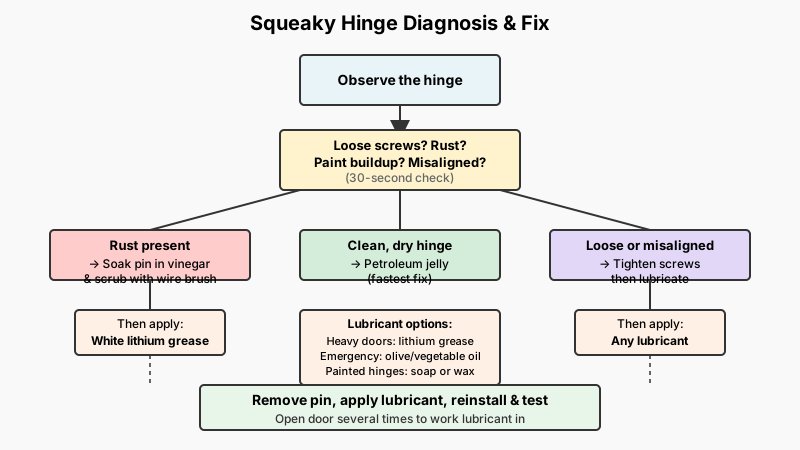
A squeaky hinge is almost always a friction problem. Two metal surfaces are rubbing against each other without enough lubrication between them, and the result is that familiar creak every time you open or close the door. The root cause matters, though, because it shapes which fix will actually work.
The most common culprits:
- Dry metal-on-metal contact — the lubricant has dried out or was never applied
- Rust or corrosion — tiny oxidation particles act like sandpaper inside the hinge barrel
- Paint buildup — layers of paint fill the gap between the hinge leaves, creating drag
- A loose hinge — when screws no longer grip, the hinge shifts under load and squeaks
- Hinge misalignment — a door that has settled or warped puts uneven pressure on one hinge
Identifying the real cause takes about 30 seconds. Open the door slowly and watch which hinge moves oddly, check whether any screws are loose, and look for orange rust streaks or paint ridges around the barrel. That diagnosis will tell you exactly where to start.

The 7 Best Methods to Fix a Squeaky Door Hinge
Method 1: Petroleum Jelly (Vaseline)
This is the fastest fix for a clean, dry hinge with no rust. Petroleum jelly is thick enough to stay in place and slippery enough to eliminate friction immediately.
How to do it:
- Open the door fully and prop it open so it doesn’t move.
- Tap out the hinge pin with a screwdriver and a hammer — position the flathead under the pin head and tap upward.
- Coat the pin generously with petroleum jelly, and smear a little inside the hinge barrel.
- Slide the pin back in, wipe off any excess, and swing the door several times to work the lubricant in.
The whole job takes under five minutes. The downside is that petroleum jelly attracts dust over time, so the squeak may return after a year or two. A quick re-application fixes it.
Method 2: WD-40 or Penetrating Spray
WD-40 is widely misunderstood. It’s a water displacer and light solvent, not a long-term lubricant — but for a squeaky hinge, that property is exactly what you want at the cleaning stage. Spray it directly into the hinge barrel, move the door back and forth, then wipe away the loosened grime. Follow up with a proper lubricant (see Methods 3 and 4) for lasting results.
If you use WD-40 alone, the squeak will return within weeks because the solvent evaporates. Think of it as a degreaser first, lubricant second.
Method 3: White Lithium Grease
For hinges that carry heavy doors — solid-wood exterior doors, fire doors — white lithium grease is the professional’s choice. It’s much heavier-bodied than petroleum jelly, resists heat and moisture, and stays in place far longer.
Apply it the same way as petroleum jelly: remove the pin, coat it and the barrel interior, reassemble. You can also get it in aerosol form with a straw nozzle, which lets you inject it directly into the barrel without removing the pin.
Method 4: Olive Oil or Vegetable Oil (Emergency Fix)
You’re at home at midnight, a squeaky hinge is waking everyone up, and you have no lubricating products in the house. Olive oil works. So does vegetable oil, coconut oil, or even a few drops of cooking spray.
Apply with a cotton swab or cloth, work it into the hinge by moving the door, and wipe up the drips. It won’t last as long as purpose-made lubricants and it can turn rancid in warm climates, but it will silence the squeak tonight. Replace it with a proper lubricant when you can.
Method 5: Bar Soap or a Wax Candle
Solid lubricants are underrated. Rub a bar of soap — regular bath soap works fine — directly onto the hinge pin and inside the barrel. The soap compresses into the metal surfaces and reduces friction effectively. A plain wax candle or a block of beeswax does the same job and lasts longer because wax is less water-soluble than soap.
This method is particularly useful for painted hinges where you don’t want to drip oil onto woodwork.

Method 6: Cleaning and Removing Rust
If the hinge pin or barrel shows visible rust, lubrication alone won’t fix the problem for long — you need to remove the corrosion first.
Steps:
- Remove the hinge pin and soak it in white vinegar for 30 minutes. The acetic acid dissolves light rust without damaging the metal.
- Scrub with a small wire brush or steel wool (fine grade, #0000) until the surface is smooth.
- Rinse, dry completely, then apply white lithium grease or petroleum jelly before reassembling.
For severe rust where the barrel itself is corroded, replacing the entire hinge is usually faster than restoring it. Standard interior door hinges cost very little at any hardware store and the swap takes about 20 minutes.
Method 7: Fixing a Loose Hinge
Sometimes what sounds like a squeak is actually a creak caused by a hinge that’s shifted because its screws no longer grip the wood. Test this by grabbing the door near the top and gently pushing it up and down — if there’s noticeable play, a loose hinge is the culprit.
The toothpick trick:
- Remove the loose screws.
- Pack the stripped holes with wooden toothpicks (or short bamboo skewers) dipped in wood glue.
- Let the glue dry for at least an hour — ideally overnight.
- Snap off the toothpick ends flush with the surface and reinstall the screws.
The wood fibers give the screw threads something to bite into again, and the repair is surprisingly durable. For larger stripped holes, wooden golf tees work perfectly.
For a more permanent fix, use longer screws — upgrading from the standard 3/4-inch screws to 3-inch screws that reach the structural framing behind the door jamb will anchor the hinge far more securely.
Choosing the Right Lubricant for Your Situation
Not every squeaky hinge needs the same fix. Here’s a quick reference:
| Situation | Best Choice |
|---|---|
| Light indoor door, no rust | Petroleum jelly or bar soap |
| Heavy exterior or fire door | White lithium grease |
| Rust present | Vinegar soak + lithium grease |
| Emergency, no products handy | Olive oil or cooking spray |
| Painted hinge, no drips wanted | Wax candle or soap |
| Loose, not just dry | Toothpick repair + longer screws |
One thing to avoid: cooking sprays like PAM directly on metal hinges left long-term. The propellants evaporate cleanly, but the oil residue can gum up and attract grit in exterior applications. For a quick indoor fix, fine — for anything outside, use lithium grease.
When the Squeak Isn’t the Hinge
Before you disassemble anything, check one detail: is the squeak coming from the hinge itself or from the door rubbing against the frame? Run your hand along the door edges as someone slowly closes it. If you feel resistance at the top corner or along the side, the door has swollen or the frame has shifted — the fix there is planing or sanding the door edge, not lubricating the hinge.
Similarly, a squeak that happens only when you release the door (not while opening it) sometimes comes from the latch mechanism, not the hinge. A drop of lightweight machine oil in the latch assembly usually sorts that out.

If you’re on a roll fixing household annoyances, How to Stop a Running Toilet: Fix It Fast & Save Water tackles another common nuisance that’s just as easy to solve once you know the trick.
Keeping Hinges Quiet Long-Term
Most hinge squeaks come back because people forget about them until the noise returns. A few habits prevent that:
- Annual maintenance: Once a year — when you’re doing other home maintenance — add a tiny amount of petroleum jelly or lithium grease to every hinge in the house. It takes about ten minutes for an entire home.
- Check screws after seasonal changes: Wood expands in summer and contracts in winter. Check hinge screws in early spring and again in autumn; a quarter-turn of tightening prevents the looseness that leads to creaking.
- Prime and paint hinge areas carefully: When repainting doors, use painter’s tape on the hinge barrels to prevent paint buildup that causes friction later.
The best outcome is a squeak you never have to hear again — and with a proper lubricant and tight screws, that’s genuinely achievable.
While you’re tackling small fixes around the house, How to Hang a Picture Frame Straight: The Ten Minute Fix That Lasts offers another quick weekend project that keeps your walls looking sharp.
Conclusion
Fixing a squeaky door hinge doesn’t require special tools or professional help. Nine times out of ten, the problem is dry metal, light rust, or a loose screw — all solvable in under 15 minutes with things you already have. Remove the pin, clean it, lubricate it well, and reinstall. If screws are loose, the toothpick trick costs almost nothing and holds for years.
The one thing that doesn’t work is ignoring it. A small squeak from friction tends to worsen as the metal wears, and a loose hinge left too long can eventually damage the door jamb. Spend 10 minutes on it now and the door will swing silently for years.